Power outage in Berlin: Why employers still have to pay wages
Jan 4, 2026
Power outage Berlin 2026: 2,200 businesses affected. Find out why employers must still pay wages according to § 615 BGB - and what applies to payroll.
Ready for payroll that finally takes the pressure off?
Leave your contact details - we will get back to you shortly.
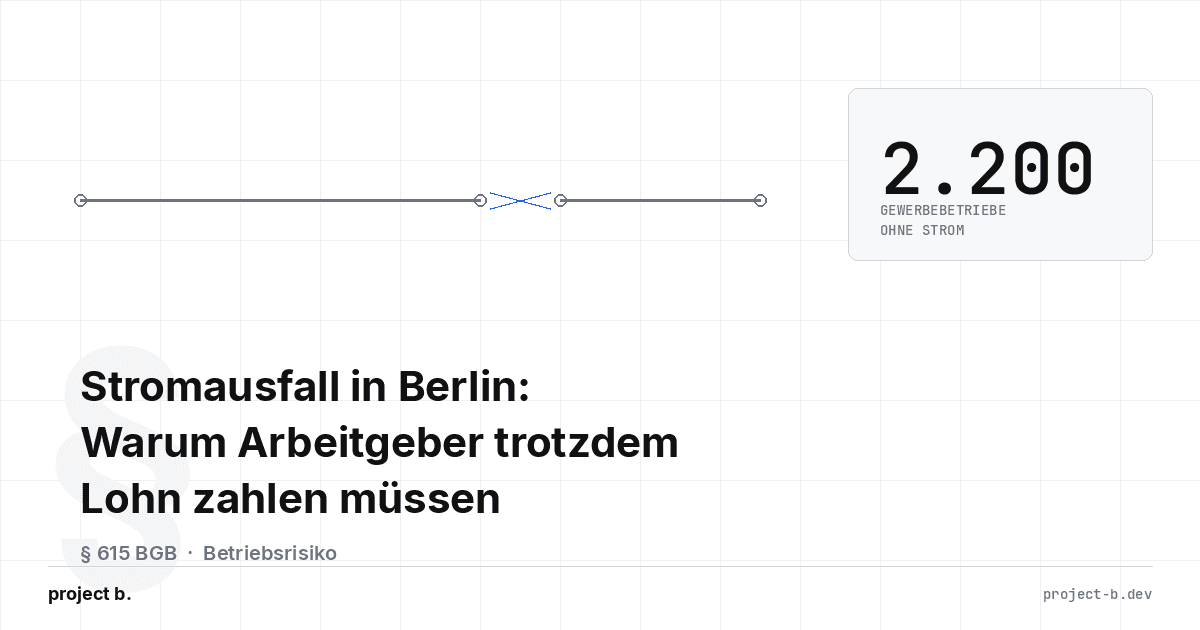
2,200 businesses in Steglitz-Zehlendorf have been without electricity since Friday. Employees cannot work. Nevertheless, wages must be paid. Here is what employers and payroll accountants need to know.
What is currently happening in Berlin
On January 3, 2026, at 6:13 AM, a cable bridge over the Teltow Canal caught fire. Five high voltage and ten medium voltage cables were destroyed. The result: 45,000 households and 2,200 businesses in Nikolassee, Zehlendorf, Wannsee, and Lichterfelde are without power.
The full restoration is not expected until Thursday, January 8. This means that many businesses will lose almost five working days.
What happens to the wages this week?
The short answer
Yes, the wages must be paid.
No negative hours. No forced leave. No cuts.
The employer bears the so-called "operational risk" – and a power outage is one of the classic examples of this.
Why is that so?
§ 615 sentence 3 BGB
Since January 1, 2002, it has been enshrined in law: If the employer "bears the risk of work interruption," he still has to pay.
What does that mean concretely? The employer must cover disturbances that:
lie within his area of influence (machine defect, software failure)
or come from outside and hit the operation (power outage, flood, fire)
Power failure is a standard example. The Federal Labor Court already confirmed this in 1991 (BAG, 30.01.1991, Az. 1 AZR 338/90): If work is interrupted due to a power failure, it is the operational risk – and the employer pays.
Even in the case of force majeure
The Berlin power outage was caused by an arson attack. Does that change anything? No.
Force majeure (natural disasters, attacks, extreme weather events) also falls under operational risk. The employer may not be at fault – but he still bears the risk.
What this means for payroll accounting
Practically: Nothing special.
The affected days are processed as if the employees had worked. No correction, no special treatment.
Calculation example:
A business with 10 employees, average salary €3,000 gross/month:
Daily costs per employee: approx. €140
With 5 days of outage: 140 € × 10 × 5 = €7,000 wage costs without work performance
This is painful – but legally clear.
When it can be different
There are exceptions. But they are narrowly defined:
1. Other activities are possible
If employees can work meaningfully without electricity (sorting goods, organizing files, cleaning up), the employer may instruct this. The right of instruction is extended in emergency situations.
2. Home office is possible
Does the employee have electricity at home and can work from there? Then the employer can order home office – provided the activity permits it.
3. Contractual regulation
Collective agreements or employment contracts can regulate operational risk differently. This is rare, but possible.
4. Threat to the existence of the business
If wage payment endangers the existence of the company, the obligation may cease. However, this exception is interpreted very restrictively by courts.
Important: Route risk is something else
If an employee cannot come to work because the S-Bahn is not running due to the power failure? That is his risk, not that of the employer. The employee must try to find another way to work.
What employers should do now
Checklist for the affected businesses:
Inform employees: Those who cannot work do not need to be afraid for their wages.
Check home office: Can employees work from home? If yes, order it.
Document: Which days were affected? Which employees could not work? (Important for insurance and operational audit)
Process normally: There is no change in payroll accounting.
Check insurance: Does the business have business interruption insurance? This can cover wage costs in case of a power outage.
Short-time work as an alternative?
In the case of longer outages, short-time work could be an option. A power outage may be considered an "unforeseen event".
But: The application takes time. The work interruption must be temporary and cause a wage loss of more than 10% for at least one-third of the employees.
For a 5-day power outage, the effort is usually not worth it. In the case of longer crises (several weeks), it is worth considering.
Conclusion
The operational risk is not a legal quibble – it is applicable law. And it protects employees from income losses due to events that they cannot control.
For employers in Steglitz-Zehlendorf, this means concretely: The payroll accounting for January runs normally. The outage days will be paid.
For payroll accountants: No correction necessary. Business as usual.
Sources
Must employers continue to pay wages during a power outage?
Yes. According to § 615 sentence 3 of the German Civil Code (BGB), the employer bears the so-called operational risk. A power failure – even if caused by external circumstances such as an arson attack – falls under this risk. Wages must be paid in full, even if employees cannot work.
May I send employees on forced leave during a power outage?
No. The employer may not transfer the operational risk to the employees. This means: no negative hours, no compulsory leave, no salary cuts. However, if employees can work from home and have electricity there, the employer may mandate remote work.
What is the difference between operational risk and route risk?
The operational risk is borne by the employer - they pay when the business cannot operate. The commuting risk is borne by the employee - they must ensure they get to work. If the subway is out due to a power failure, the employee must find an alternative. If they cannot make it to work, they have no right to wages for that day.
Aaron H.
Further articles
Apr 16, 2026
·
Payment
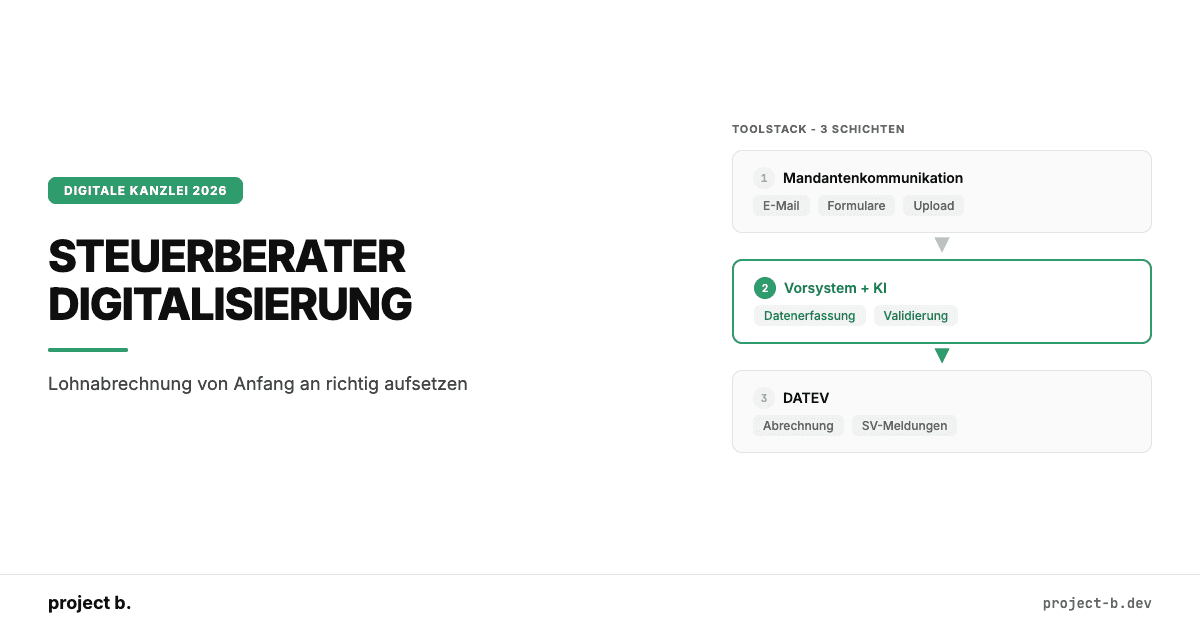
Steuerberater Digitalisierung: Wie neue Kanzleien Lohnabrechnung von Anfang an richtig aufsetzen
No need to spend time changing colors and styles manually. Our component & layouts are styled out of the box
Apr 14, 2026
·
AI
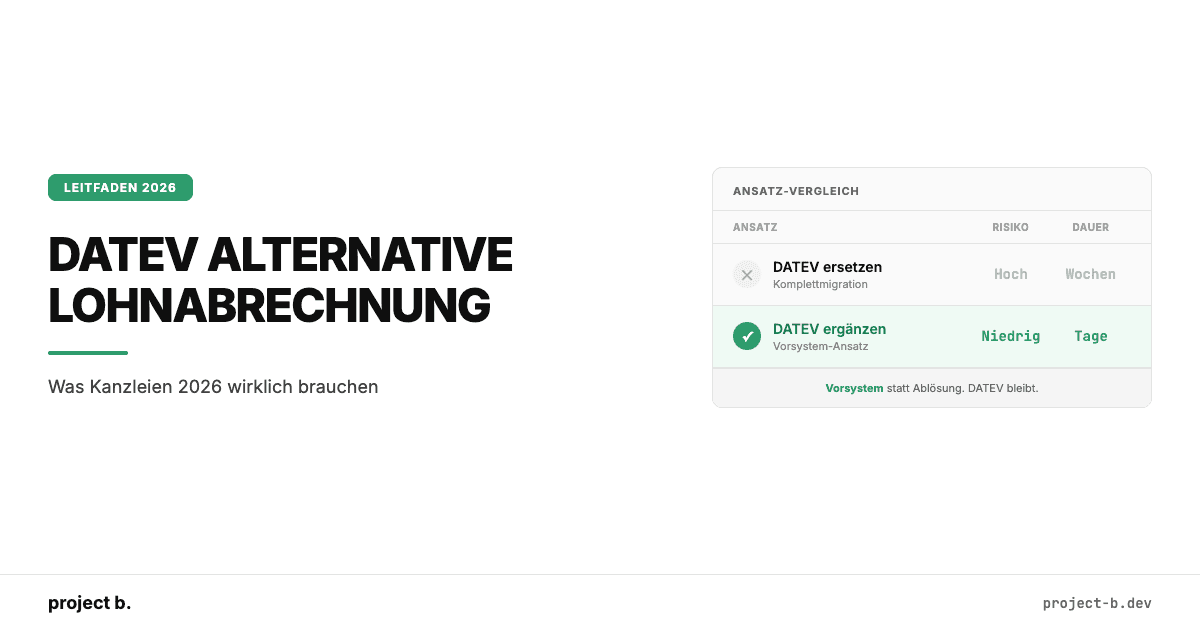
DATEV Alternative Lohnabrechnung: Was Kanzleien 2026 wirklich brauchen
DATEV Alternative für die Lohnabrechnung gesucht? Warum ein Vorsystem sinnvoller ist als ein kompletter Wechsel. Mit Kostenvergleich und Praxisbeispiel.
Apr 9, 2026
·
AI
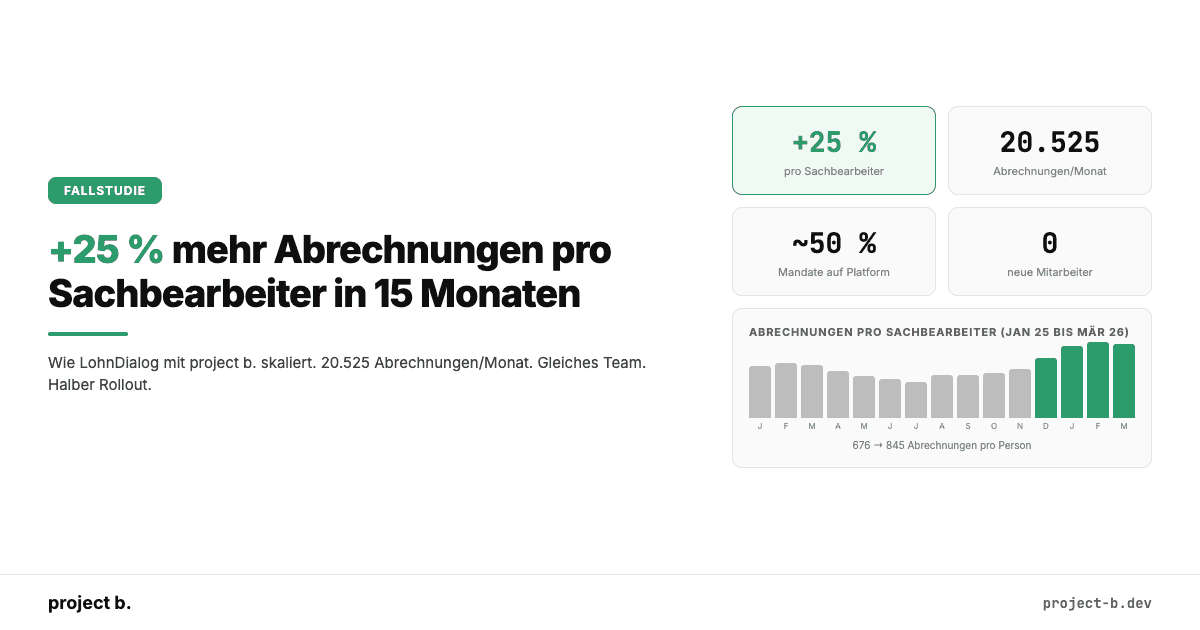
+25 % mehr Abrechnungen pro Sachbearbeiter: Wie LohnDialog mit project b. skaliert
LohnDialog verarbeitet 20.525 Abrechnungen pro Monat mit 24 Sachbearbeitern. Kein neues Personal. +25 % Effizienz nach 15 Monaten. Die Zahlen im Detail.
Apr 7, 2026
·
AI
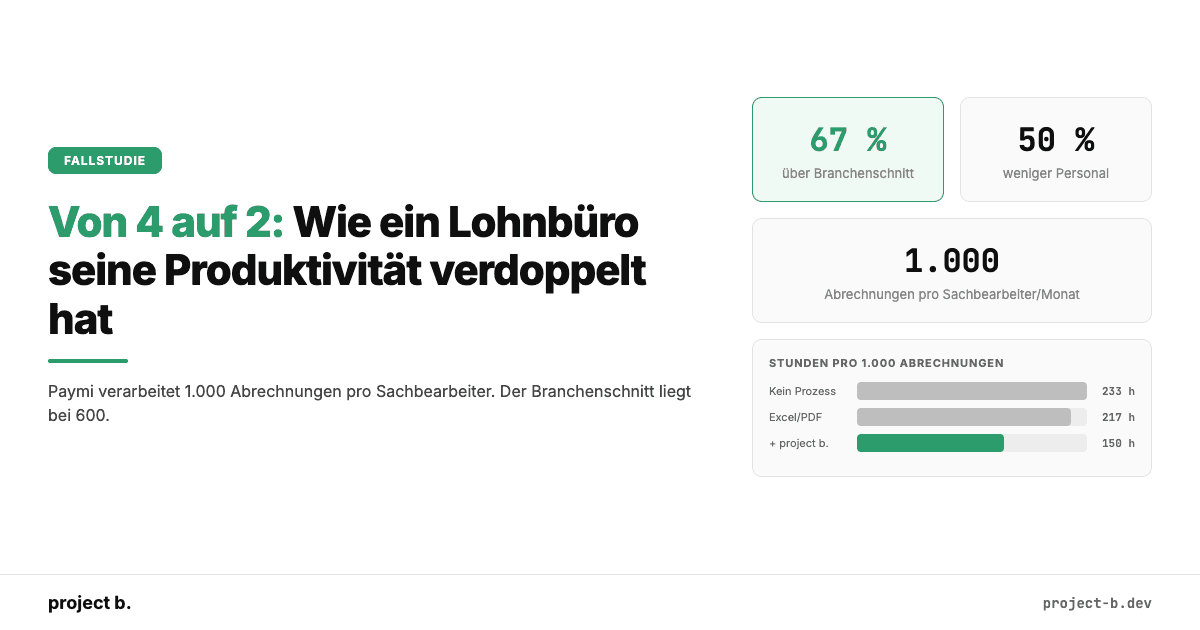
Von 4 auf 2: Wie ein Lohnbüro seine Produktivität verdoppelt hat
Wie der PSP Paymi mit project b. von 4 auf 2 FTEs reduzierte und 1.000 Abrechnungen pro Person verarbeitet. 67 % über Branchenschnitt. Mit Zahlen.

Apr 1, 2026
·
Payment
Zollprüfung Pflege 2026: Was die FKS kontrolliert und wie Sie sich vorbereiten
Was die Finanzkontrolle Schwarzarbeit in Pflegeeinrichtungen prüft: Mindestlohn, Arbeitszeiterfassung, Dokumentation. Bußgelder bis 500.000 EUR und wie Sie sich schützen.
Mar 30, 2026
·
Payment
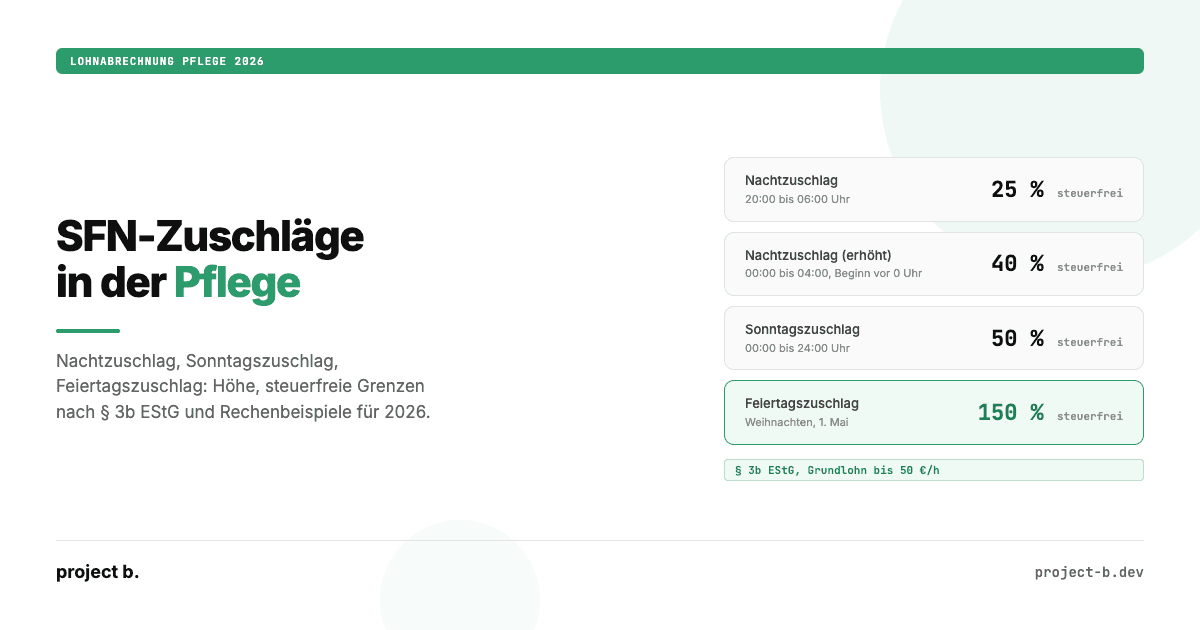
Zuschläge Pflege 2026: Nacht-, Sonntags- und Feiertagszuschläge korrekt abrechnen
Nachtzuschlag, Sonntagszuschlag, Feiertagszuschlag in der Pflege 2026: Höhe, steuerfreie Grenzen nach § 3b EStG, Rechenbeispiele und typische Abrechnungsfehler.

Mar 27, 2026
·
Payment
Pflegemindestlohn 2026: Alle neuen Sätze, Tabellen und Eingruppierungsregeln
Pflegemindestlohn 2026 ab 1. Juli: 16,52 bis 21,03 Euro pro Stunde. Alle drei Qualifikationsstufen, Eingruppierungsregeln und was Arbeitgeber jetzt umsetzen müssen.
Mar 20, 2026
·
Outsourcing
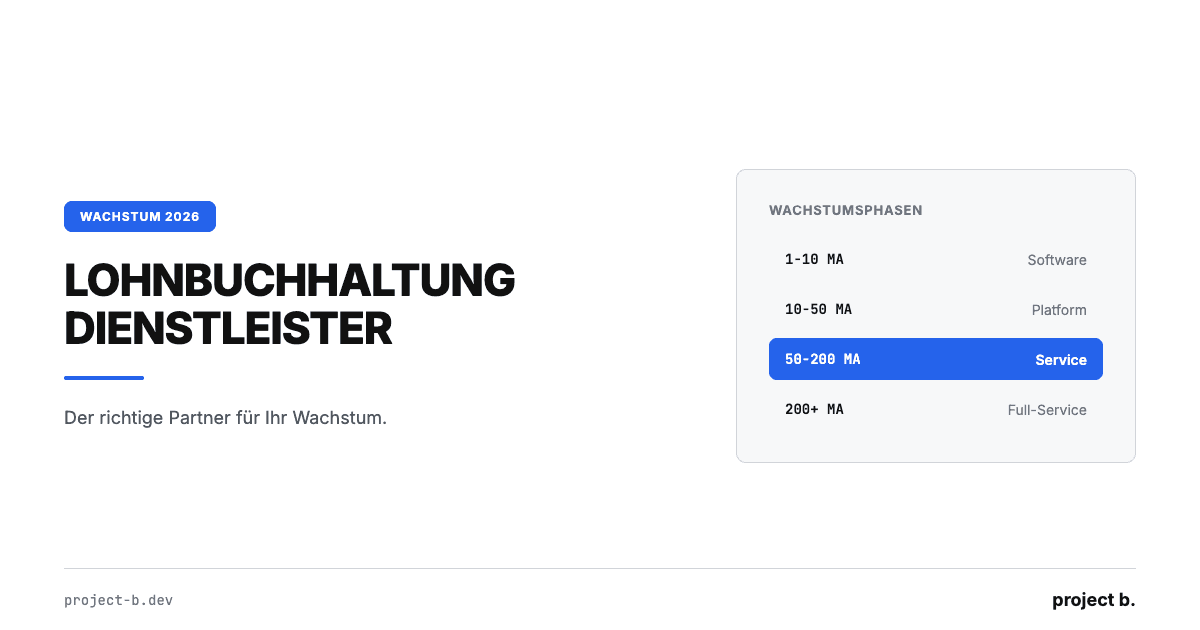
Lohnbuchhaltung Dienstleister: Der richtige Partner für Ihr Wachstum
Lohnbuchhaltung Dienstleister finden, der mit Ihrem Unternehmen wächst. Kosten, Phasenmodell und 5 Kriterien für skalierbare Lohnabrechnung ab 4 €/MA.

Mar 18, 2026
·
Outsourcing
Günstige Lohnabrechnung: Qualität muss nicht teuer sein
Günstige Lohnabrechnung ab 4 €/Mitarbeiter: Kostenvergleich Software, Steuerberater und Outsourcing mit TCO-Rechnung und konkreten Spartipps für KMU.
Mar 16, 2026
·
Outsourcing
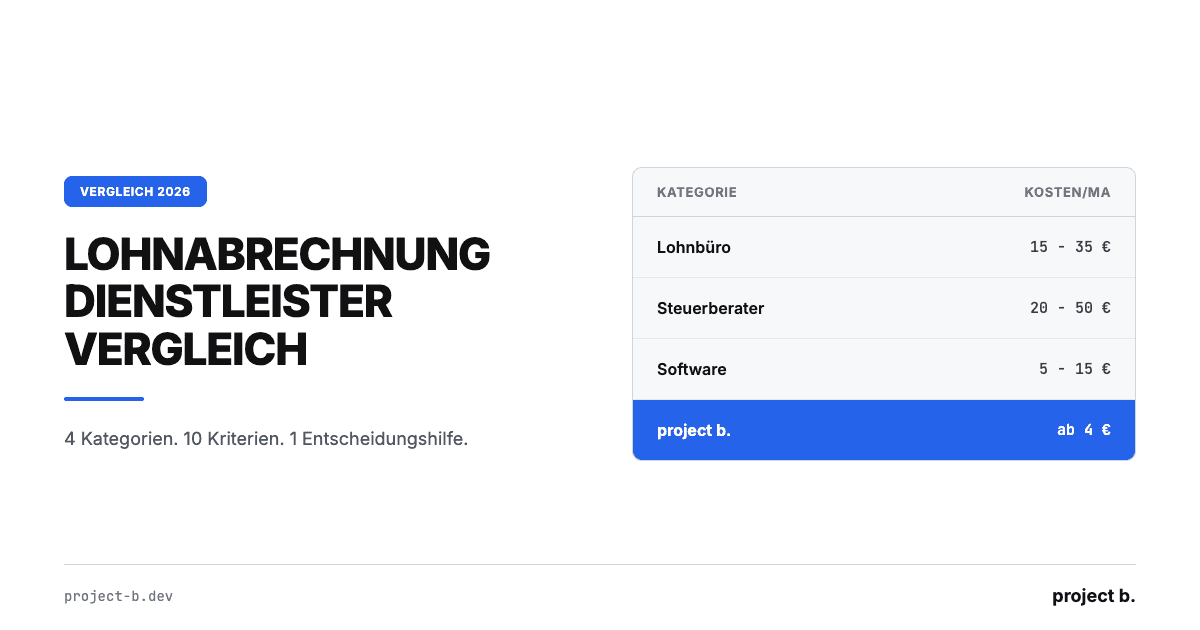
Lohnabrechnung Dienstleister Vergleich: Die Optionen 2026
Lohnabrechnung Dienstleister Vergleich 2026: 4 Kategorien, 10 Kriterien, echte Preise ab 4€/MA. Finden Sie den passenden Payroll-Partner für Ihr Unternehmen.
Mar 13, 2026
·
Outsourcing
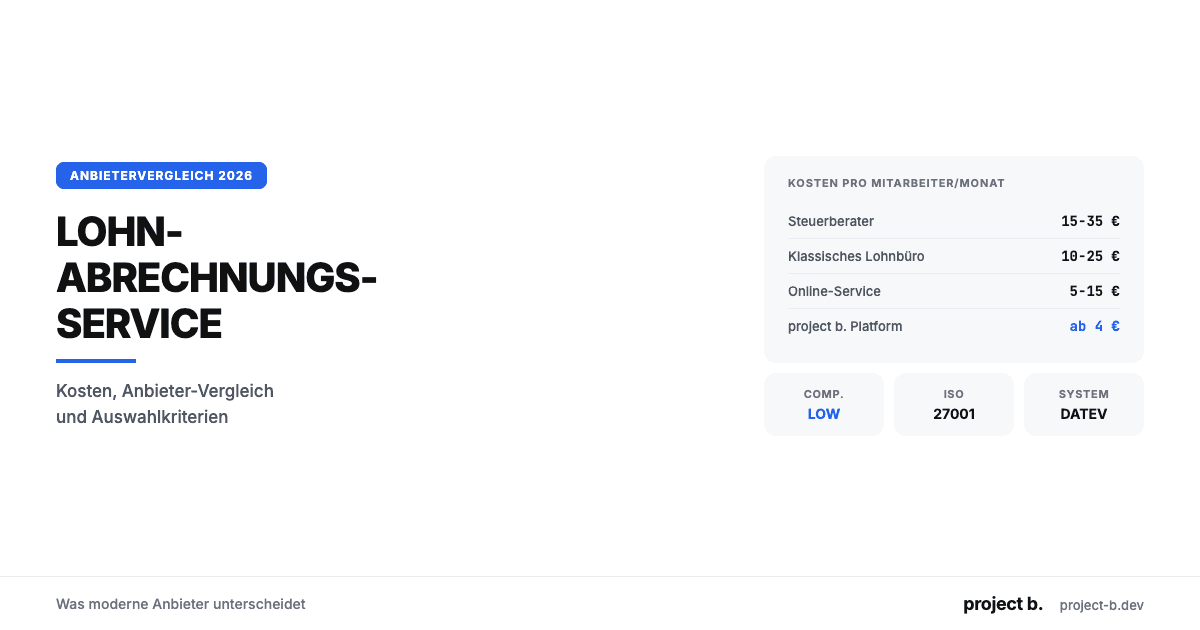
Lohnabrechnungsservice: Was moderne Anbieter unterscheidet
Lohnabrechnungsservice gesucht? Kosten ab 6 €/MA, Anbieter-Vergleich, Online vs. vor Ort und worauf Sie bei der Auswahl achten sollten. Jetzt informieren.
Mar 11, 2026
·
Outsourcing
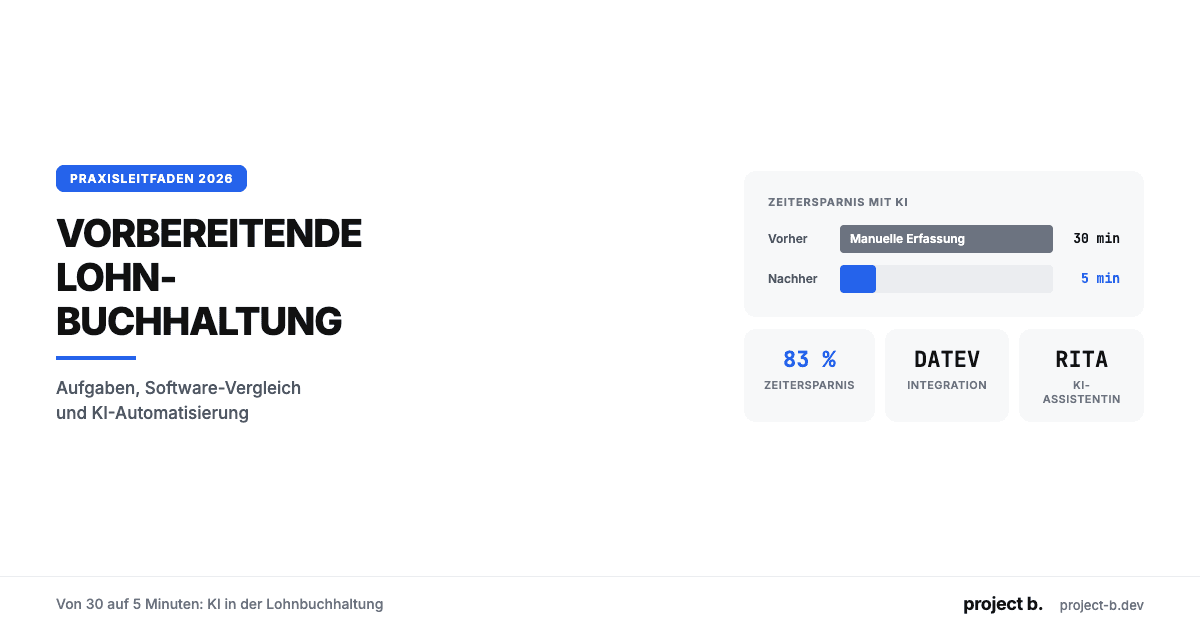
Vorbereitende Lohnbuchhaltung: Von 30 auf 5 Minuten
Was ist vorbereitende Lohnbuchhaltung? Aufgaben-Checkliste, DATEV-Integration, Software-Vergleich und wie KI den Zeitaufwand von 30 auf 5 Minuten senkt.

Mar 9, 2026
·
Outsourcing
Lohnbüro Berlin: Professionelle Lohnabrechnung in der Hauptstadt
Lohnbüro in Berlin gesucht? Leistungen, Kosten (ab 6 €/MA), 7-Punkte-Checkliste und warum LohnDialog mit project b. Technologie die smarte Wahl ist.

Mar 5, 2026
·
Outsourcing
Lohnabrechnung Berlin: Ihr Payroll-Partner in der Hauptstadt
Lohnabrechnung in Berlin mit LohnDialog und project b. Lohnbüro-Service, DATEV-Integration, ab €10/MA. Persönliche Betreuung vor Ort.
Mar 3, 2026
·
Outsourcing
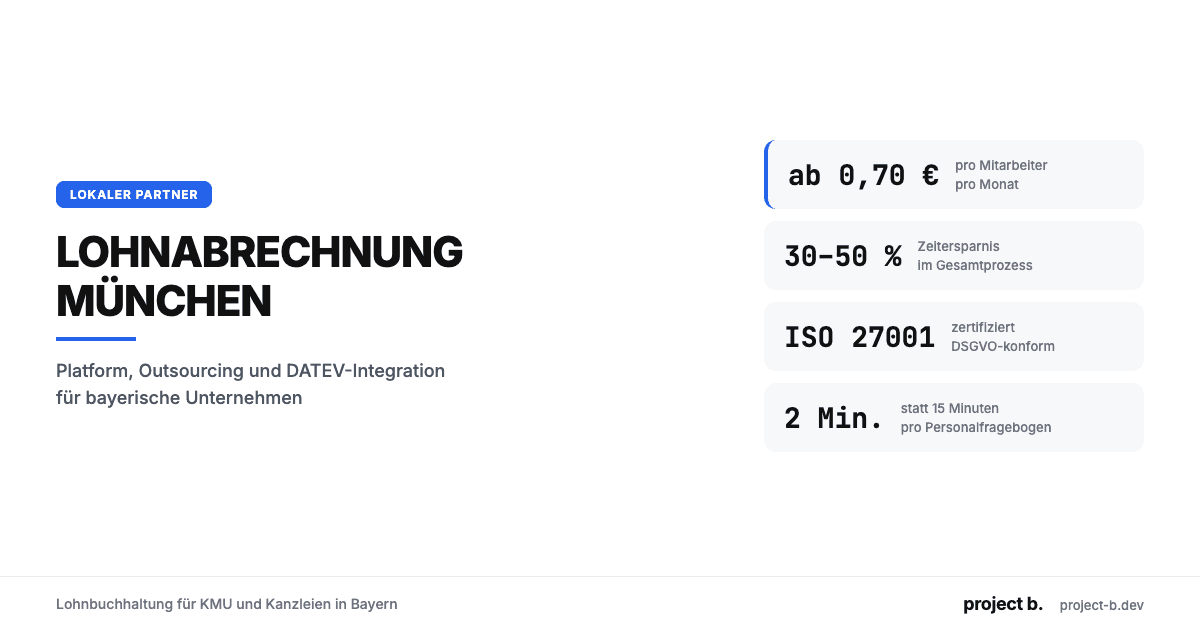
Lohnabrechnung München: Lohnbuchhaltung für KMU & Kanzleien
Lohnabrechnung in München ab €0,70/MA/Monat. Platform oder Outsourcing, DATEV-Integration, ISO 27001. So finden Sie den richtigen Partner.
Feb 27, 2026
·
Outsourcing
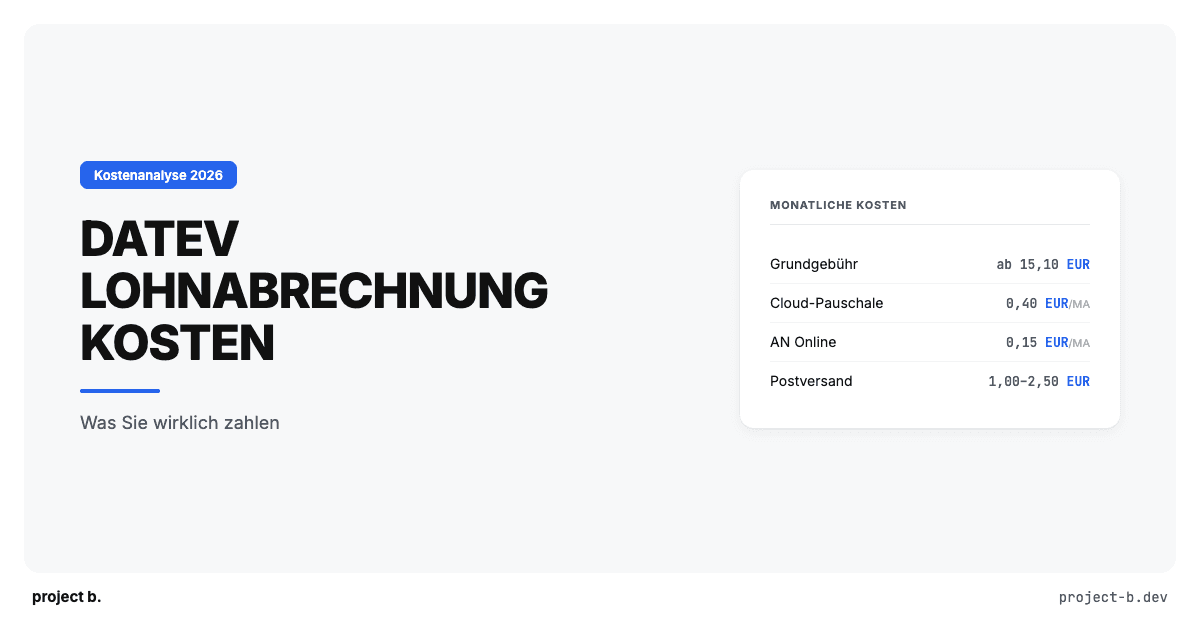
DATEV Lohnabrechnung Kosten: Was Sie wirklich zahlen
Was kostet eine Lohnabrechnung mit DATEV? Preise pro Mitarbeiter, versteckte Zusatzkosten, Vergleich mit Alternativen. Mit konkretem Rechenbeispiel.
Feb 25, 2026
·
Outsourcing
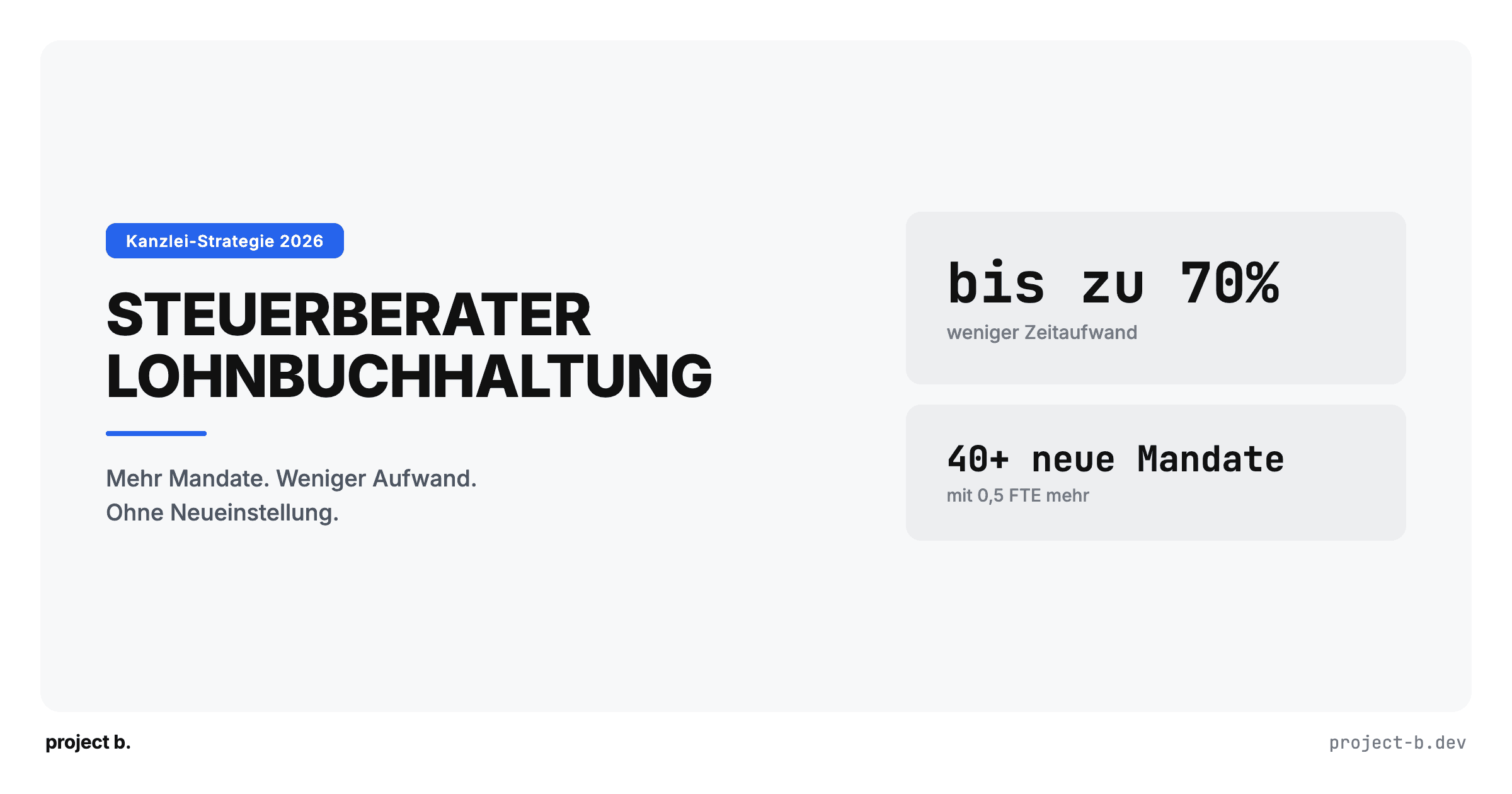
Steuerberater Lohnbuchhaltung: Mehr Mandate ohne mehr Personal
Als Steuerberater mehr Lohnmandate betreuen, ohne proportional Personal aufzubauen? So reduzieren digitale Vorsysteme den Aufwand pro Mandat.
Feb 23, 2026
·
Outsourcing
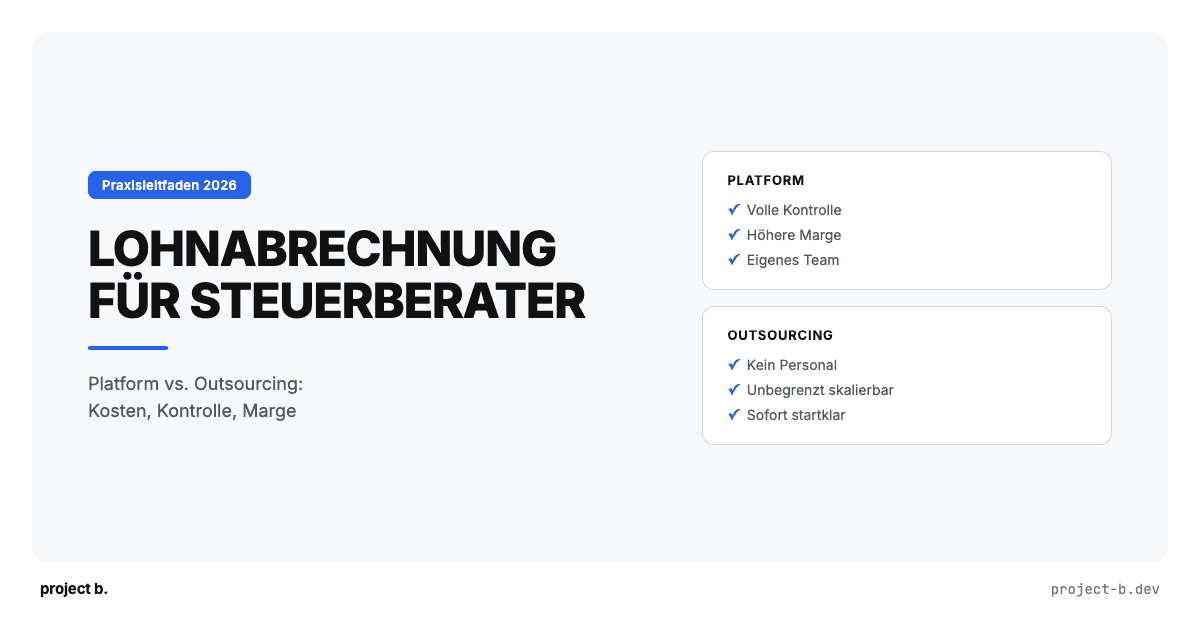
Lohnabrechnung für Steuerberater: Platform vs. Outsourcing
Lohnabrechnung als Steuerberater selbst abrechnen oder auslagern? Vergleich beider Modelle mit Kosten, Aufwand und Praxisbeispiel.
Feb 20, 2026
·
Outsourcing
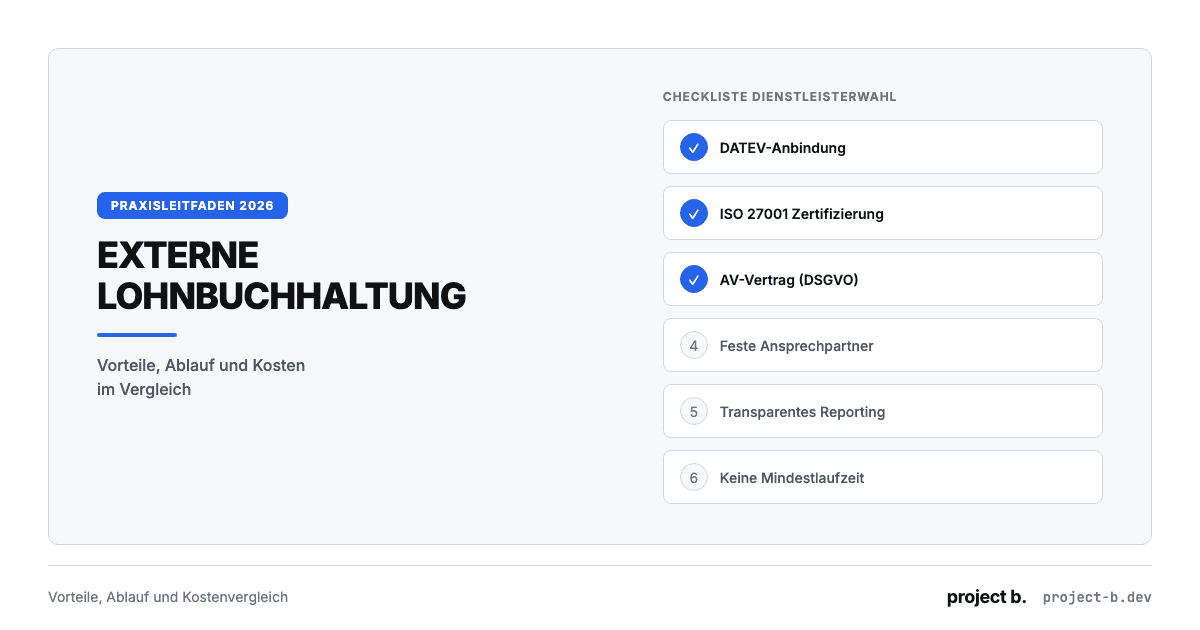
Externe Lohnbuchhaltung: Vorteile, Ablauf und Kosten
Externe Lohnbuchhaltung ab 10 EUR pro Mitarbeiter. Vorteile, typischer Ablauf, Kostenvergleich und worauf Sie bei der Auswahl des Dienstleisters achten sollten.

Feb 18, 2026
·
Outsourcing
Digitale Lohnabrechnung: So funktioniert sie in der Praxis
Digitale Lohnabrechnung rechtssicher einführen. Vorteile, DSGVO-Anforderungen, Software-Vergleich und Schritt-für-Schritt-Anleitung für die Umstellung 2026.
Feb 16, 2026
·
Outsourcing
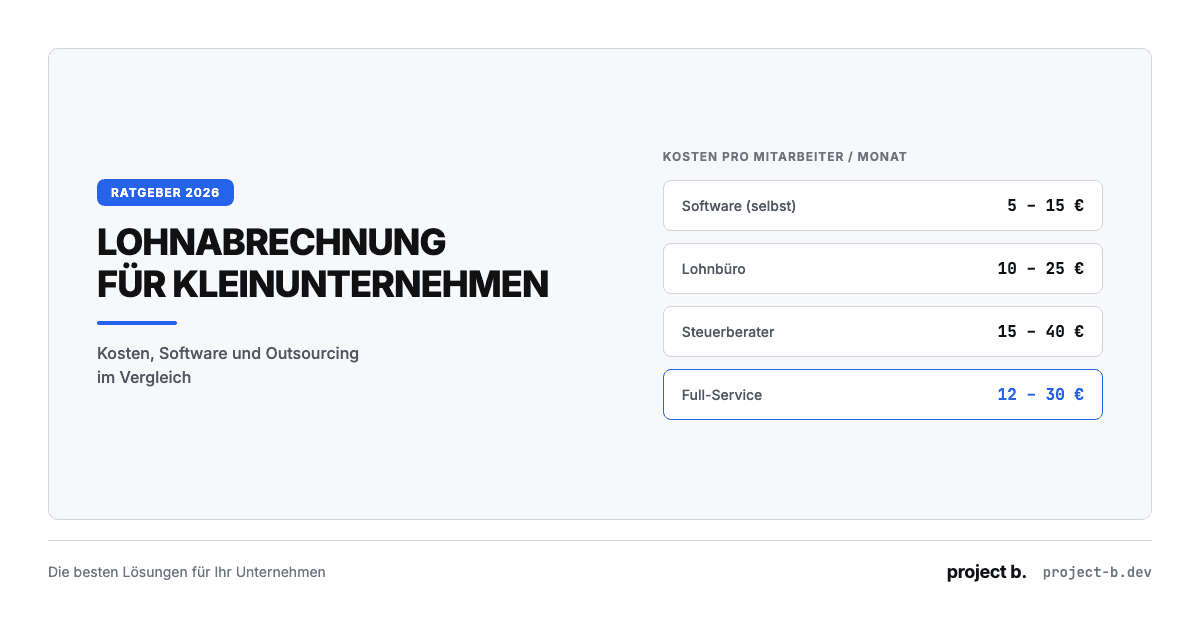
Lohnabrechnung für Kleinunternehmen: Die besten Lösungen 2026
Lohnabrechnung für Kleinunternehmen ab 5 EUR pro Mitarbeiter. Vergleich: selber machen, Software oder outsourcen. Mit Kostenrechnung und Entscheidungshilfe.
Feb 11, 2026
·
Outsourcing
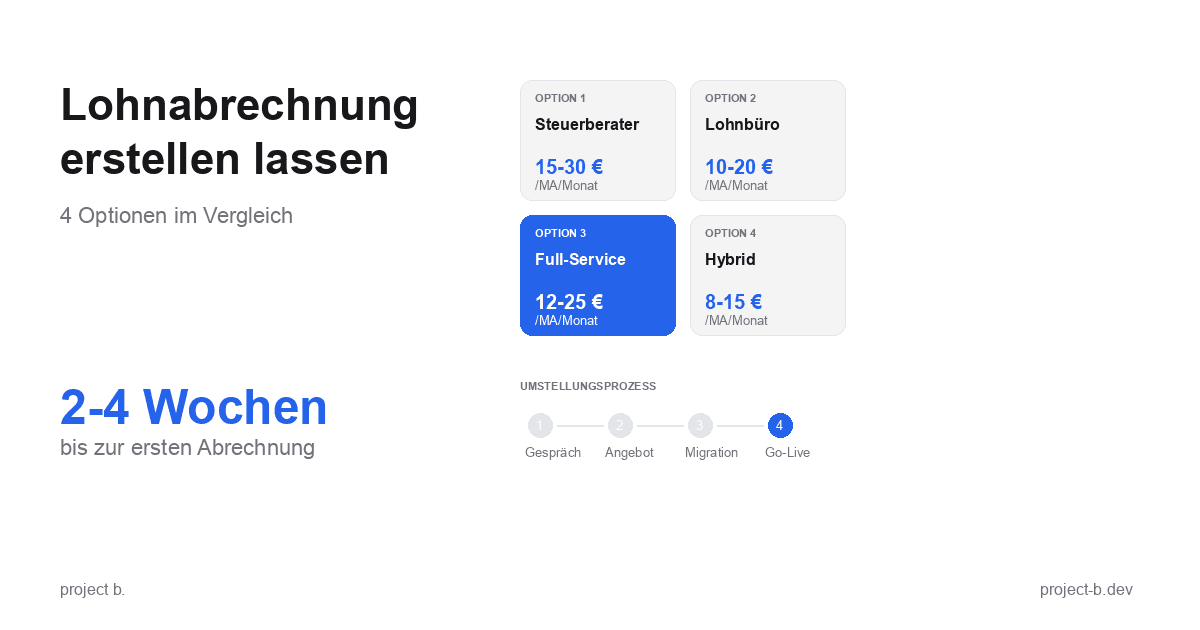
Lohnabrechnung erstellen lassen: Ihre Optionen im Vergleich
Lohnabrechnung erstellen lassen statt selbst kämpfen? Erfahren Sie, welche Optionen Sie haben, was es kostet und wie schnell Sie starten können.
Feb 9, 2026
·
Payment
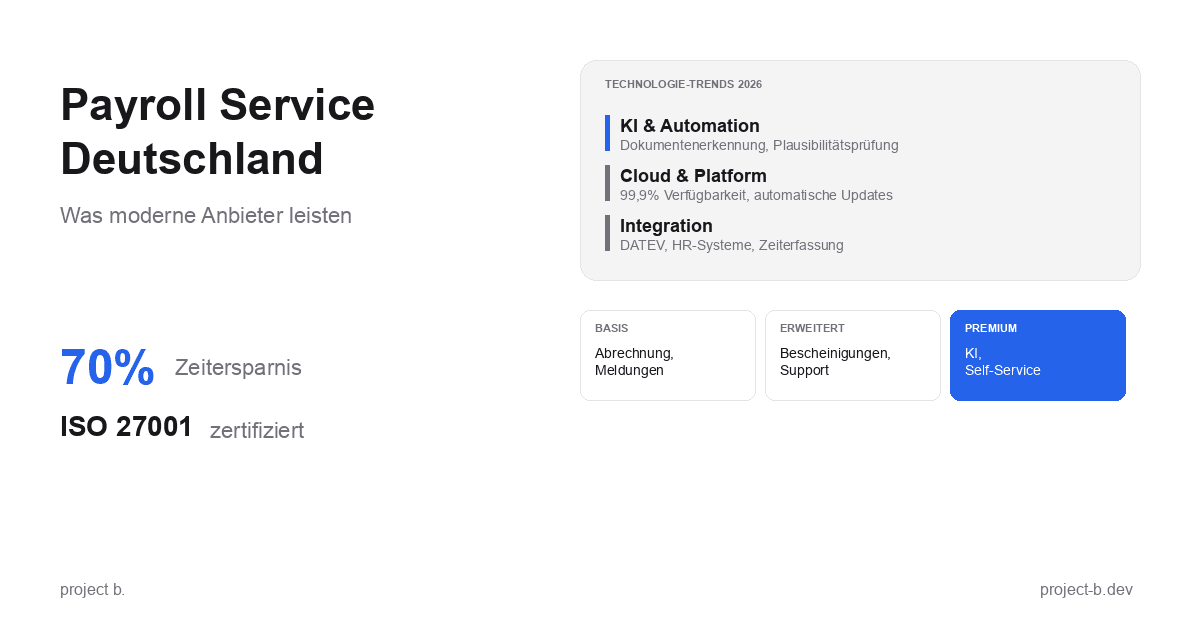
Payroll Service Deutschland: Was moderne Anbieter leisten
Payroll Service in Deutschland gesucht? Erfahren Sie, was moderne Anbieter leisten, welche Technologien sie nutzen und worauf Sie bei der Auswahl achten sollten.
Feb 9, 2026
·
Outsourcing
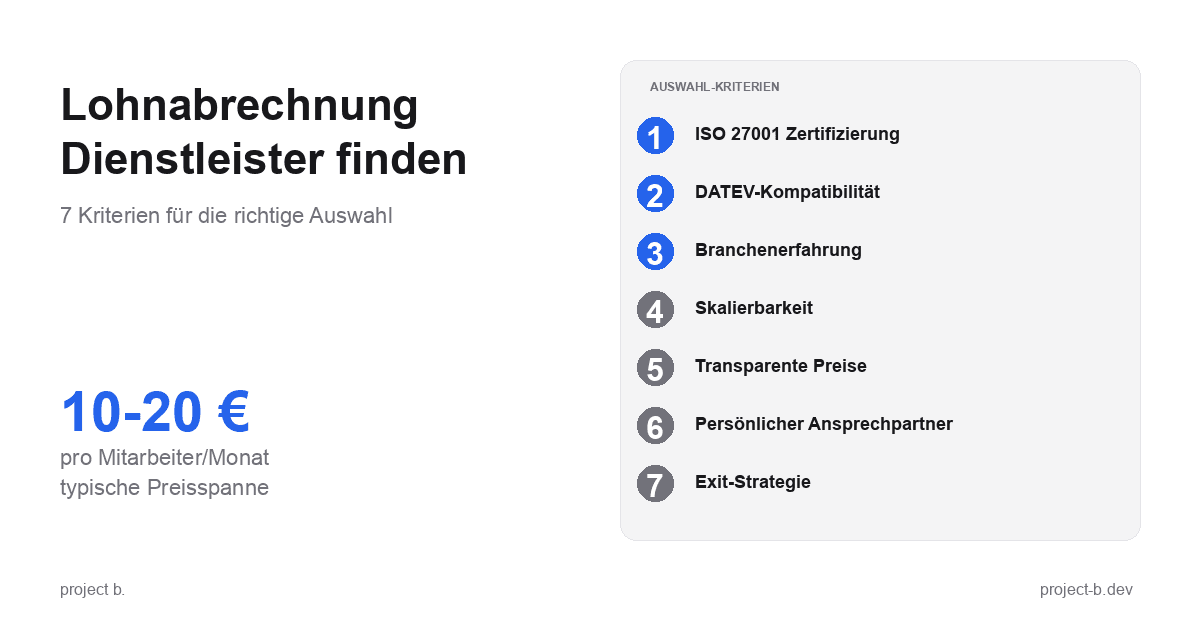
Lohnabrechnung Dienstleister: So finden Sie den richtigen Partner
Lohnabrechnung Dienstleister gesucht? 7 Kriterien für die Auswahl, Preisvergleich und Checkliste fürs Erstgespräch. Finden Sie den Partner, der zu Ihnen passt.
Feb 6, 2026
·
Outsourcing
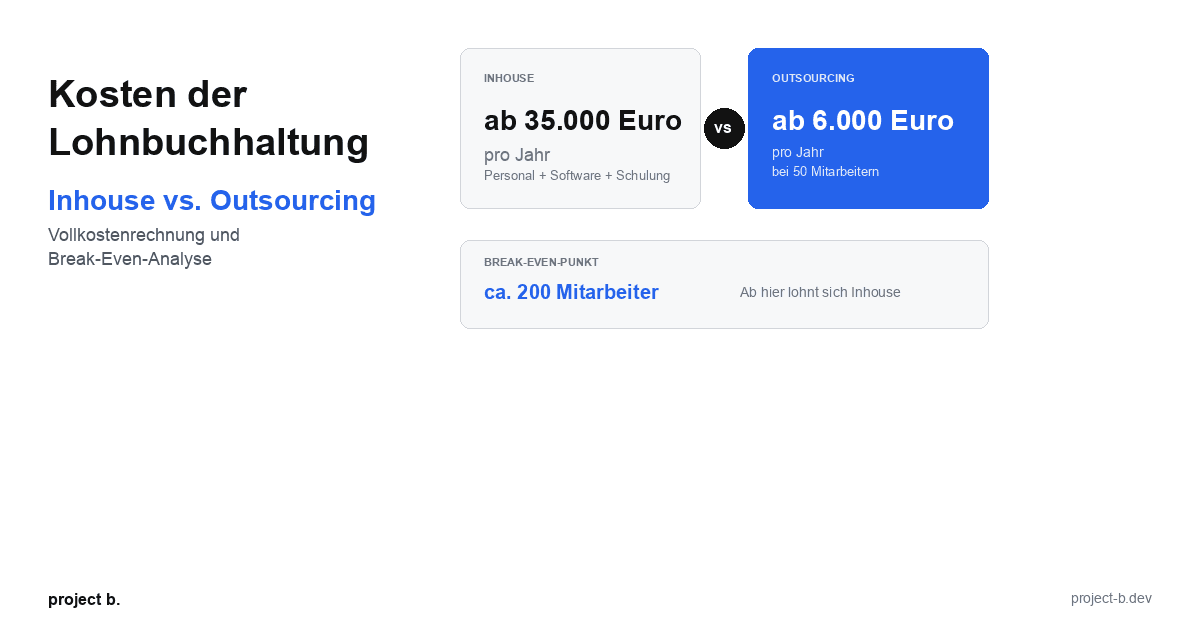
Kosten der Lohnbuchhaltung: Inhouse vs. Outsourcing im Vergleich
Lohnbuchhaltung Kosten: Inhouse ab 35.000 Euro/Jahr vs. Outsourcing ab 6.000 Euro/Jahr. Break-Even-Analyse, ROI-Rechnung und Entscheidungshilfe.
Feb 4, 2026
·
Outsourcing
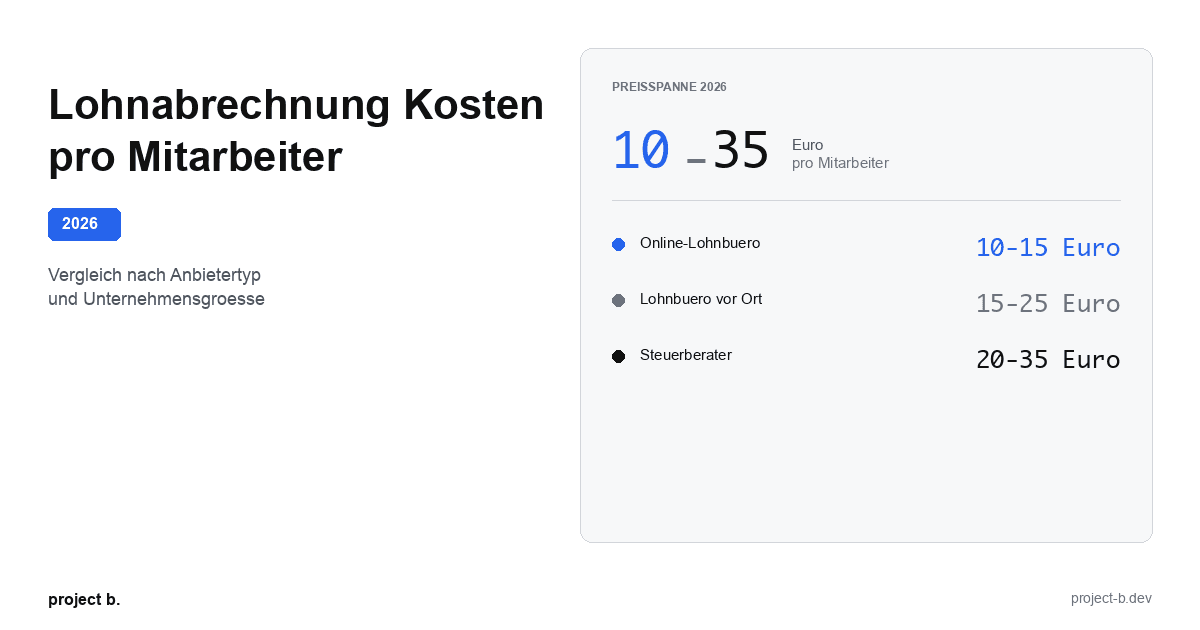
Lohnabrechnung Kosten pro Mitarbeiter: Was Sie 2026 zahlen
Lohnabrechnung Kosten 2026: 10-35 Euro pro Mitarbeiter je nach Anbieter. Vergleich nach Unternehmensgroesse, Branche und versteckte Kosten aufgedeckt.
Feb 2, 2026
·
Outsourcing
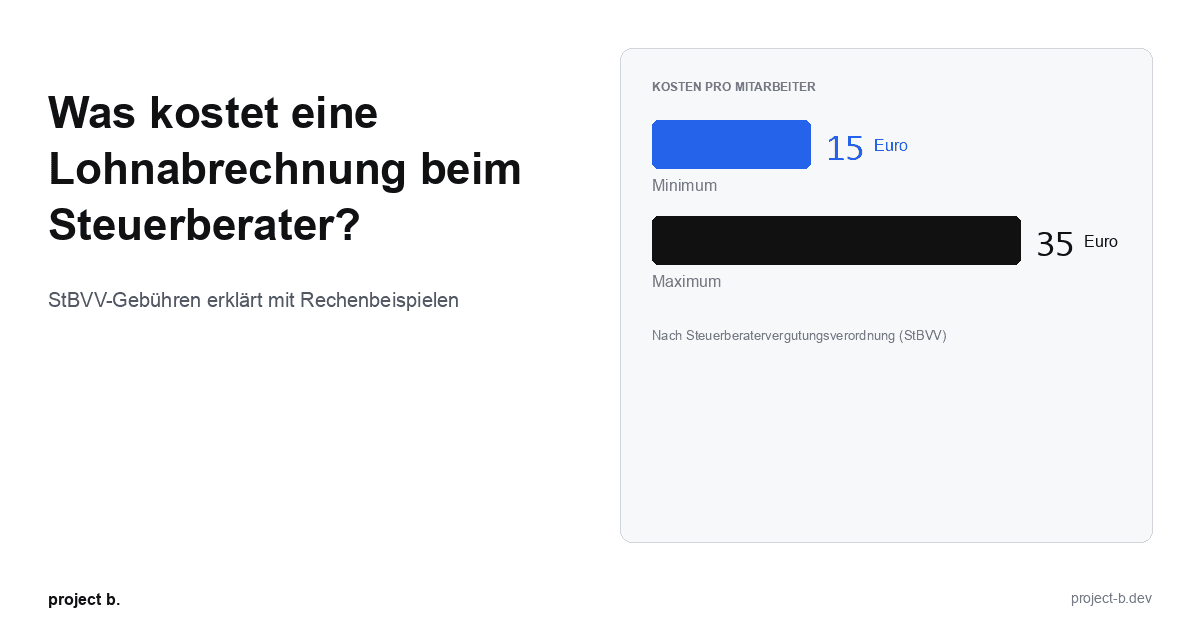
Was kostet eine Lohnabrechnung beim Steuerberater?
Lohnabrechnung beim Steuerberater: Kosten von 15-35 € pro Mitarbeiter. StBVV-Gebühren erklärt, Preisvergleich und Rechenbeispiele für 10, 50, 100 Mitarbeiter.

Jan 30, 2026
·
Outsourcing
Outsource payroll accounting: When is the right time?
Outsourcing payroll: 7 clear signs that now is the right time. Including break-even analysis and DATEV integration check.
Jan 28, 2026
·
Outsourcing
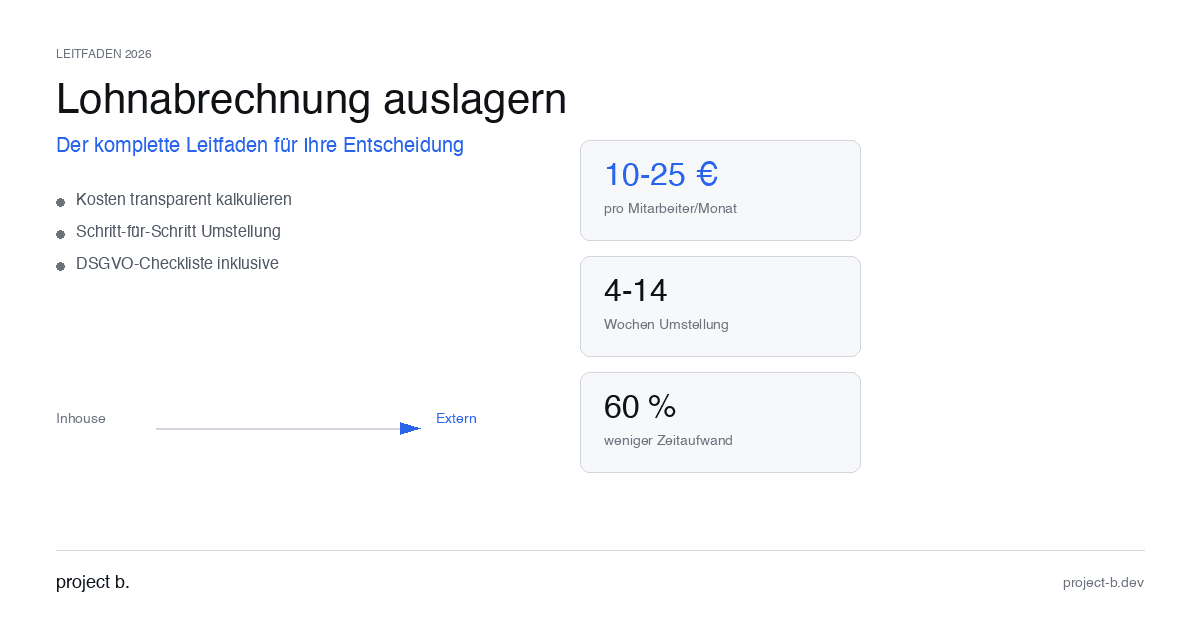
Outsourcing payroll accounting: The complete guide for 2026
Outsource payroll processing 2026: Costs from €10 per employee, step-by-step guide and GDPR checklist. This is how to make the transition without risk.
Jan 26, 2026
·
Outsourcing
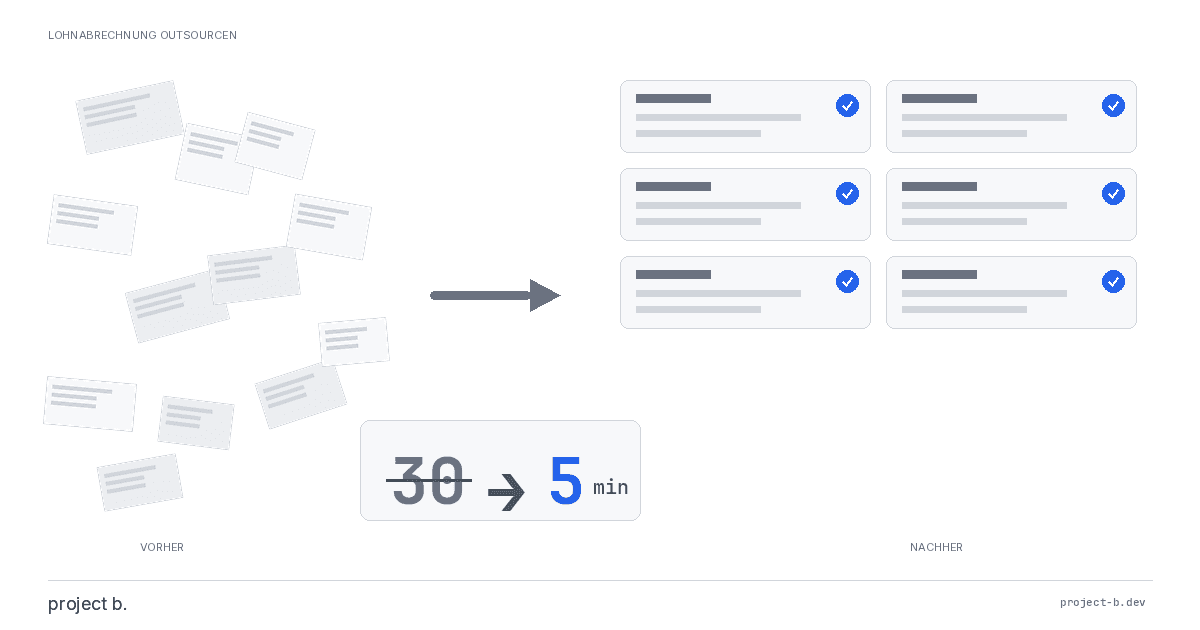
Outsourcing payroll: Costs, benefits, and providers at a glance
Outsource payroll accounting from €10 per employee. Learn about the benefits of outsourcing, its costs, and how to find the right provider.
Jan 22, 2026
·
AI
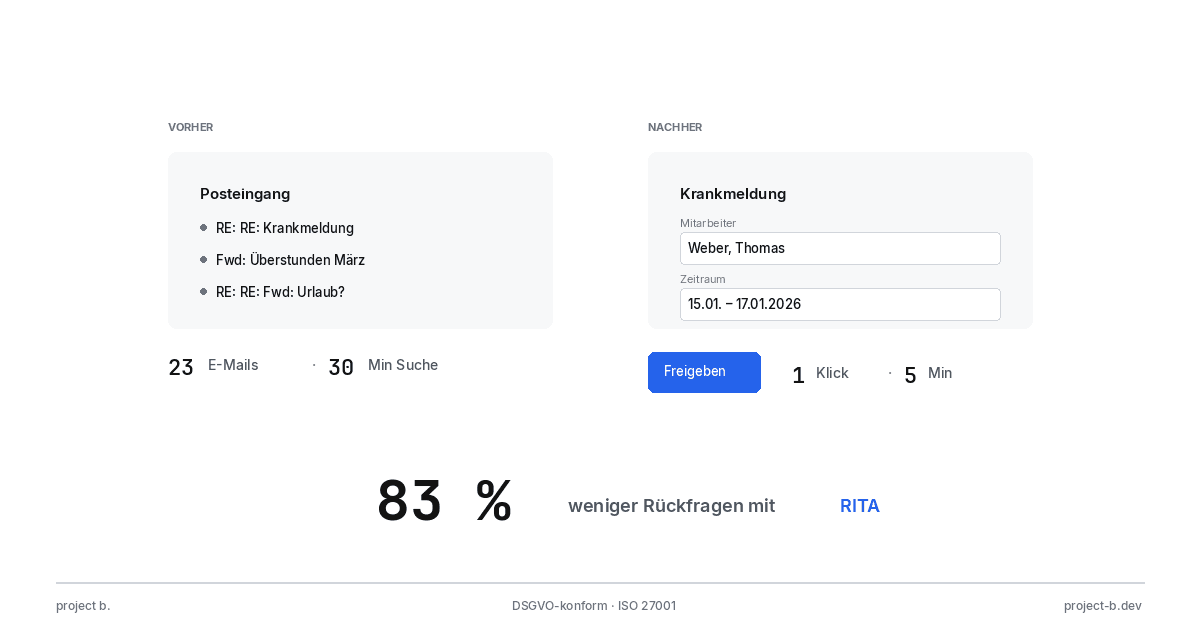
Client portal vs. Email chaos: What modern payroll processing is all about
Payroll statements by email pose a GDPR risk. With the project b. Portal and RITA, you save 1,400 hours/year. This is how secure data exchange works.
Jan 20, 2026
·
AI
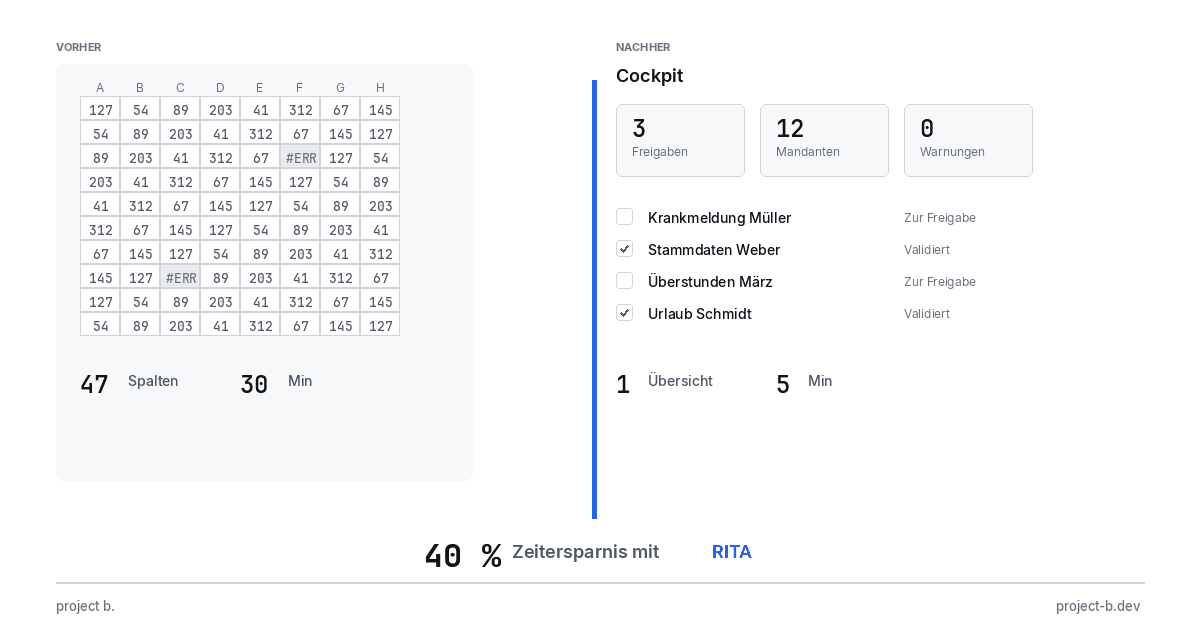
From Excel to the Cockpit: How Payroll Offices Will Make the Leap into Digitalization in 2026
Digital payroll instead of Excel: With RITA and the project b. cockpit, payroll offices save 40% time without switching to DATEV. Practical guide with checklist.
Jan 15, 2026
·
Personal
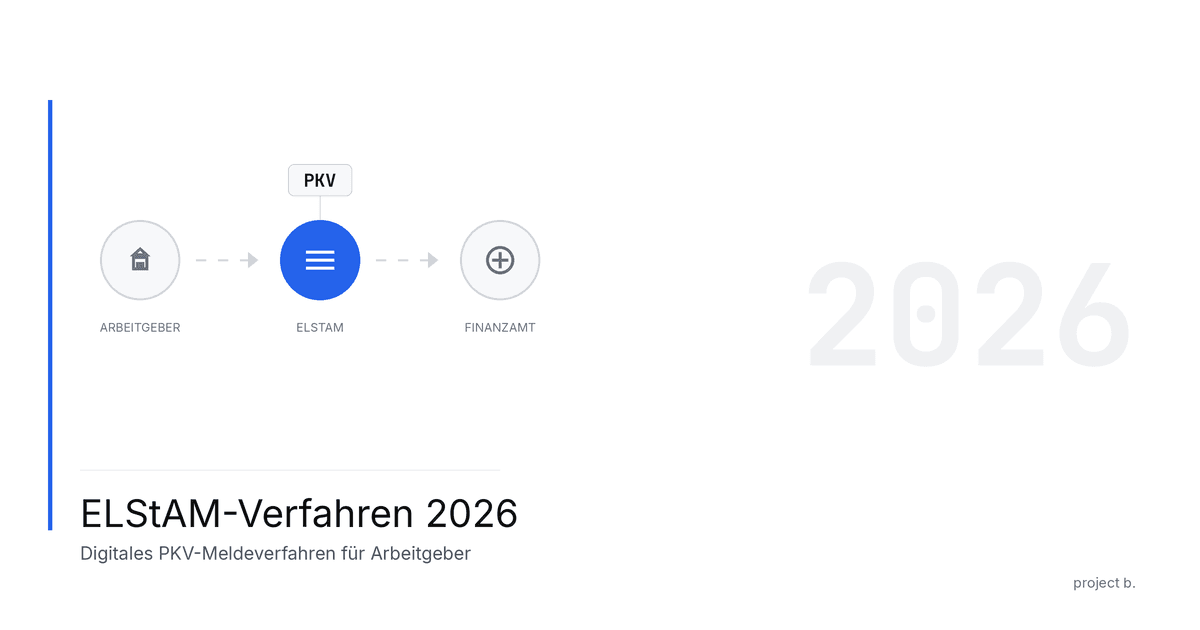
ELStAM Procedure 2026: This is how the new private health insurance notification for employers works
From 2026, employers will report private health insurance contributions digitally via the ELStAM procedure. Find out which systems are affected and how you can prepare now.
Jan 14, 2026
·
AI
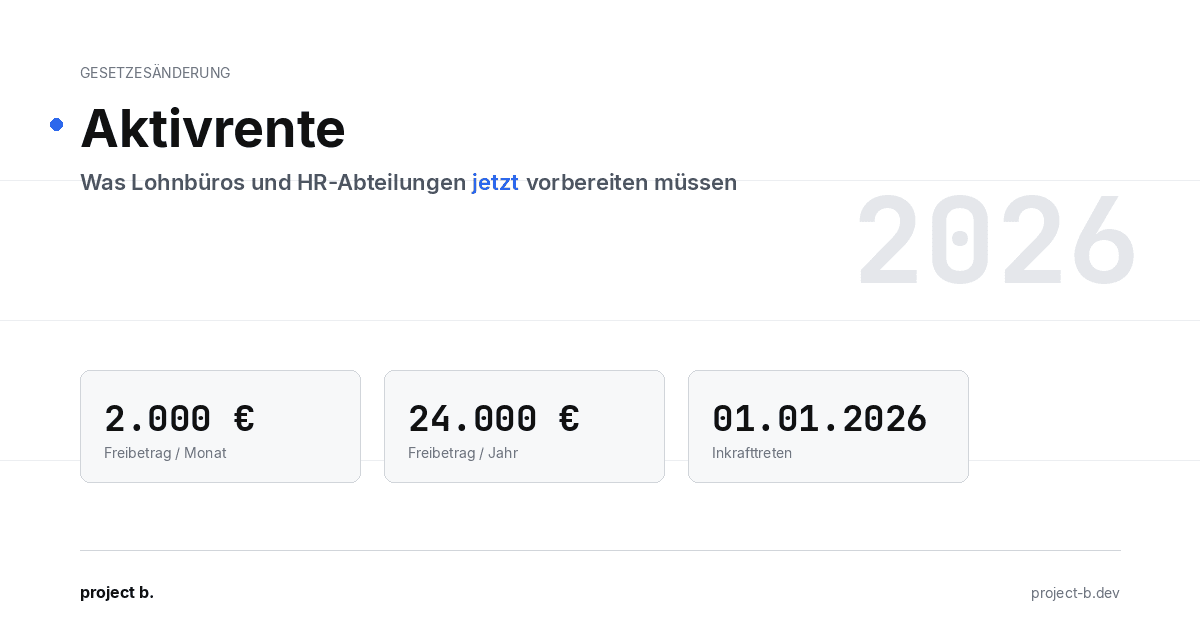
Active pension 2026: What payroll offices and HR departments need to prepare now
Pension from January 2026: Up to €2,000 tax allowance for retirees. Learn about the changes in payroll processes and how AI facilitates implementation.
Jan 13, 2026
·
AI
AI-Powered Payroll Software: How Tax Advisors Will Save Time in 2026
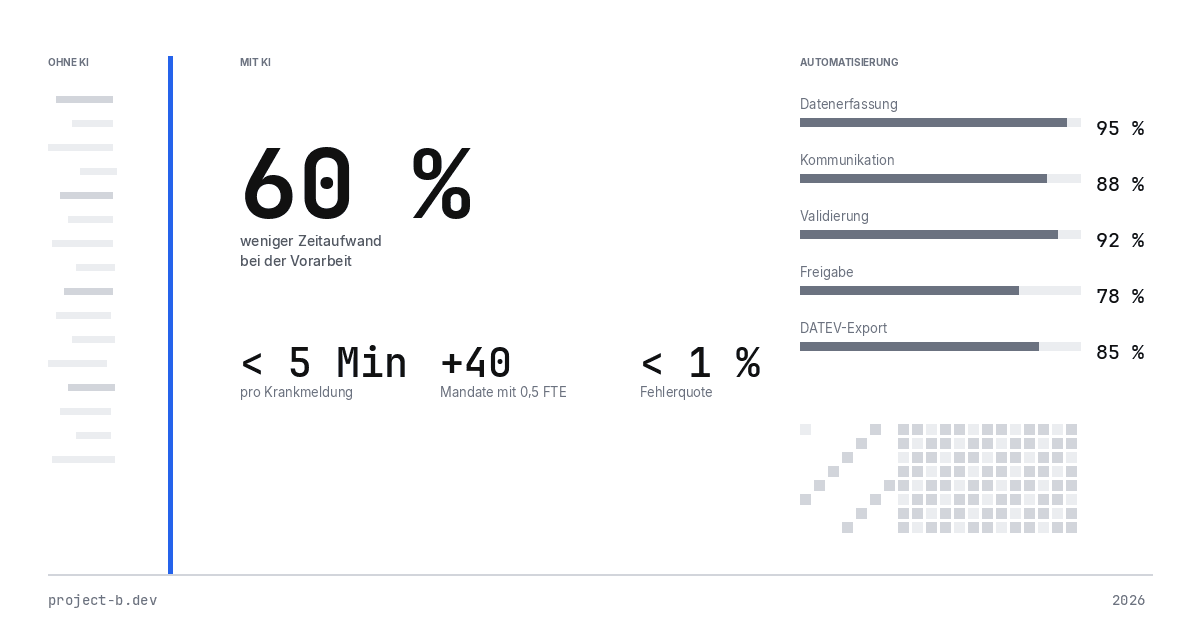
AI payroll accounting for tax consultants: Learn how project b. reduces manual work by 80% with RITA and helps combat the skilled labor shortage.
Jan 8, 2026
·
Payment
Personio vs. project b.: Which tool really fits your payroll?
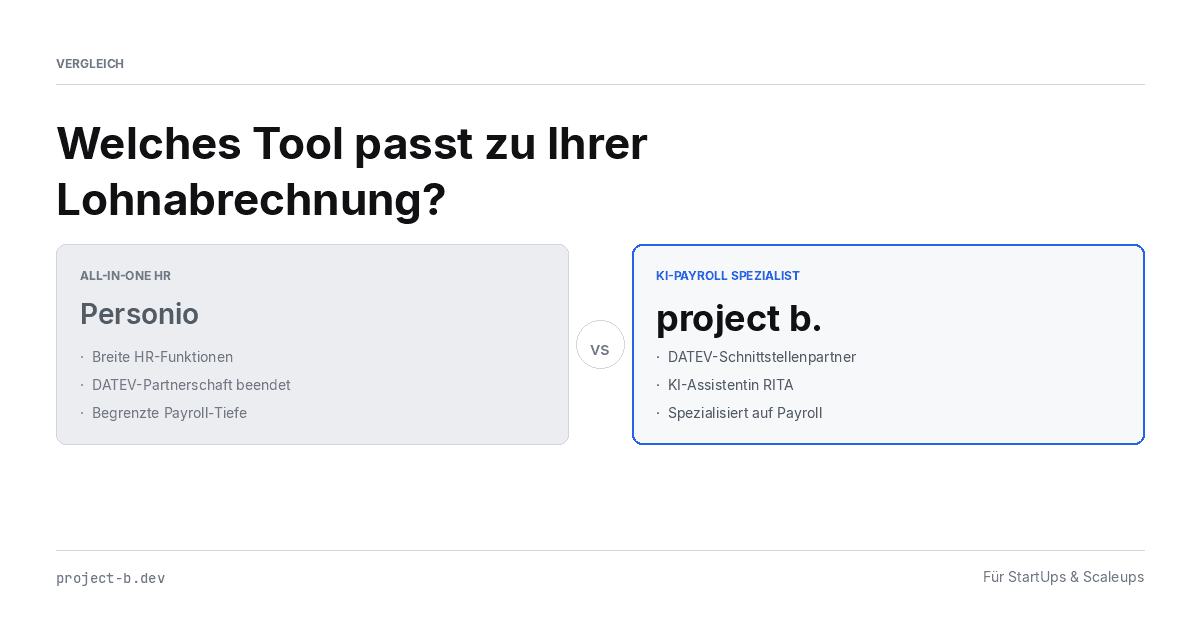
Personio or project b.? Comparison for StartUps & Scaleups: DATEV integration, AI automation, costs. Why specialized payroll tools are gaining traction.
Jan 5, 2026
·
AI
Payroll 2026: All Changes at a Glance (with AI Automation)
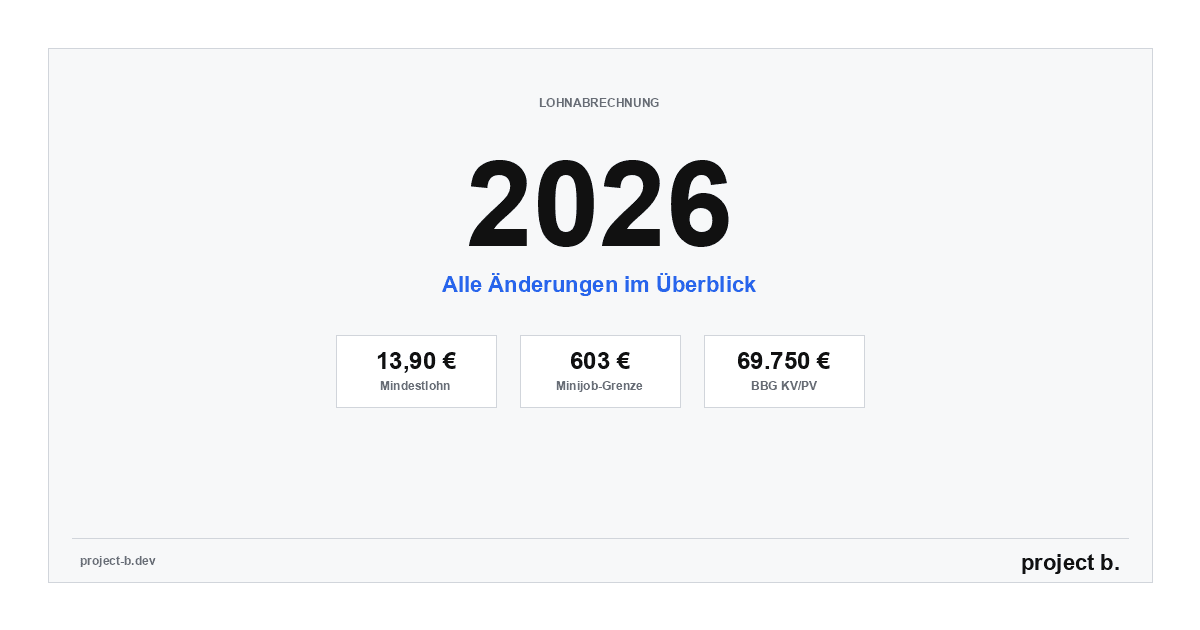
Minimum wage €13.90, mini-job limit €603, new contribution assessment ceilings: An overview of all changes for payroll in 2026. Learn how AI automatically implements these updates.

Dec 31, 2025
·
AI
AI in Payroll: Hype or Help?
AI in payroll processing: What is behind it? A guide for anyone who wants to understand the topic before making a decision.

Dec 29, 2025
·
AI
Payroll without professionals? This is how AI will help in 2026
AI in payroll: 70% less routine work, 0.1% error rate. This is how companies are solving the skilled labor shortage in payroll accounting in 2026.

Dec 26, 2025
·
AI
This is how you use AI in payroll.
Enough with manual data collection: This is how AI supports payroll accounting in case of sickness notifications, master data, and billing - without loss of control.

Dec 22, 2025
·
AI
How an AI layer works in payroll.
Digital payroll, but manual data entry? An AI layer closes the gap between employees, HR, and DATEV & Co.

Dec 17, 2025
·
AI
Payroll accounting with AI: 5 terms that every payroll clerk should know
Payroll processing explained clearly with AI: These 5 key AI terms payroll accountants should know to automate processes, reduce errors, and work more efficiently.

Dec 10, 2025
·
AI
How companies automate payroll accounting with Rita
Learn how Rita from project b. has automated the preliminary payroll accounting. From data collection to DATEV integration: This is how payroll agencies and tax consultants save up to 70% time.

Dec 8, 2025
·
AI
AI Software for Payroll Accounting: The Ultimate Selection Guide
Discover the ultimate selection guide for AI software in payroll. Compare AI tools and find the best payroll software for your business.

Dec 5, 2025
·
AI
10 processes in payroll that AI is already handling today
Discover 10 payroll processes that AI has already automated: from master data validation to compliance monitoring. Save up to 94% time on digital payroll.

Dec 4, 2025
·
Payment
The story of DATEV and how it became an unshakable power in German accounting.
DATEV is more than software – it is the infrastructural foundation of German accounting. The text shows how a cooperative of tax advisors became the central backbone of accounting and payroll through regulatory entanglement, standardization, and decades of trust-building. At the same time, it explains why this very structure is hindering innovation today: closed data architectures, high switching costs, and a system built for stability rather than AI-based automation. A look at how the past and present shape digital progress.
Dec 3, 2025
·
Payment
EU Salary Transparency Directive: How to Prepare Your Payroll for June 2026
Discover the best tools for implementing the EU Pay Transparency Directive – including AI solutions like project b. for fair and data-driven salary analyses.

Dec 2, 2025
·
AI
5 Reasons for Payroll Processing with project b.
Discover 5 reasons why tax consultants and payroll offices digitize their preparatory payroll accounting with project b. AI-assisted data collection, fewer queries, full DATEV integration.
Nov 27, 2025
·
AI
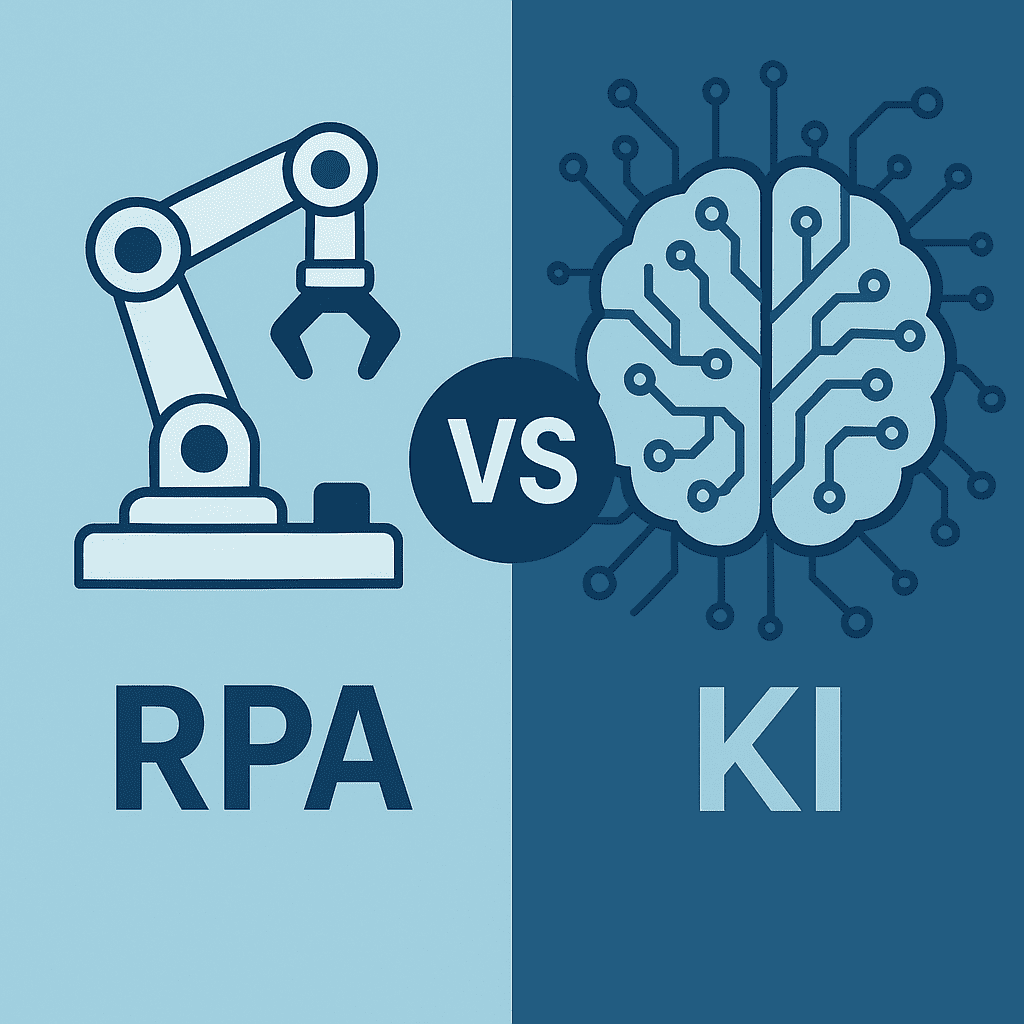
RPA vs. AI in Payroll: The Ultimate Technology Comparison 2026
RPA or AI in payroll accounting? The major comparison for 2026 shows advantages, costs, areas of application, and practical examples for the right automation strategy.

Nov 26, 2025
·
AI
AI in payroll processing: What will be possible in 2026 and what will not?
AI in Payroll 2026: What can artificial intelligence really achieve in payroll? Reality check with maturity assessment, practical examples, and an honest analysis of the limits. For payroll offices, tax advisors, and SMEs.

Nov 25, 2025
·
AI
5 Easy Ways to Automate Payroll in 2026
5 practical ways to automate payroll: from digital time tracking to AI-driven software. With cost-saving examples for medium-sized businesses, tax consultants, and payroll offices.

Nov 24, 2025
·
Payment
Pension flat-rate reform 2026: What employers need to adjust in their payroll software now
Major income tax reform from 2026: The retirement allowance will be recalculated. Learn how this affects net wages, payroll software, and employers.
Nov 20, 2025
·
Payment
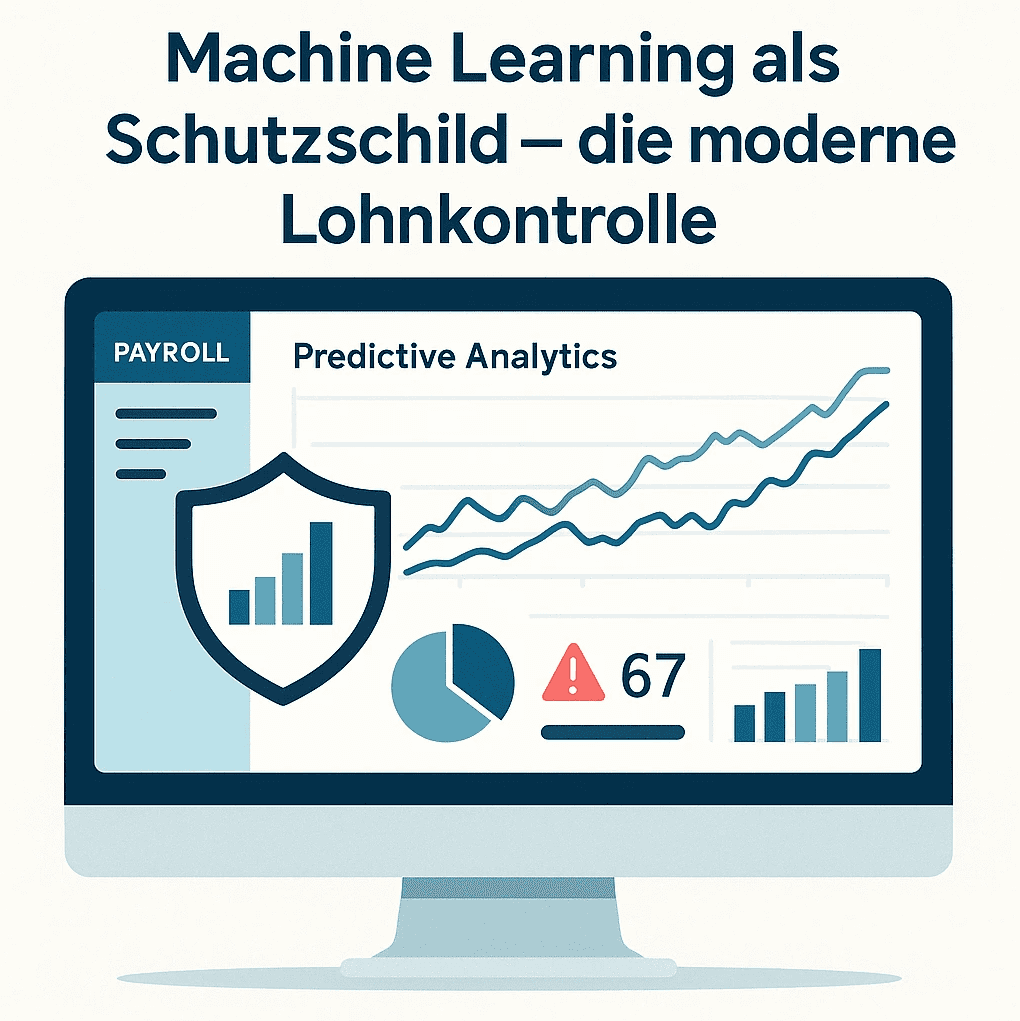
Predictive Analytics in Payroll: How Tax Advisors Avoid Costly Mistakes
Discover how predictive analytics reduces error rates in payroll, saves costs, and transforms your payroll from reactive to proactive.
Nov 18, 2025
·
Payment
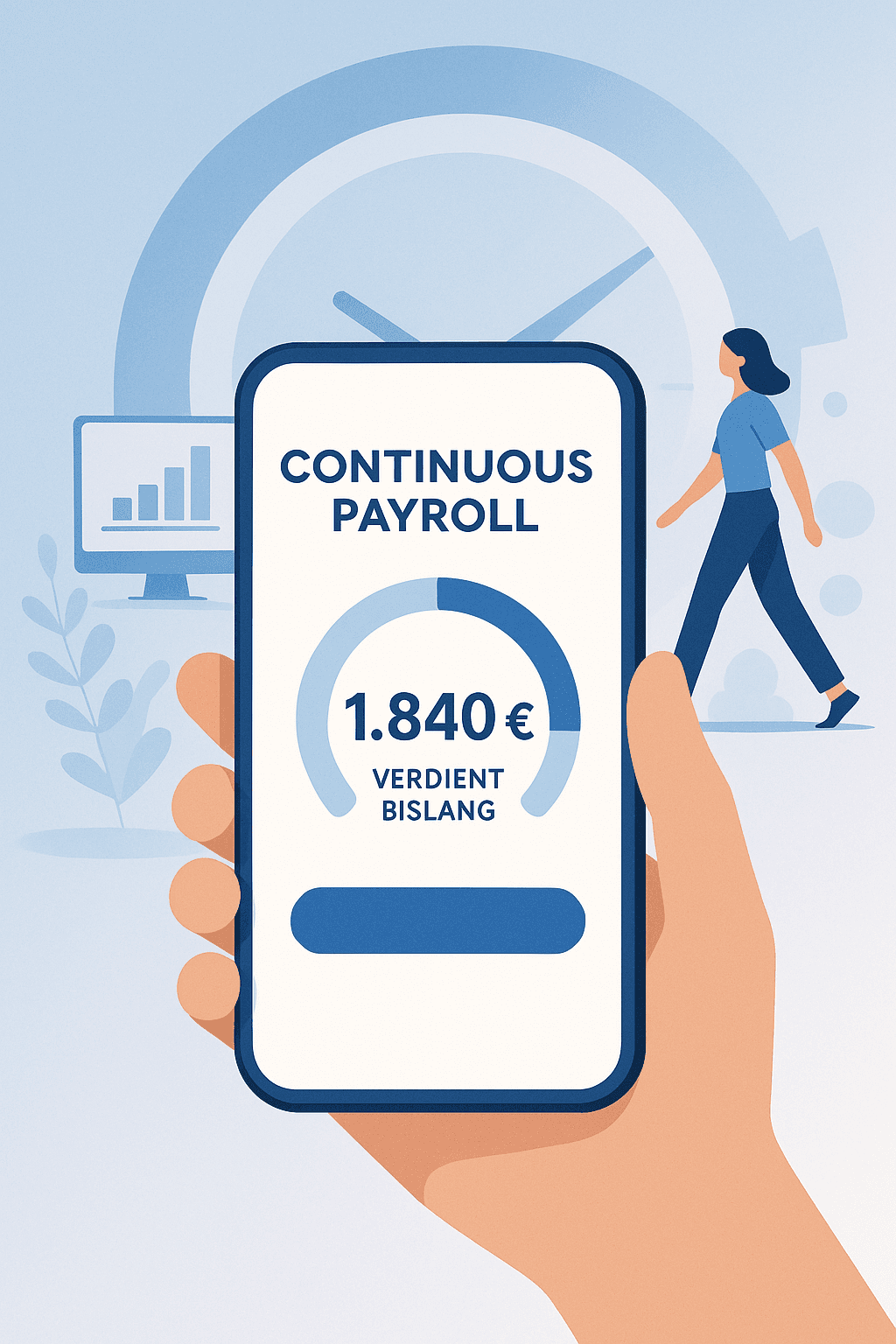
Continuous Payroll 2026: How Real-Time Payroll Processing is Replacing Monthly Payroll Statements
Continuous Payroll revolutionizes payroll processing: real-time salary data, on-demand pay, and fewer errors. This is how SMEs and HR teams benefit in 2026.

Nov 13, 2025
·
Personal
AI in Payroll Accounting: Practical Guide for Payroll Offices and Tax Advisors 2026
AI in Payroll Accounting 2026: Practical Guide for Payroll Offices with Software Comparison (project b., DATEV, Lexware), ROI Calculation and Step-by-Step Instructions.