Continuous Payroll 2026: How Real-Time Payroll Processing is Replacing Monthly Payroll Statements
Nov 18, 2025
Continuous Payroll revolutionizes payroll processing: real-time salary data, on-demand pay, and fewer errors. This is how SMEs and HR teams benefit in 2026.
Ready for payroll that finally takes the pressure off?
Leave your contact details - we will get back to you shortly.
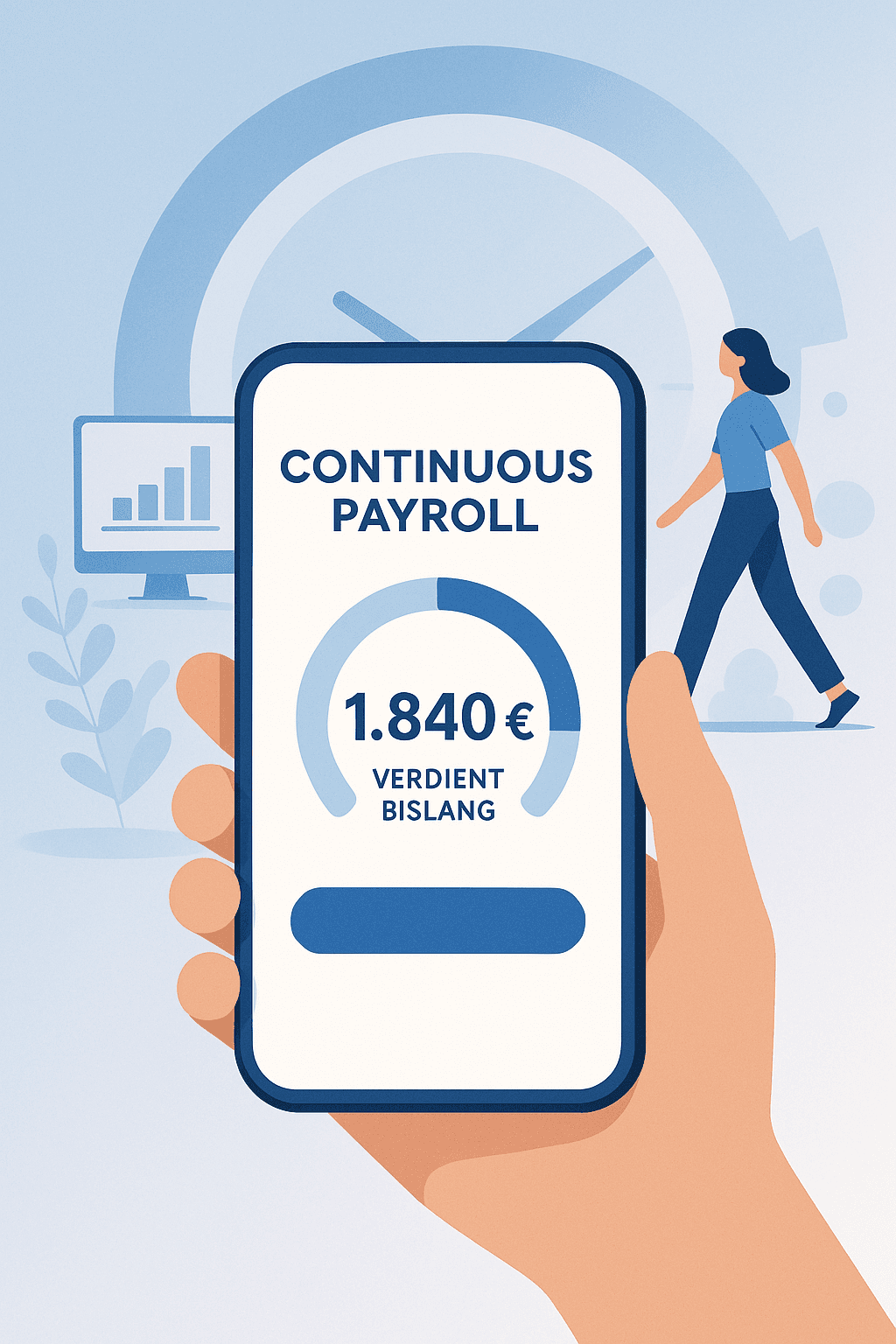
Continuous Payroll 2026: This is how continuous payroll works
The payroll is facing a paradigm shift. A trend from the USA is sweeping over to Germany, revolutionizing the way we conduct payroll: "Continuous Payroll", or in German: continuous payroll. While traditional payroll processes occur monthly in compressed time frames, Continuous Payroll allows for the ongoing processing of payroll data – in real-time, automated, and resistant to errors.
Practical Example: A Tuesday in March 2026
Lisa has been working as a marketing manager for three years. Her car unexpectedly breaks down, and the repair costs 800 euros. No drama anymore: She opens her employer's app, sees her already earned salary (1,840 euros out of 3,200 euros gross) and withdraws 500 euros. Two hours later, the money is in her account. No overdraft, no awkward question to the boss for an advance.
What sounds like science fiction is already reality in the USA. Services like DailyPay or Earnin allow millions of employees access to already earned wages. In Germany, this development is still in its infancy, but 2026 could be the year it changes.
The monthly payroll, a standard in German companies for decades, shows first cracks. According to a survey by Personio, 45 percent of payroll managers spend at least three full working days per month preparing payroll. Nearly two-thirds regularly struggle with errors or missed deadlines. At the same time, younger employees expect flexible, digital solutions that fit their lifestyles.
What is Continuous Payroll?
The term Continuous Payroll describes a payroll system that is no longer tied to fixed monthly cycles. Instead, salary data is continuously updated and validated, allowing employees to access already earned wage components as needed.
Three concepts are often confused:
The technical infrastructure that enables real-time payroll. HR systems and payroll software are closely integrated, changes (new employees, salary adjustments, overtime) are processed immediately.Continuous Payroll:
On-Demand Pay / Earned Wage Access: The employee service that builds on Continuous Payroll. Employees can access already earned wages at any time.
Real-Time Payroll Preview: The ability for payroll managers to make changes and see their impact on pay slips immediately before finalizing the payroll.
The technological basis is the integration between time tracking, HR, and payroll systems. While traditional payroll relies on monthly data uploads (sending CSV files to DATEV, waiting for processing), modern systems synchronize via API in real-time.
Germany is lagging behind: Where does the market stand in 2026?
In April 2023, Personio introduced an integrated real-time solution to the market as the first German provider. The Munich-based HR software company promises time savings of up to 85 percent for clients with 10 to 5,000 employees through automated data reconciliation between personnel and payroll data.
The German market is dominated by DATEV, which processes 14 million payrolls for SMEs monthly. The cooperatively organized software platform is deeply embedded in the structures of German tax advisory firms, which simultaneously encourages and hinders innovation. While DATEV is working on modern interfaces (DATEV LODAS, DATEV payroll & wages), the ITSG certification imposes strict compliance requirements.
Why is Germany lagging behind? Three factors play a role:
1. Legal complexity: German tax and social security law is among the most complicated in the world. Every payment triggers reporting obligations that are hardly manageable with weekly or even daily payroll.
2. Dependency on tax advisors: Many SMEs outsource payroll entirely to tax advisors. They typically work with DATEV and have little incentive to change processes that are functioning.
3. Conservative corporate culture: Salary comes on the 1st of the month; that has always been the case. Many HR professionals see no urgency to change.
However, the tide is turning. Workday, SAP SuccessFactors and other international players are pushing into the market with cloud solutions. Startups like Moss, Candis, or Zeitgold demonstrate that financial workflows can be radically simplified. 2026 will be a turning point as three developments converge: better API standards, cloud migration of many companies, and a new generation of employees expecting digital self-service solutions.
Technical Implementation: This is how Continuous Payroll works
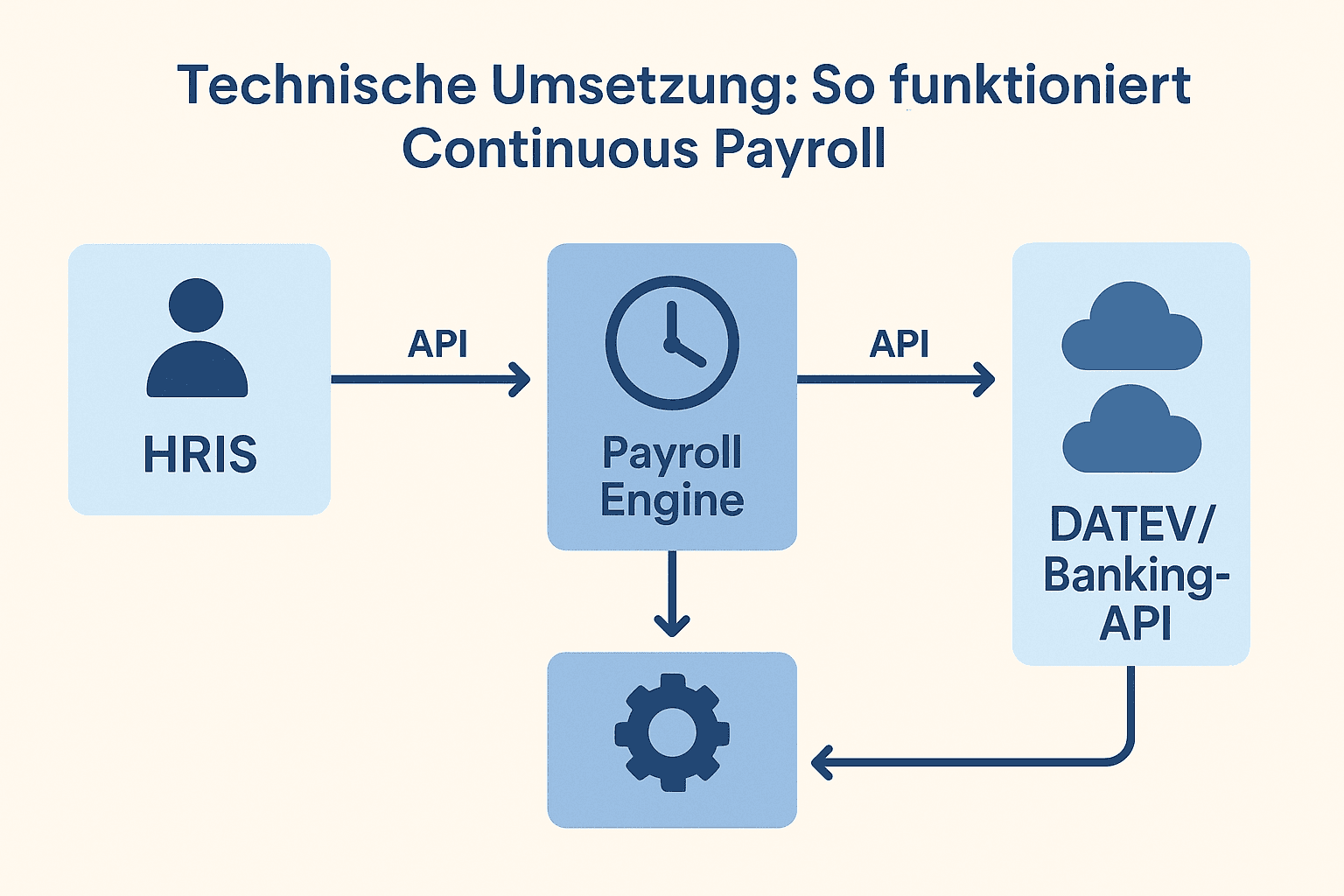
Implementing Continuous Payroll requires close integration of several systems. The typical tech stack looks like this:
HRIS (Human Resources Information System): Master data management (employee data, contracts, bank details). Examples: Personio, Factorial, HRworks.
Time tracking: Tracking working hours, overtime, vacation, illness. Ideally via an app with GPS stamps for field service.
Payroll engine: The core of the calculation. Must process tax classes, exemptions, social security contributions, company savings plans, etc.
Interface to Most tax advisors expect data in DATEV-compatible formats. Modern solutions offer bidirectional sync.DATEV:
Banking API: For on-demand payments, the system must be able to initiate transfers (SEPA direct debits, real-time transfers).
The typical workflow
Let's take an example: Master painter Schmidt employs 15 journeymen. Until now, his accountant had to export Excel sheets from the time tracking app every month, import them into DATEV, correct errors manually, and upload the completed payroll back to the HR system. With Continuous Payroll it works like this:
1. Journeyman Müller clocks in via the app in the morning: The working time flows into the HR system in real time.
2. The payroll engine calculates continuously: After just two weeks, Müller sees in the app: "Earned so far: 1,650 € gross, available: 1,180 € net."
3. Errors are immediately visible: If the accountant forgets to enter Müller's tax exemption, the system will display a warning.
4. At the end of the month: One click finalizes the payroll. The data is automatically sent to the tax advisor, and the pay slips are sent via email.
5. Optional: On-demand access: Müller can request a portion of his already earned salary at any time.
The ITSG certification that payroll software in Germany must demonstrate ensures that all calculations are tamper-proof and secure. Every change is logged, and audit logs are maintained comprehensively.
Legal and tax hurdles in Germany
Continuous Payroll sounds technically simple, but often fails in practice due to German tax and social security law. The challenges in detail:
§ 108 GewO: The obligation to issue payslips
Paragraph 108 of the Trade Regulation Act obliges employers to provide a payslip in text form for each salary payment. This means: If salaries are paid out more frequently, more payslips must be created accordingly. Purely digital, this is not a problem, but it deters conservative employers.
Wage tax advance notification
Companies must report withheld wage tax to the tax office monthly (quarterly for smaller businesses). Weekly payouts would create additional administrative effort. Modern payroll systems handle this through automated preliminary notifications, but not all tax offices are prepared for it.
A solution could be to continue reconciling only monthly, but to allow employees to receive partial payments as advances, which would be offset at the end of the month. Legally, this is unproblematic, but it requires clean accounting.
Social security and reporting obligations
Contributions to health, long-term care, pension, and unemployment insurance are due monthly. Here too: More frequent payouts change nothing in the calculation base but increase the documentation effort. The data interface to the German pension insurance (DEÜV notifications) is not designed for real-time.
EU regulation for Earned Wage Access
In the USA, Earned Wage Access is currently being heavily regulated. The CFPB (Consumer Financial Protection Bureau) is analyzing whether these services should be classified as credit products, which would bring licensing obligations. In Europe, there is no uniform regulation yet in 2026. Providers operate in a gray area between salary advances and financial services.
Germany could become a pioneer here: A clear legal framework that protects employees (no hidden fees, no indebtedness) while facilitating innovation would invigorate the market.
Benefits for employees: More than just financial flexibility
The most obvious advantage is clear: Those who desperately need money on the 15th of the month no longer have to resort to an overdraft (average interest of 10 percent) or turn to friends.
However, the impact goes deeper:
Reduction of everyday stress: Studies from the USA show that employees with access to Earned Wage Access suffer from financial stress less frequently. This has a positive effect on productivity and health.
Avoidance of indebtedness: Those who have access to their own money are less likely to take out costly short-term loans. In the USA, payday lending (loans with 400+ percent annual interest) is a billion-dollar market; in Germany, overdrafts are the problem.
Transparency: Continuous Payroll means that employees can see at any time how much they have earned. This promotes understanding of deductions and taxes.
Generational change: Gen Z and younger millennials expect the same digital experience from their employer as they do from Netflix or Spotify. An app where they can request vacation, view overtime, and manage their salary is no longer a nice-to-have.
Critics warn: Those who have constant access to their salary lose their sense of budgeting. In fact, data from DailyPay shows that only 15-20 percent of users regularly take partial payouts. Most use the feature as a safety net, not as a standard.
Benefits for employers: Efficiency and employer branding
The Personio study comes to a clear conclusion: Companies that rely on integrated payroll systems save up to 85 percent of time. Specifically, this means:
Less manual work: No double data maintenance in Excel and DATEV. No copy-paste errors.
Automatic validation: Missing tax IDs, expired contracts, unresolved overtime are displayed immediately.
Faster closings: Instead of three days for monthly payroll, only a few hours are needed.
But softer factors also play a role. In a job market where there is a shortage of skilled workers, employer branding becomes a matter of survival. Those who can tell potential applicants: "With us, you can view your salary at any time and access it flexibly" stand out.
Especially in industries with high turnover (gastronomy, retail, care), on-demand pay can be a game changer. A study by Kronos shows that 78 percent of employees in these sectors see financial flexibility as an important benefit.
Challenges and risks: What can go wrong?
Continuous Payroll is not a cure-all. Companies should be aware of the risks:
Cash flow management
If employees can request partial payouts at any time, cash flow becomes less predictable. For large companies with stable liquidity reserves, this is not a problem, but for SMEs with tight margins, it could be critical. Solutions like "pooling" (third-party providers finance the payouts in advance and settle at the end of the month) help but come with fees.
Tax complexity
The more frequently payments are made, the more complex accounting becomes. While modern systems automate much, special cases (company cars, company savings plans, bonuses) can cause issues. Companies need either in-house expertise or a tax advisor who is proficient in modern software.
Data protection and GDPR
Payroll data are among the most sensitive information. Cloud solutions must be GDPR-compliant (servers in the EU, encryption, clear data deletion policies). The integration of many systems (HR, time tracking, banking) increases the attack surface for data leaks.
Vendor lock-in
Relying on an all-in-one provider creates dependency. What happens if Personio doubles its prices? Or if the provider goes bankrupt? An exit strategy (exporting all data in standardized formats) should be considered from the start.
Outlook 2026: How will the market evolve?
Three scenarios are conceivable:
Careful adoption (likely): By the end of 2026, 10-15 percent of German SMEs with more than 50 employees will use integrated payroll systems. On-demand pay will remain a niche product for progressive employers.
Rapid breakthrough (optimistic): A major player (SAP, Workday) or a regulatory change (e.g., legal promotion of digital payroll) accelerates adoption. More than 30 percent of companies will transition.
Stagnation (pessimistic): The legal hurdles remain too high, and DATEV successfully defends its market position. Continuous Payroll remains a buzzword without real penetration.
Scenario 1 is realistic. The German market needs time for change, but the direction is right. Exciting will be the integration with other financial services: Neobanks like N26 or Trade Republic could integrate payroll features into their apps. Imagine: Your salary flows directly into an ETF savings plan, and overtime automatically lands in a savings account.
AI-supported Predictive Payroll
The next step after Continuous Payroll is Predictive Payroll: Machine learning algorithms detect patterns (Müller averages 12 hours of overtime per month) and alert when anomalies occur (suddenly 40 hours of overtime - error in time tracking?). Systems could also predict how much budget a company will need for wage costs in the next quarter, including vacation reserves and bonuses.
Conclusion: When does Continuous Payroll make sense?
Continuous Payroll is not an end in itself. The question is not "When do we switch?", but "Does this solve our problems?".
Continuous Payroll makes sense when:
Your payroll processes are prone to errors: Manual Excel work dominates, corrections are standard.
You have many part-time workers or flexible working hours: Gastronomy, retail, and care particularly benefit.
Employee retention is an issue: In competitive labor markets, financial flexibility can make a difference.
You want to digitize anyway: If you're introducing HR software, you can think about payroll at the same time.
Continuous Payroll does NOT make sense when:
Your payroll is already running smoothly: If it isn't broken, don't fix it.
Your tax advisor is not on board: Without API integration with the firm, new efforts arise.
You have fewer than 10 employees: The ROI is questionable, classic solutions work well enough.
The pragmatic approach for 2026: Test hybrid models. Maintain the monthly reconciliation, but offer selected employees (e.g., in the field) on-demand access. Evaluate after six months: Is it being used? Is there added value?
Continuous Payroll will come, but not overnight. Companies that are setting the course now, building their systems modularly, and investing in API interfaces will be prepared when the market shifts.
Sources
Personio (2023): Press release 'Personio Payroll - first real-time solution for payroll'. personio.de
HR Performance Online (2025): 'Real-time solution for payroll'. hrperformance-online.de
Paymira (2025): 'Payroll Trends 2025: On-Demand Payroll'. paymira.com/blog
Remote.com (2025): 'On-demand pay: What is it, how does it work, and pros and cons'. remote.com/blog
Workday (2026): 'Payroll Software: The intelligent payroll'. workday.com/de-de
What is Continuous Payroll?
Continuous payroll refers to a payroll system that is no longer tied to fixed monthly cycles. Instead, salary data is continuously updated and validated. Employees can access their earned wages as needed.
What advantages does Continuous Payroll offer?
Continuous payroll processing reduces errors by up to 70 percent and saves time by eliminating the monthly end sprint. Employees benefit from better financial flexibility. Companies gain better planning possibilities through real-time data.
Is continuous payroll legally permissible in Germany?
Yes, as long as all legal reporting and accounting obligations are fulfilled. The monthly payroll tax declaration and social insurance notifications remain mandatory. Continuous data retrieval is technically possible and legally compliant.
Finn R.
Further articles
Apr 16, 2026
·
Payment
Steuerberater Digitalisierung: Wie neue Kanzleien Lohnabrechnung von Anfang an richtig aufsetzen
No need to spend time changing colors and styles manually. Our component & layouts are styled out of the box
Apr 14, 2026
·
AI
DATEV Alternative Lohnabrechnung: Was Kanzleien 2026 wirklich brauchen
DATEV Alternative für die Lohnabrechnung gesucht? Warum ein Vorsystem sinnvoller ist als ein kompletter Wechsel. Mit Kostenvergleich und Praxisbeispiel.
Apr 9, 2026
·
AI
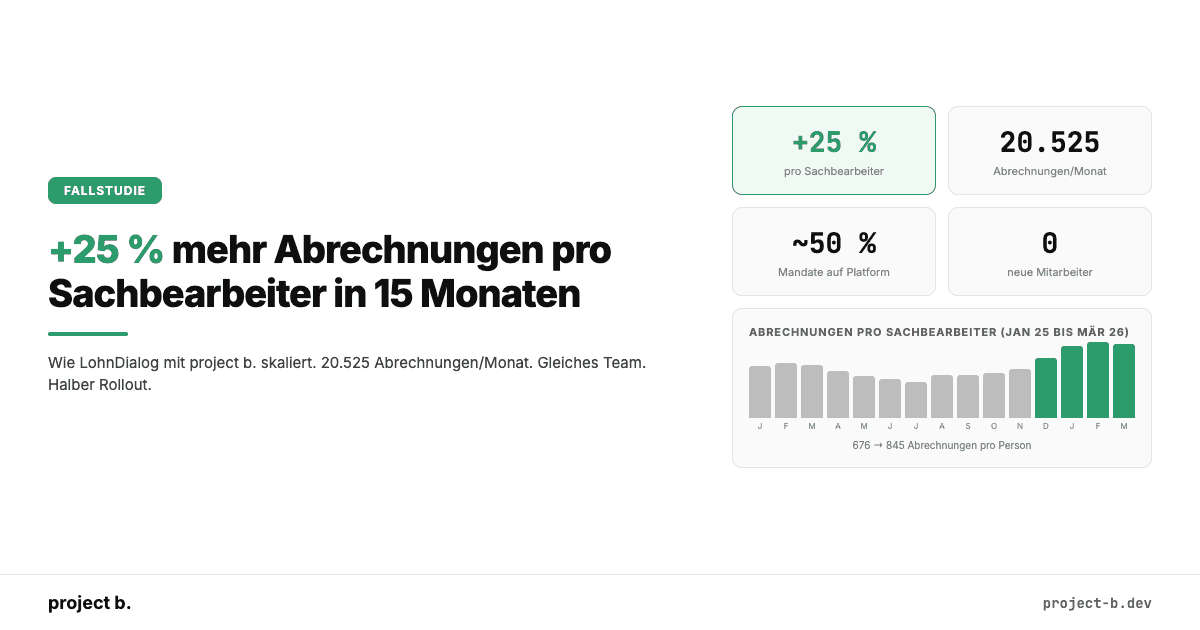
+25 % mehr Abrechnungen pro Sachbearbeiter: Wie LohnDialog mit project b. skaliert
LohnDialog verarbeitet 20.525 Abrechnungen pro Monat mit 24 Sachbearbeitern. Kein neues Personal. +25 % Effizienz nach 15 Monaten. Die Zahlen im Detail.
Apr 7, 2026
·
AI
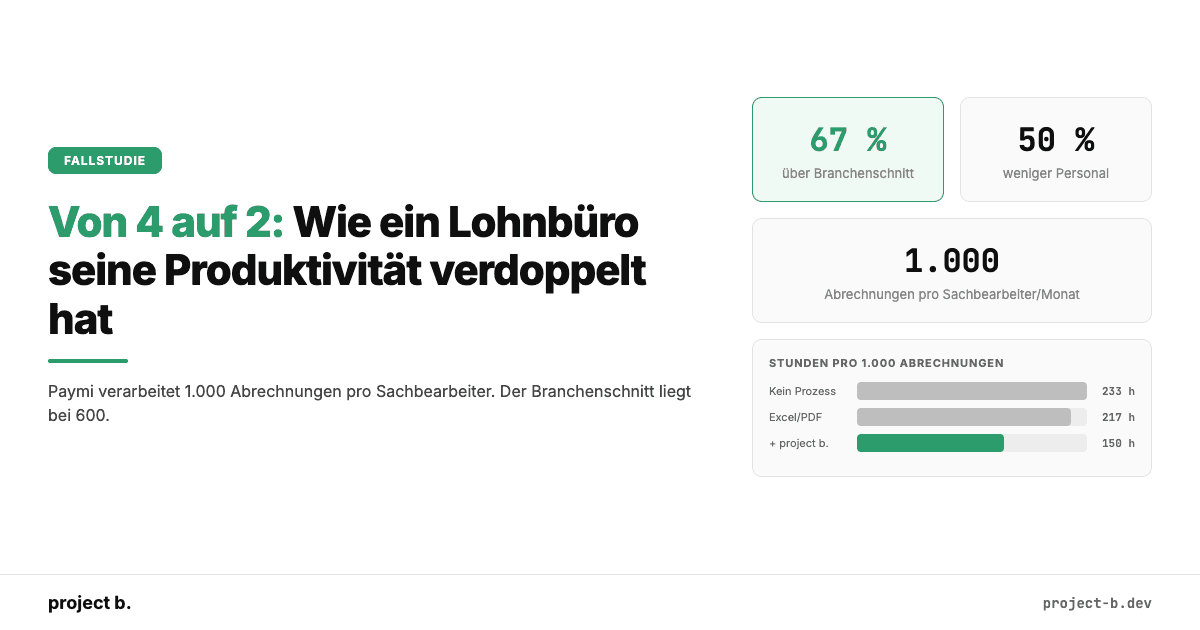
Von 4 auf 2: Wie ein Lohnbüro seine Produktivität verdoppelt hat
Wie der PSP Paymi mit project b. von 4 auf 2 FTEs reduzierte und 1.000 Abrechnungen pro Person verarbeitet. 67 % über Branchenschnitt. Mit Zahlen.
Apr 1, 2026
·
Payment
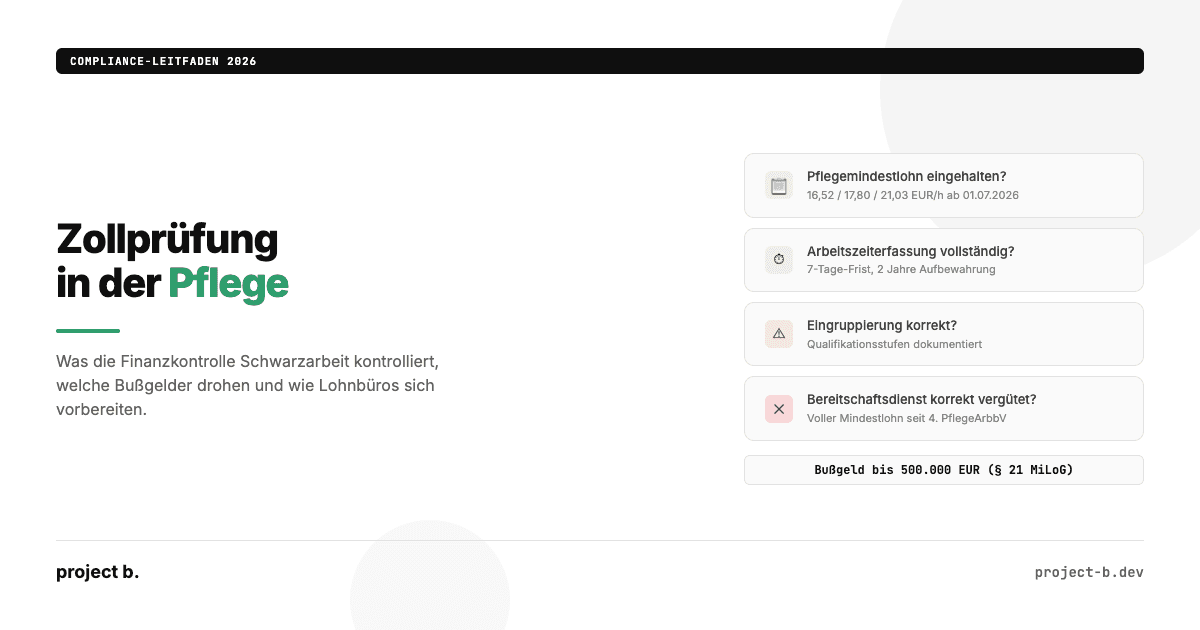
Zollprüfung Pflege 2026: Was die FKS kontrolliert und wie Sie sich vorbereiten
Was die Finanzkontrolle Schwarzarbeit in Pflegeeinrichtungen prüft: Mindestlohn, Arbeitszeiterfassung, Dokumentation. Bußgelder bis 500.000 EUR und wie Sie sich schützen.
Mar 30, 2026
·
Payment
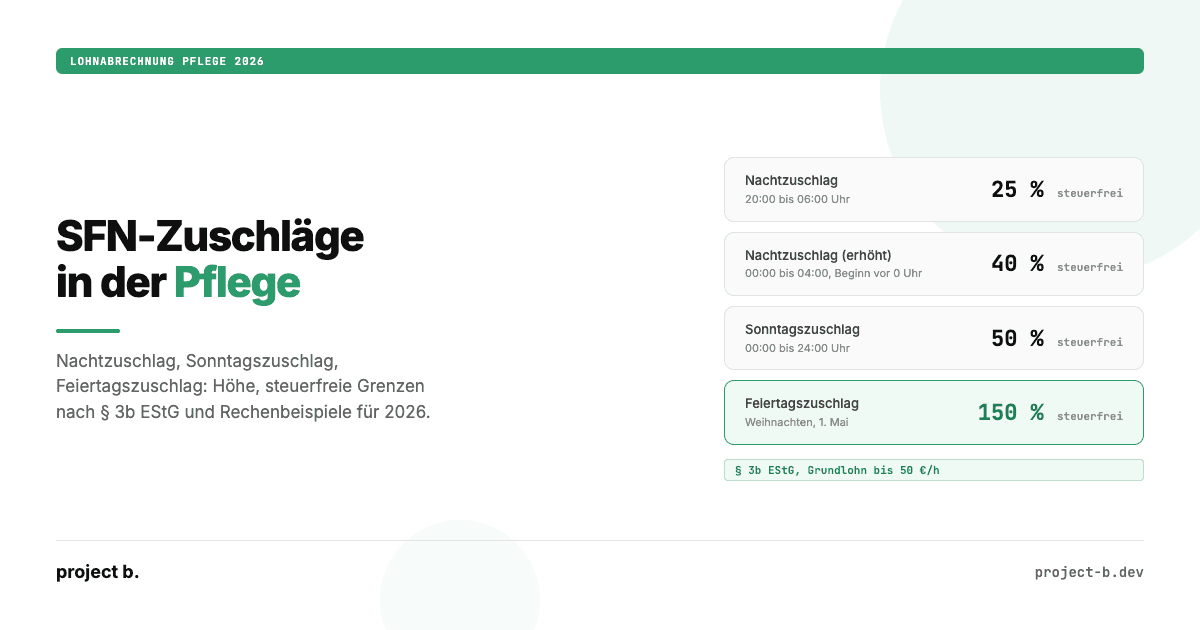
Zuschläge Pflege 2026: Nacht-, Sonntags- und Feiertagszuschläge korrekt abrechnen
Nachtzuschlag, Sonntagszuschlag, Feiertagszuschlag in der Pflege 2026: Höhe, steuerfreie Grenzen nach § 3b EStG, Rechenbeispiele und typische Abrechnungsfehler.
Mar 27, 2026
·
Payment
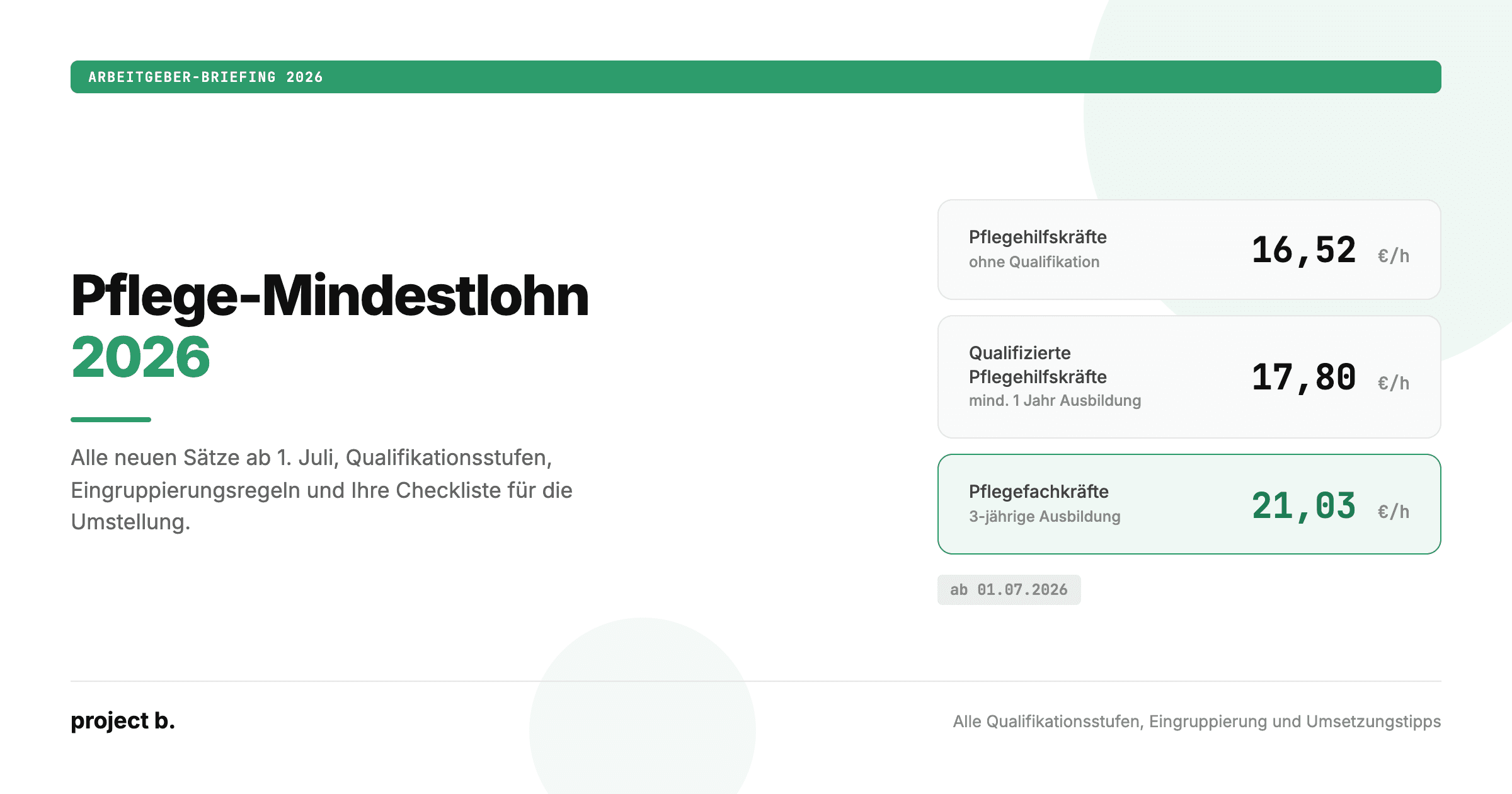
Pflegemindestlohn 2026: Alle neuen Sätze, Tabellen und Eingruppierungsregeln
Pflegemindestlohn 2026 ab 1. Juli: 16,52 bis 21,03 Euro pro Stunde. Alle drei Qualifikationsstufen, Eingruppierungsregeln und was Arbeitgeber jetzt umsetzen müssen.
Mar 20, 2026
·
Outsourcing
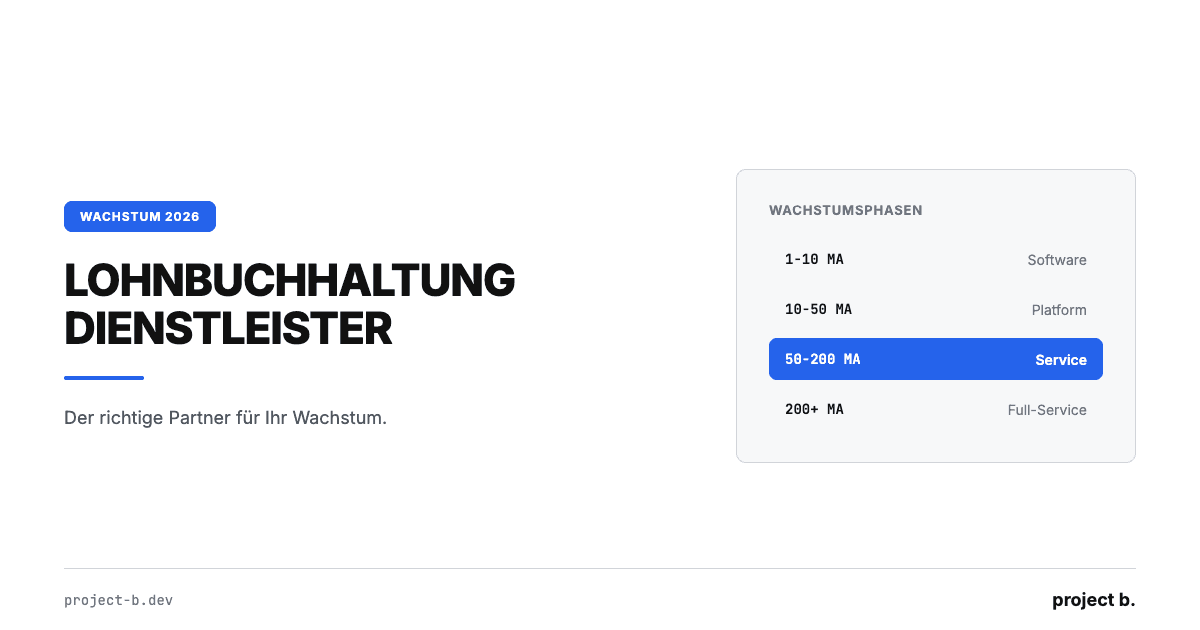
Lohnbuchhaltung Dienstleister: Der richtige Partner für Ihr Wachstum
Lohnbuchhaltung Dienstleister finden, der mit Ihrem Unternehmen wächst. Kosten, Phasenmodell und 5 Kriterien für skalierbare Lohnabrechnung ab 4 €/MA.
Mar 18, 2026
·
Outsourcing
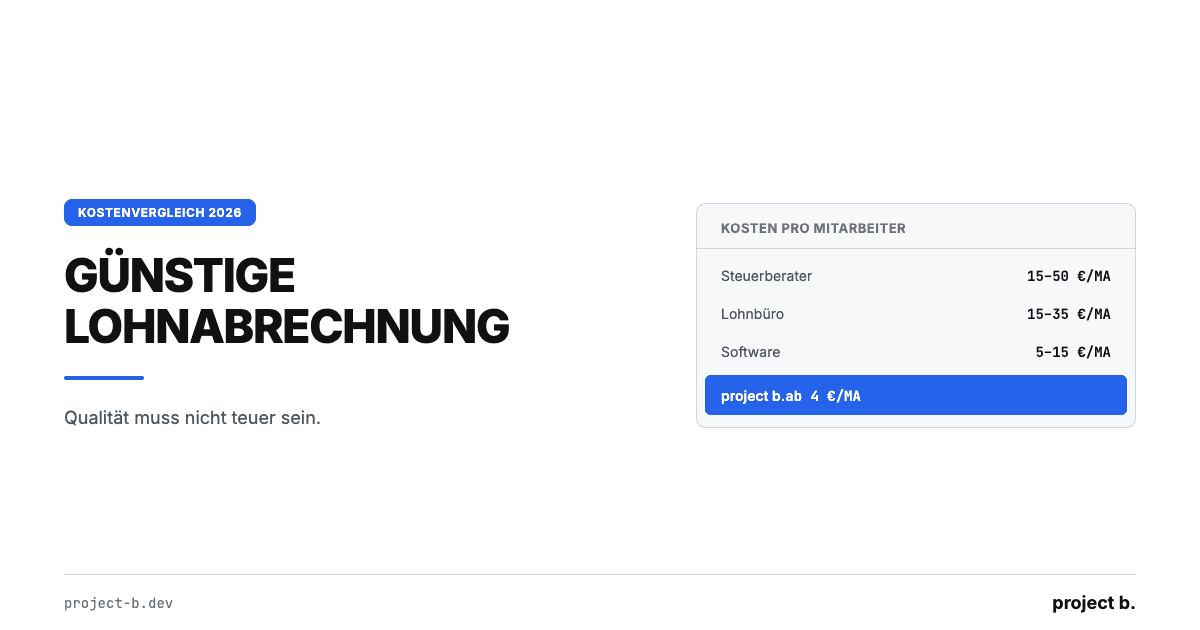
Günstige Lohnabrechnung: Qualität muss nicht teuer sein
Günstige Lohnabrechnung ab 4 €/Mitarbeiter: Kostenvergleich Software, Steuerberater und Outsourcing mit TCO-Rechnung und konkreten Spartipps für KMU.
Mar 16, 2026
·
Outsourcing
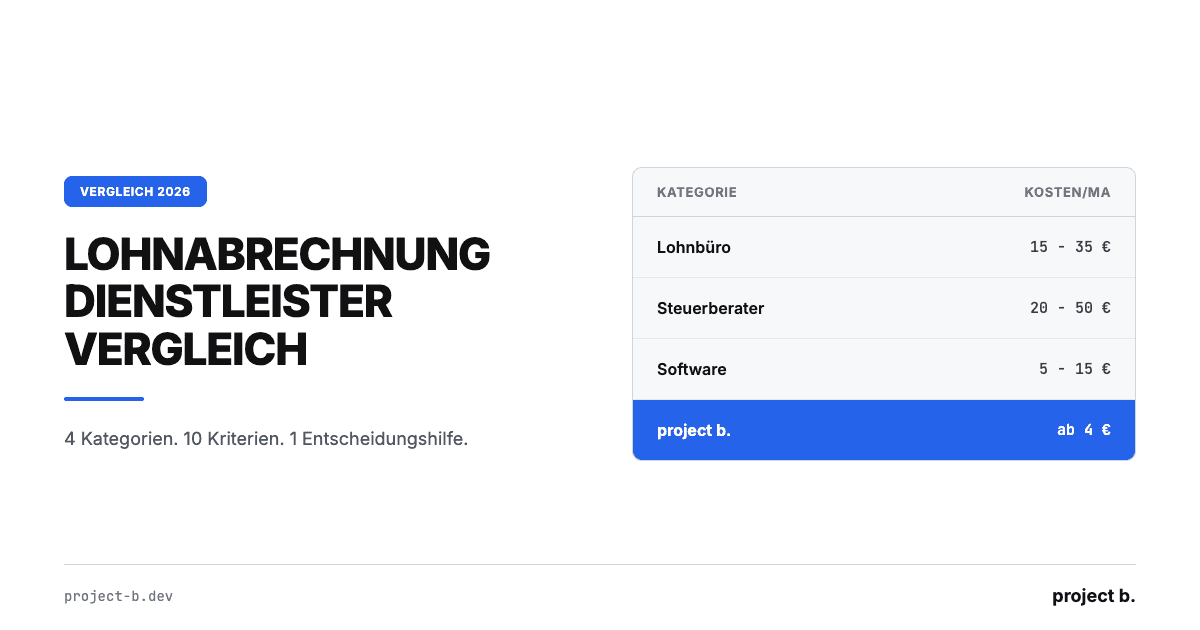
Lohnabrechnung Dienstleister Vergleich: Die Optionen 2026
Lohnabrechnung Dienstleister Vergleich 2026: 4 Kategorien, 10 Kriterien, echte Preise ab 4€/MA. Finden Sie den passenden Payroll-Partner für Ihr Unternehmen.
Mar 13, 2026
·
Outsourcing
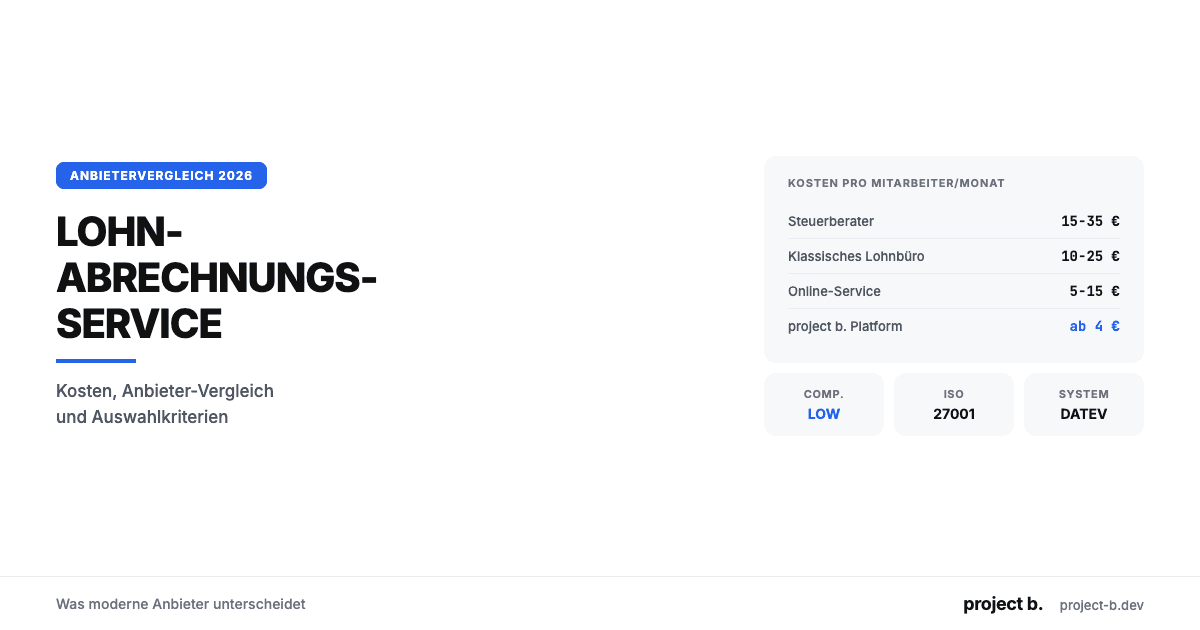
Lohnabrechnungsservice: Was moderne Anbieter unterscheidet
Lohnabrechnungsservice gesucht? Kosten ab 6 €/MA, Anbieter-Vergleich, Online vs. vor Ort und worauf Sie bei der Auswahl achten sollten. Jetzt informieren.
Mar 11, 2026
·
Outsourcing
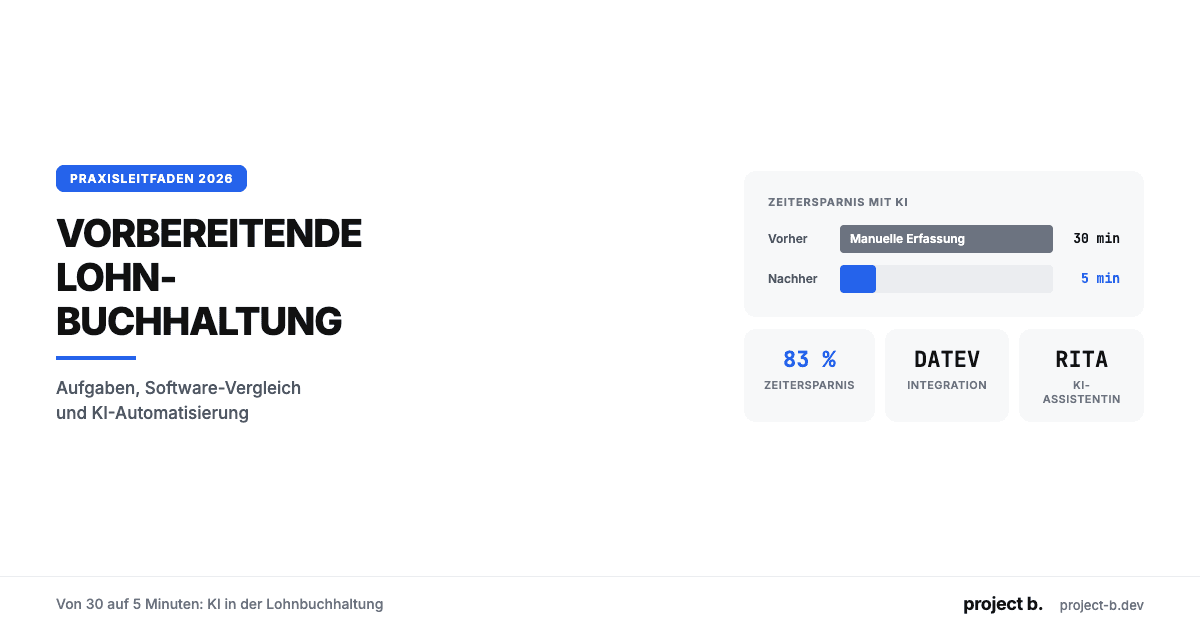
Vorbereitende Lohnbuchhaltung: Von 30 auf 5 Minuten
Was ist vorbereitende Lohnbuchhaltung? Aufgaben-Checkliste, DATEV-Integration, Software-Vergleich und wie KI den Zeitaufwand von 30 auf 5 Minuten senkt.
Mar 9, 2026
·
Outsourcing
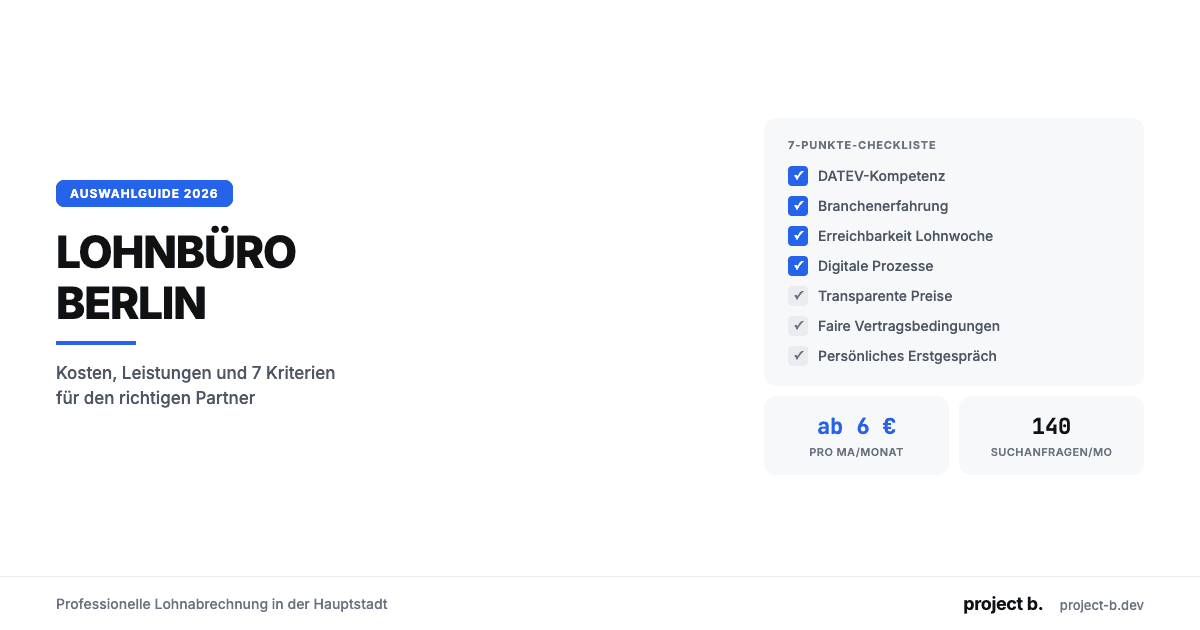
Lohnbüro Berlin: Professionelle Lohnabrechnung in der Hauptstadt
Lohnbüro in Berlin gesucht? Leistungen, Kosten (ab 6 €/MA), 7-Punkte-Checkliste und warum LohnDialog mit project b. Technologie die smarte Wahl ist.
Mar 5, 2026
·
Outsourcing
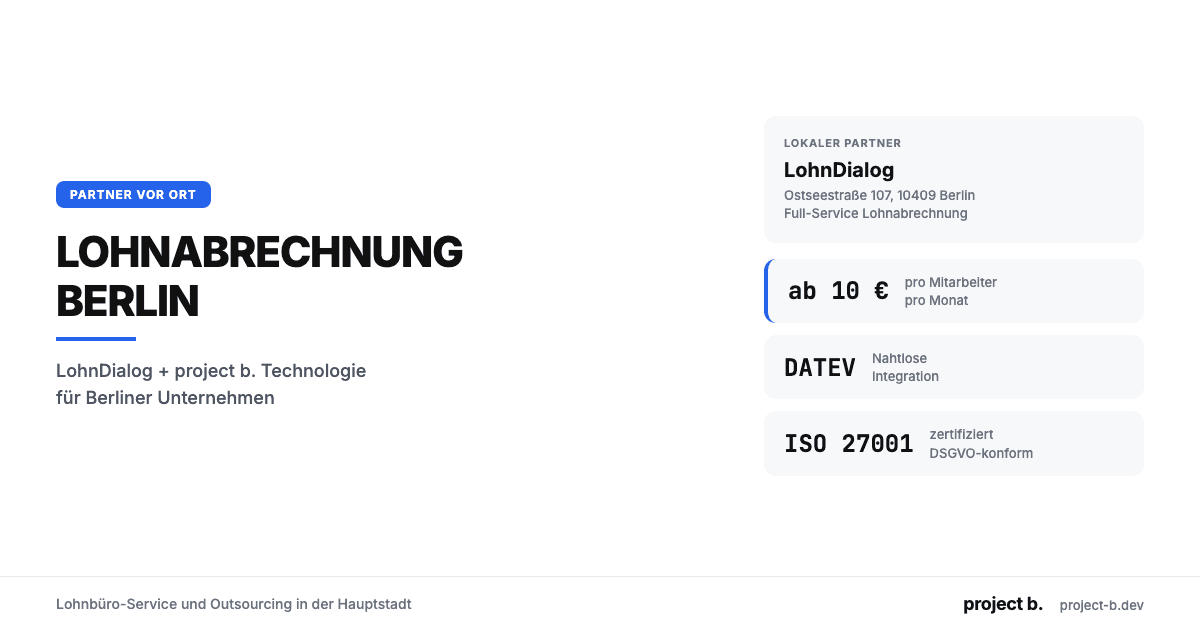
Lohnabrechnung Berlin: Ihr Payroll-Partner in der Hauptstadt
Lohnabrechnung in Berlin mit LohnDialog und project b. Lohnbüro-Service, DATEV-Integration, ab €10/MA. Persönliche Betreuung vor Ort.
Mar 3, 2026
·
Outsourcing
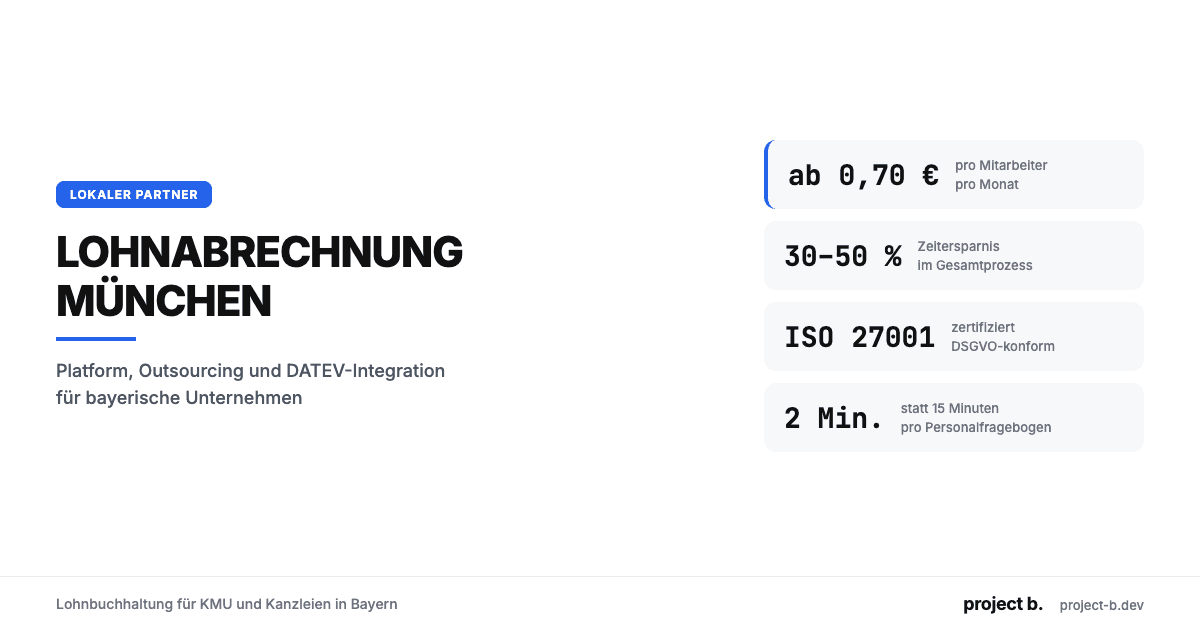
Lohnabrechnung München: Lohnbuchhaltung für KMU & Kanzleien
Lohnabrechnung in München ab €0,70/MA/Monat. Platform oder Outsourcing, DATEV-Integration, ISO 27001. So finden Sie den richtigen Partner.
Feb 27, 2026
·
Outsourcing
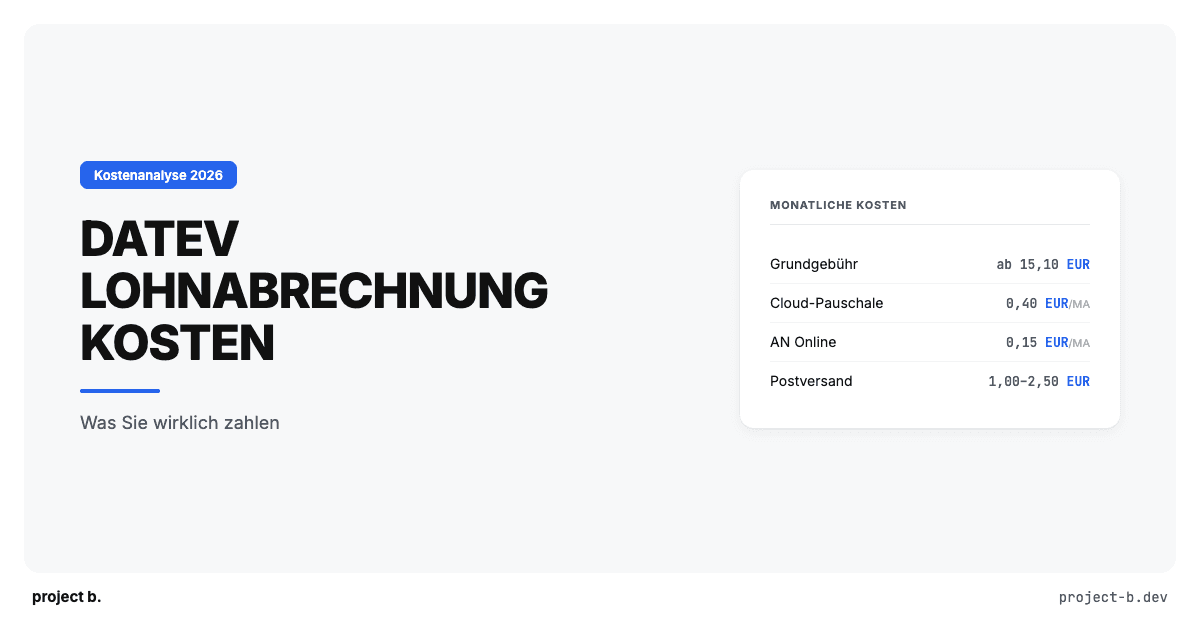
DATEV Lohnabrechnung Kosten: Was Sie wirklich zahlen
Was kostet eine Lohnabrechnung mit DATEV? Preise pro Mitarbeiter, versteckte Zusatzkosten, Vergleich mit Alternativen. Mit konkretem Rechenbeispiel.
Feb 25, 2026
·
Outsourcing
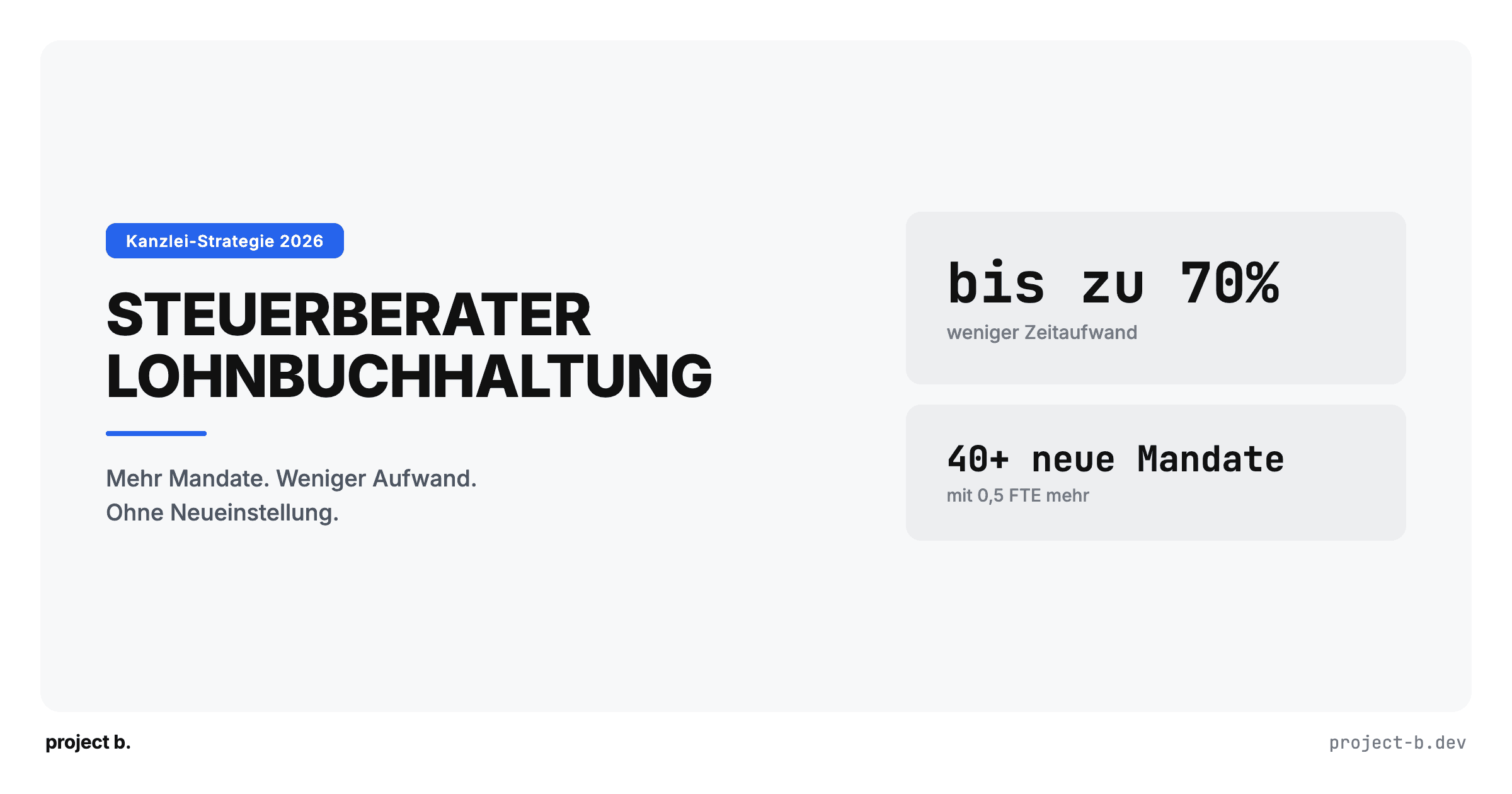
Steuerberater Lohnbuchhaltung: Mehr Mandate ohne mehr Personal
Als Steuerberater mehr Lohnmandate betreuen, ohne proportional Personal aufzubauen? So reduzieren digitale Vorsysteme den Aufwand pro Mandat.
Feb 23, 2026
·
Outsourcing
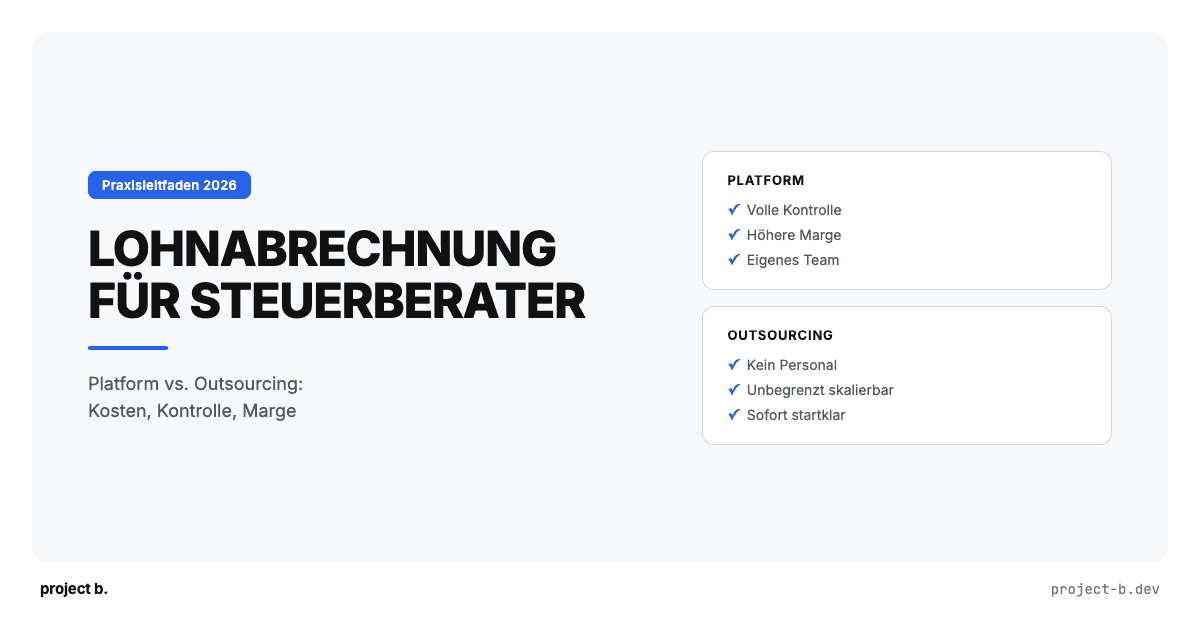
Lohnabrechnung für Steuerberater: Platform vs. Outsourcing
Lohnabrechnung als Steuerberater selbst abrechnen oder auslagern? Vergleich beider Modelle mit Kosten, Aufwand und Praxisbeispiel.
Feb 20, 2026
·
Outsourcing
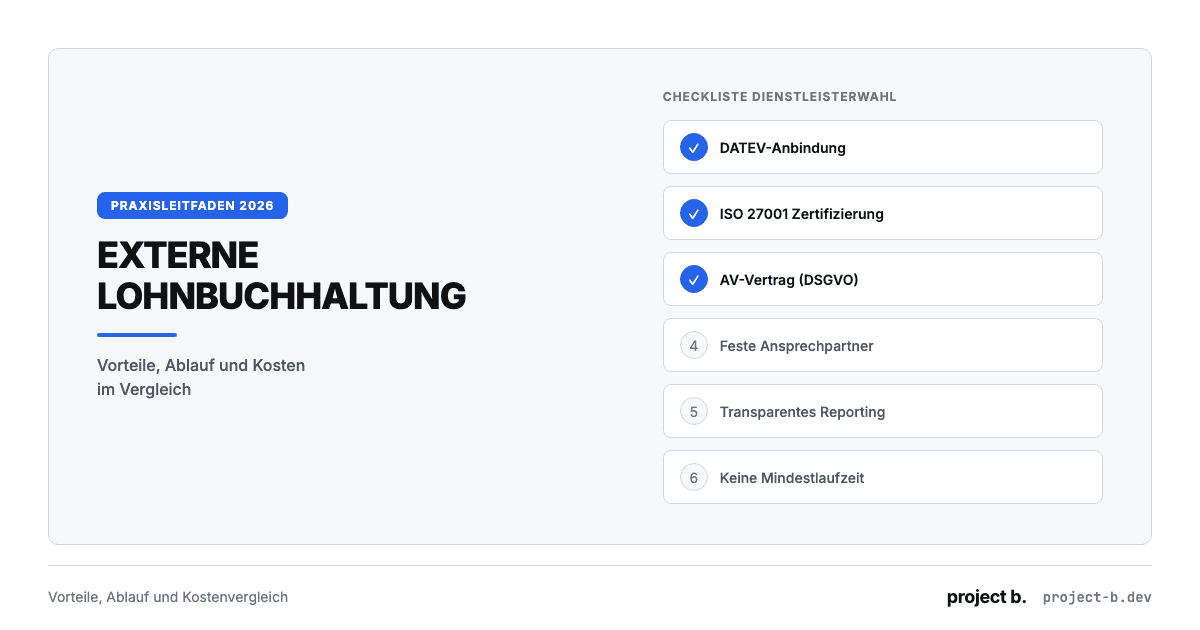
Externe Lohnbuchhaltung: Vorteile, Ablauf und Kosten
Externe Lohnbuchhaltung ab 10 EUR pro Mitarbeiter. Vorteile, typischer Ablauf, Kostenvergleich und worauf Sie bei der Auswahl des Dienstleisters achten sollten.
Feb 18, 2026
·
Outsourcing
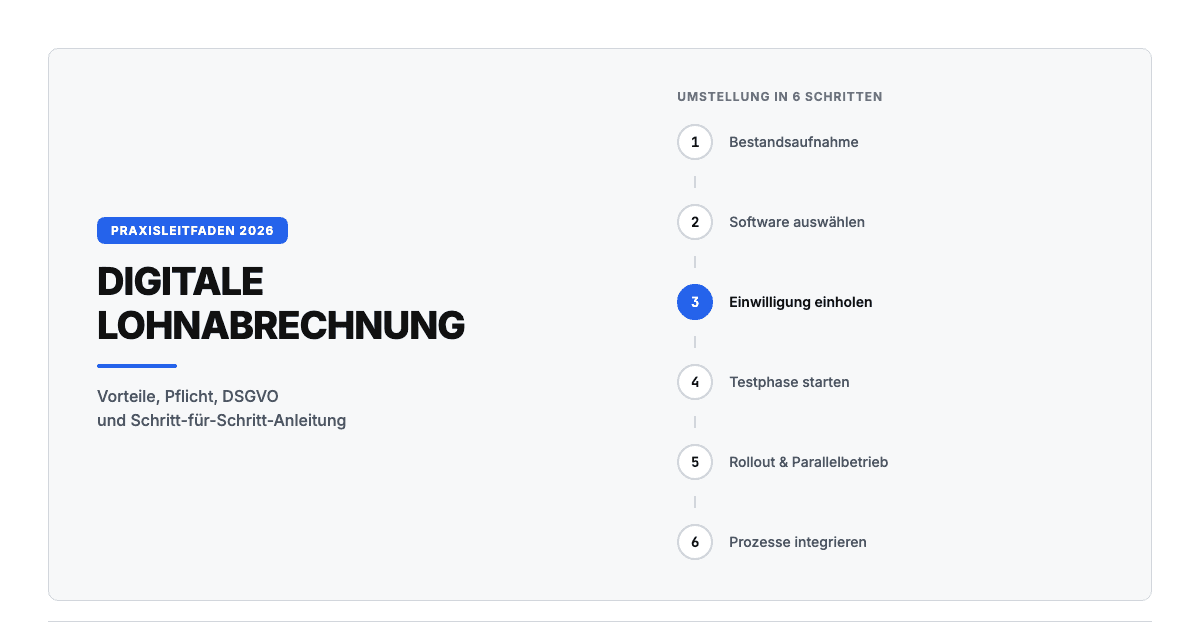
Digitale Lohnabrechnung: So funktioniert sie in der Praxis
Digitale Lohnabrechnung rechtssicher einführen. Vorteile, DSGVO-Anforderungen, Software-Vergleich und Schritt-für-Schritt-Anleitung für die Umstellung 2026.
Feb 16, 2026
·
Outsourcing
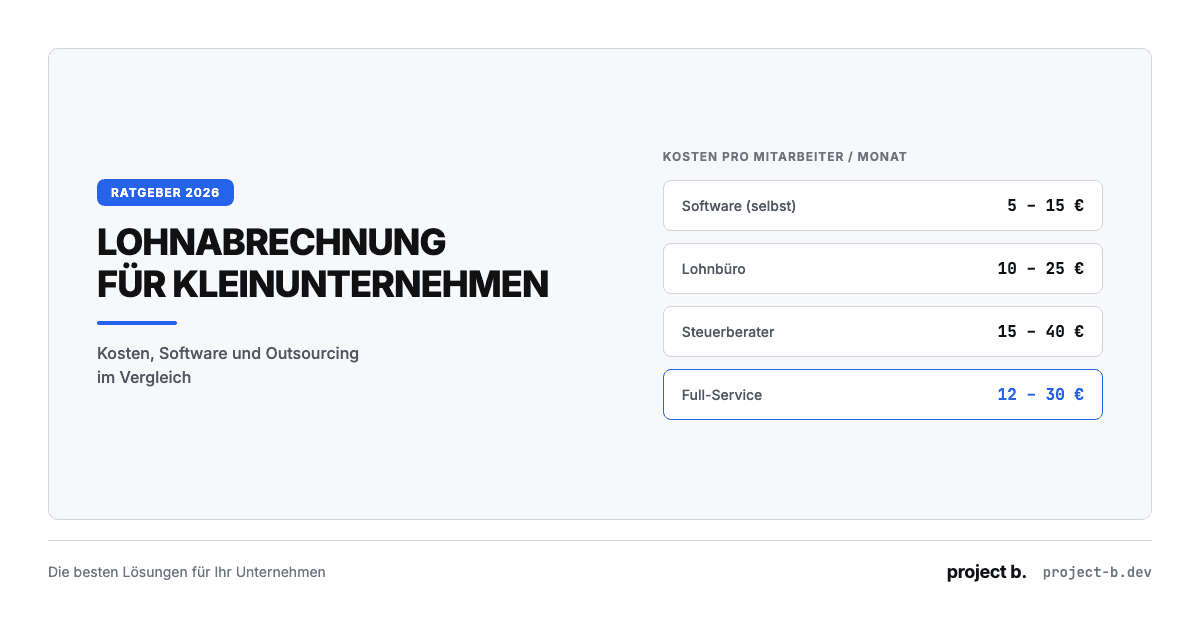
Lohnabrechnung für Kleinunternehmen: Die besten Lösungen 2026
Lohnabrechnung für Kleinunternehmen ab 5 EUR pro Mitarbeiter. Vergleich: selber machen, Software oder outsourcen. Mit Kostenrechnung und Entscheidungshilfe.
Feb 11, 2026
·
Outsourcing
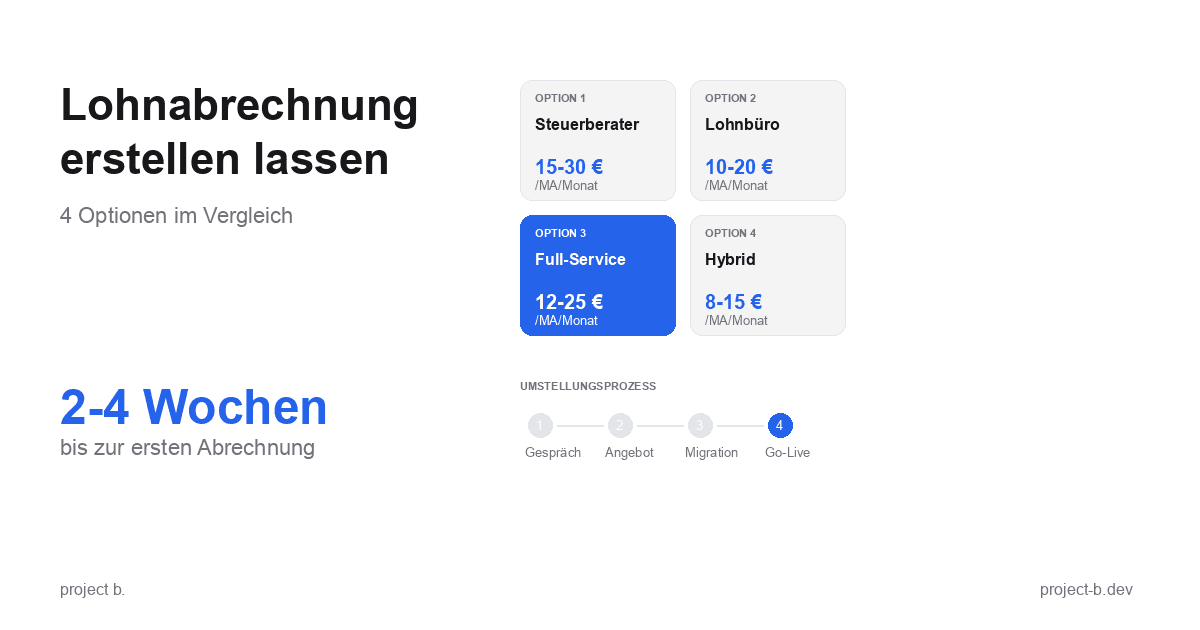
Lohnabrechnung erstellen lassen: Ihre Optionen im Vergleich
Lohnabrechnung erstellen lassen statt selbst kämpfen? Erfahren Sie, welche Optionen Sie haben, was es kostet und wie schnell Sie starten können.
Feb 9, 2026
·
Payment
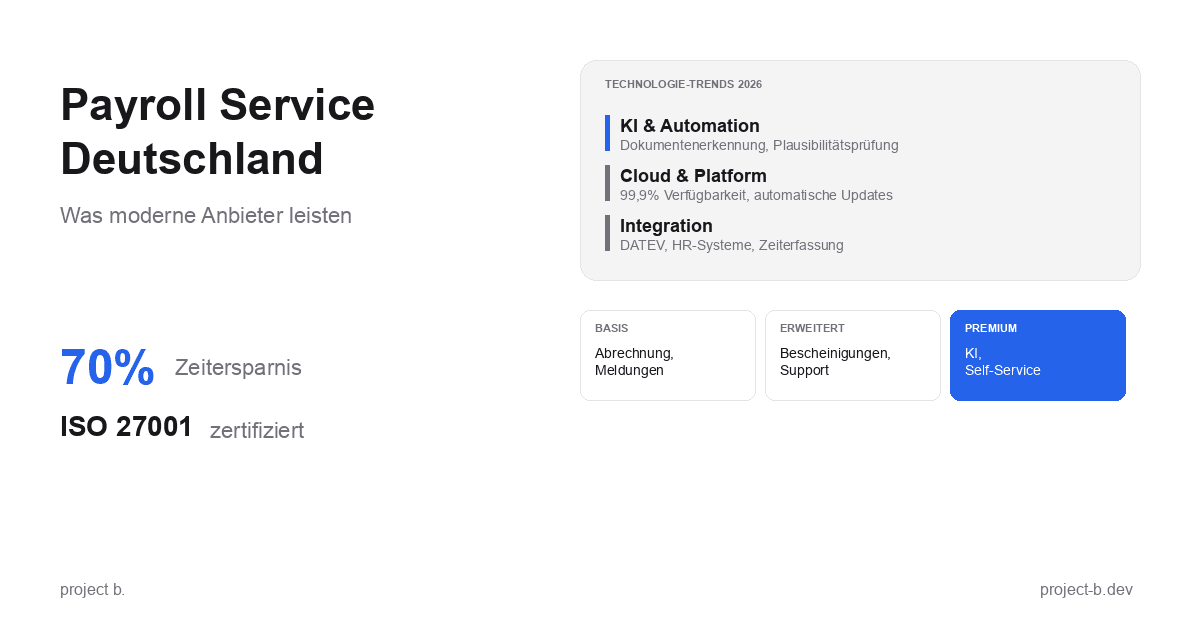
Payroll Service Deutschland: Was moderne Anbieter leisten
Payroll Service in Deutschland gesucht? Erfahren Sie, was moderne Anbieter leisten, welche Technologien sie nutzen und worauf Sie bei der Auswahl achten sollten.
Feb 9, 2026
·
Outsourcing
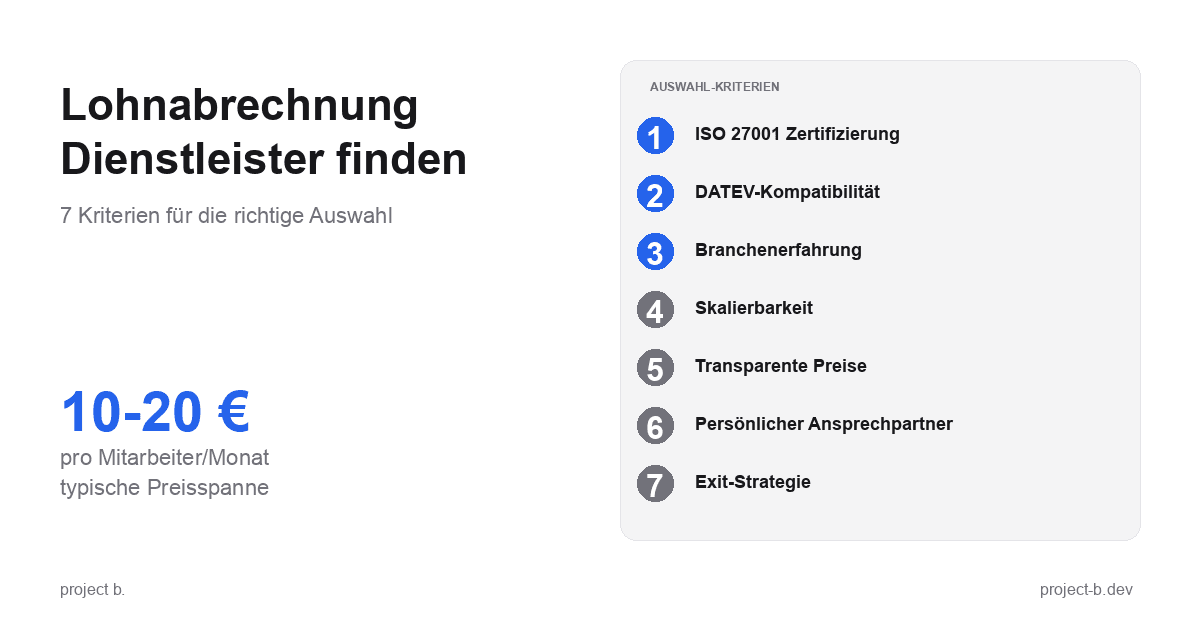
Lohnabrechnung Dienstleister: So finden Sie den richtigen Partner
Lohnabrechnung Dienstleister gesucht? 7 Kriterien für die Auswahl, Preisvergleich und Checkliste fürs Erstgespräch. Finden Sie den Partner, der zu Ihnen passt.
Feb 6, 2026
·
Outsourcing
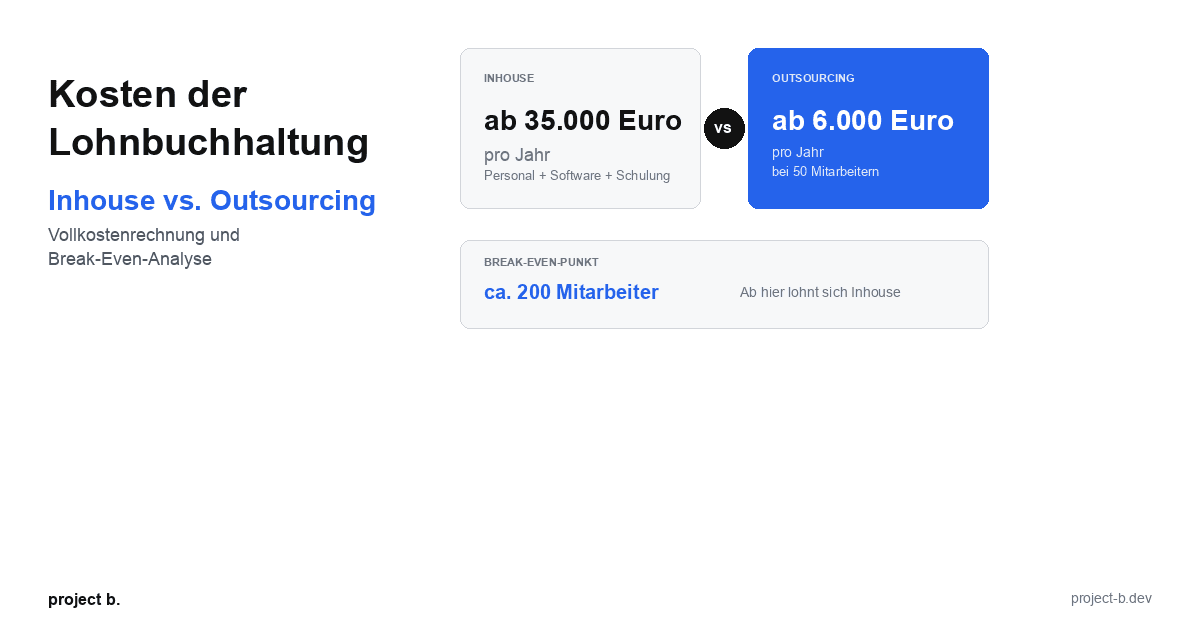
Kosten der Lohnbuchhaltung: Inhouse vs. Outsourcing im Vergleich
Lohnbuchhaltung Kosten: Inhouse ab 35.000 Euro/Jahr vs. Outsourcing ab 6.000 Euro/Jahr. Break-Even-Analyse, ROI-Rechnung und Entscheidungshilfe.
Feb 4, 2026
·
Outsourcing
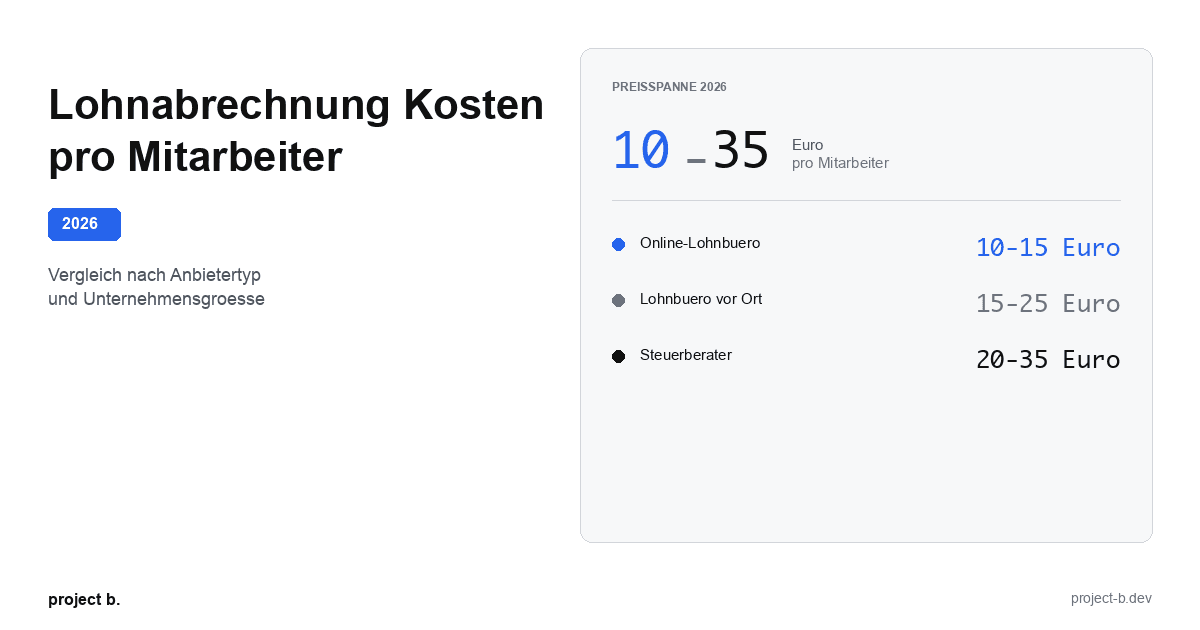
Lohnabrechnung Kosten pro Mitarbeiter: Was Sie 2026 zahlen
Lohnabrechnung Kosten 2026: 10-35 Euro pro Mitarbeiter je nach Anbieter. Vergleich nach Unternehmensgroesse, Branche und versteckte Kosten aufgedeckt.
Feb 2, 2026
·
Outsourcing
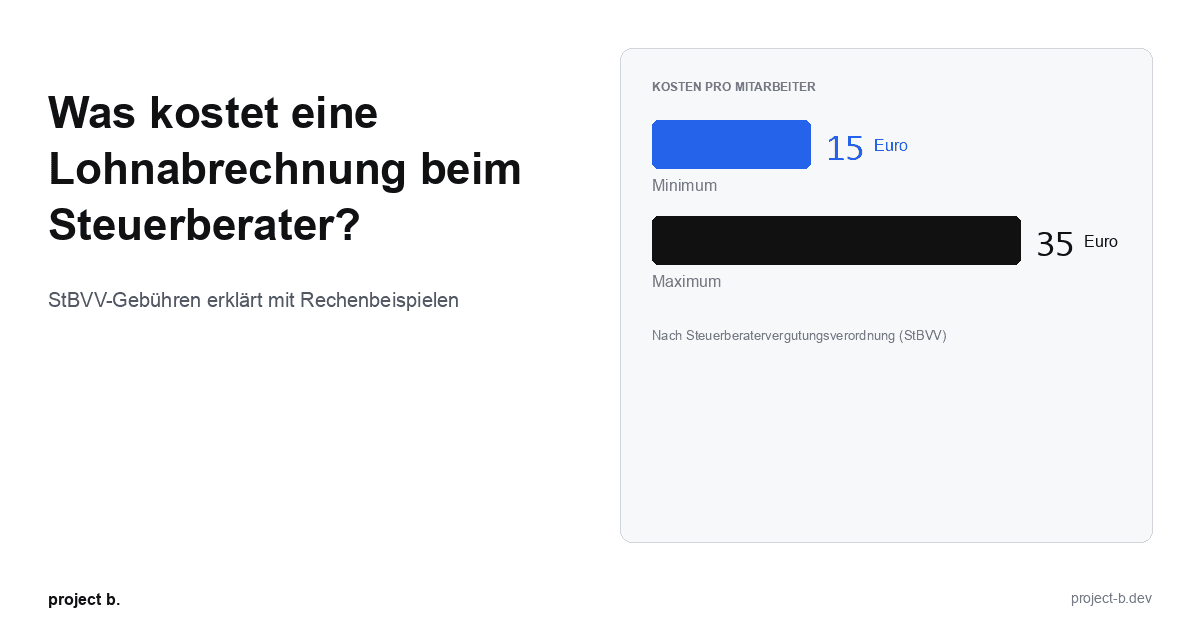
Was kostet eine Lohnabrechnung beim Steuerberater?
Lohnabrechnung beim Steuerberater: Kosten von 15-35 € pro Mitarbeiter. StBVV-Gebühren erklärt, Preisvergleich und Rechenbeispiele für 10, 50, 100 Mitarbeiter.
Jan 30, 2026
·
Outsourcing
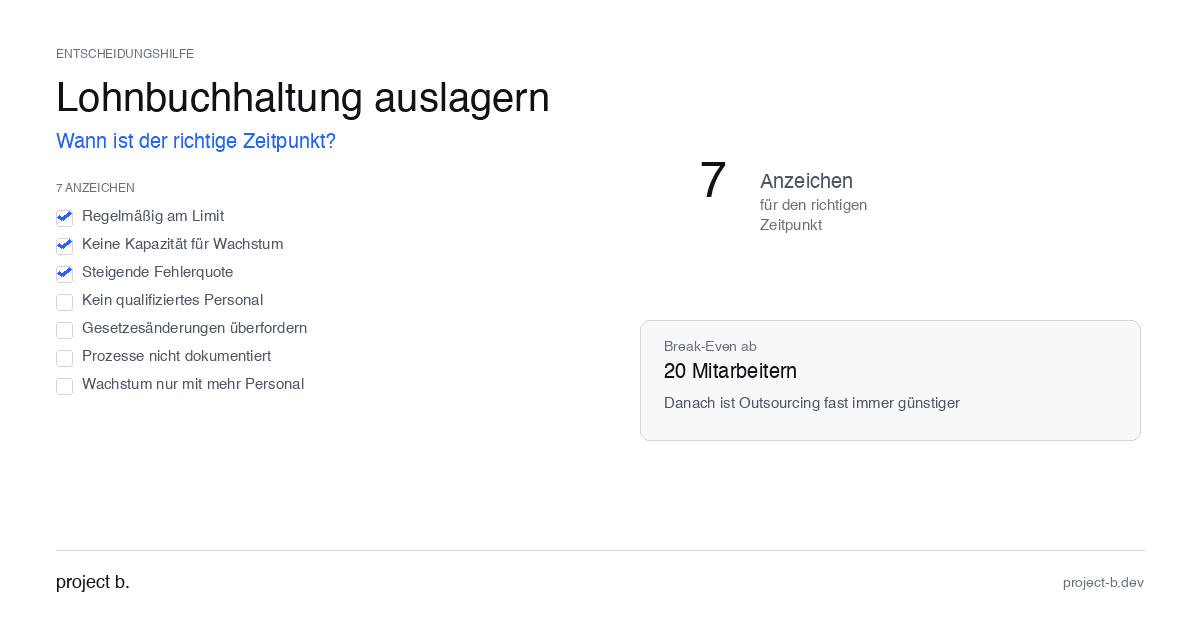
Outsource payroll accounting: When is the right time?
Outsourcing payroll: 7 clear signs that now is the right time. Including break-even analysis and DATEV integration check.
Jan 28, 2026
·
Outsourcing
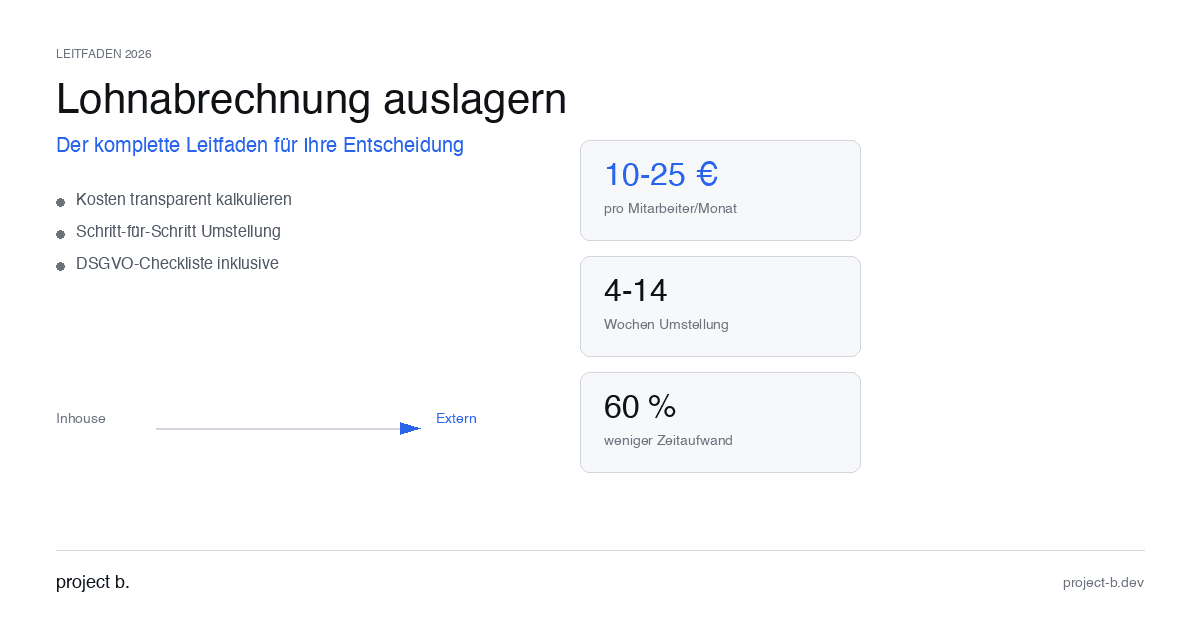
Outsourcing payroll accounting: The complete guide for 2026
Outsource payroll processing 2026: Costs from €10 per employee, step-by-step guide and GDPR checklist. This is how to make the transition without risk.
Jan 26, 2026
·
Outsourcing
Outsourcing payroll: Costs, benefits, and providers at a glance
Outsource payroll accounting from €10 per employee. Learn about the benefits of outsourcing, its costs, and how to find the right provider.
Jan 22, 2026
·
AI
Client portal vs. Email chaos: What modern payroll processing is all about
Payroll statements by email pose a GDPR risk. With the project b. Portal and RITA, you save 1,400 hours/year. This is how secure data exchange works.
Jan 20, 2026
·
AI
From Excel to the Cockpit: How Payroll Offices Will Make the Leap into Digitalization in 2026
Digital payroll instead of Excel: With RITA and the project b. cockpit, payroll offices save 40% time without switching to DATEV. Practical guide with checklist.
Jan 15, 2026
·
Personal
ELStAM Procedure 2026: This is how the new private health insurance notification for employers works
From 2026, employers will report private health insurance contributions digitally via the ELStAM procedure. Find out which systems are affected and how you can prepare now.
Jan 14, 2026
·
AI
Active pension 2026: What payroll offices and HR departments need to prepare now
Pension from January 2026: Up to €2,000 tax allowance for retirees. Learn about the changes in payroll processes and how AI facilitates implementation.
Jan 13, 2026
·
AI
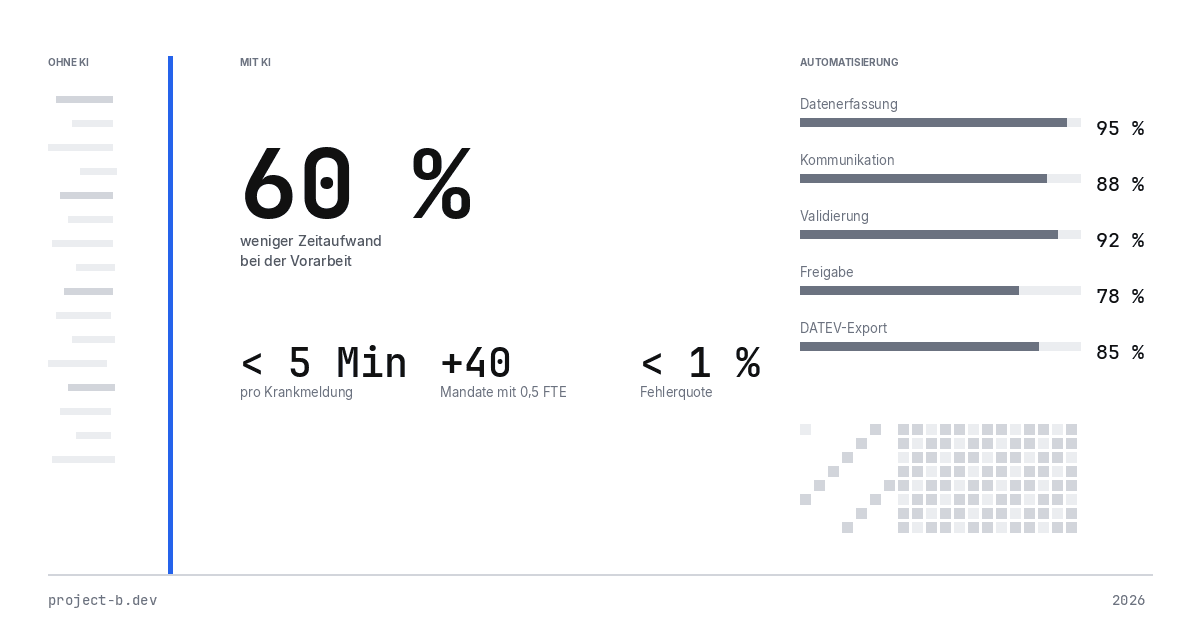
AI-Powered Payroll Software: How Tax Advisors Will Save Time in 2026
AI payroll accounting for tax consultants: Learn how project b. reduces manual work by 80% with RITA and helps combat the skilled labor shortage.
Jan 8, 2026
·
Payment
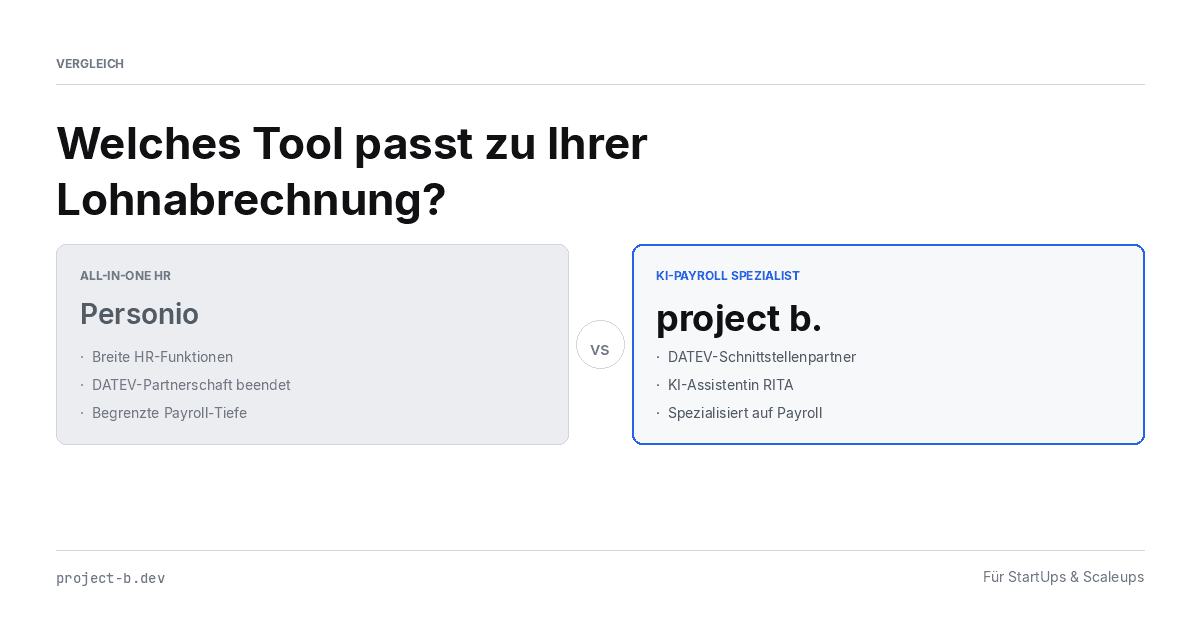
Personio vs. project b.: Which tool really fits your payroll?
Personio or project b.? Comparison for StartUps & Scaleups: DATEV integration, AI automation, costs. Why specialized payroll tools are gaining traction.
Jan 5, 2026
·
AI
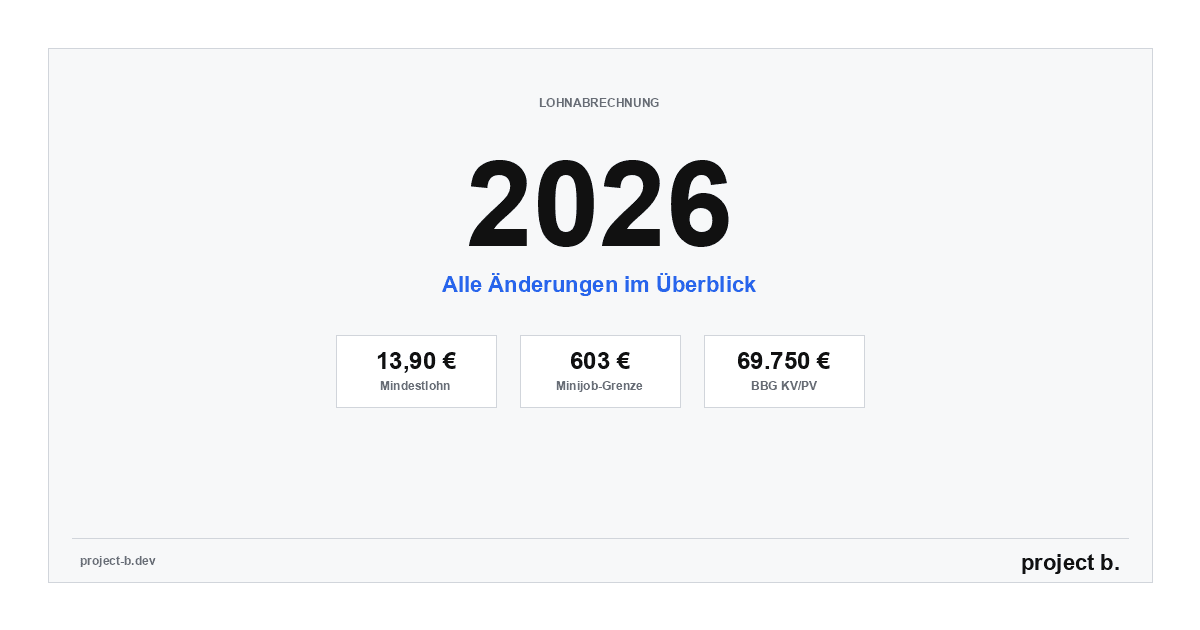
Payroll 2026: All Changes at a Glance (with AI Automation)
Minimum wage €13.90, mini-job limit €603, new contribution assessment ceilings: An overview of all changes for payroll in 2026. Learn how AI automatically implements these updates.
Jan 4, 2026
·
Payment
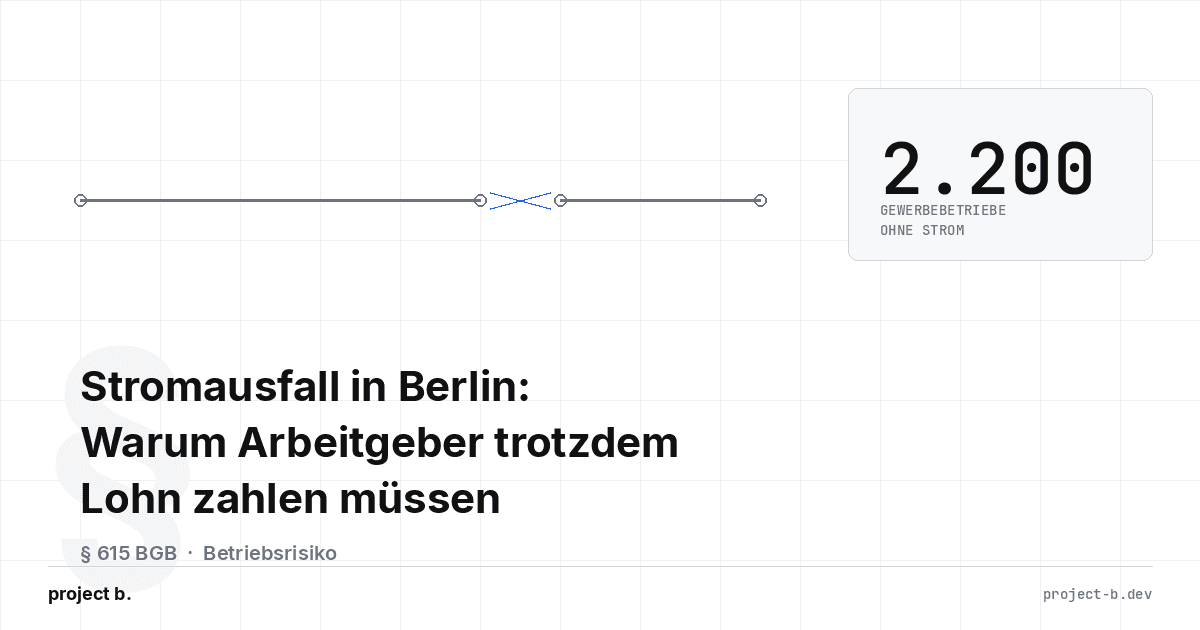
Power outage in Berlin: Why employers still have to pay wages
Power outage Berlin 2026: 2,200 businesses affected. Find out why employers must still pay wages according to § 615 BGB - and what applies to payroll.

Dec 31, 2025
·
AI
AI in Payroll: Hype or Help?
AI in payroll processing: What is behind it? A guide for anyone who wants to understand the topic before making a decision.

Dec 29, 2025
·
AI
Payroll without professionals? This is how AI will help in 2026
AI in payroll: 70% less routine work, 0.1% error rate. This is how companies are solving the skilled labor shortage in payroll accounting in 2026.
Dec 26, 2025
·
AI
This is how you use AI in payroll.
Enough with manual data collection: This is how AI supports payroll accounting in case of sickness notifications, master data, and billing - without loss of control.

Dec 22, 2025
·
AI
How an AI layer works in payroll.
Digital payroll, but manual data entry? An AI layer closes the gap between employees, HR, and DATEV & Co.
Dec 17, 2025
·
AI
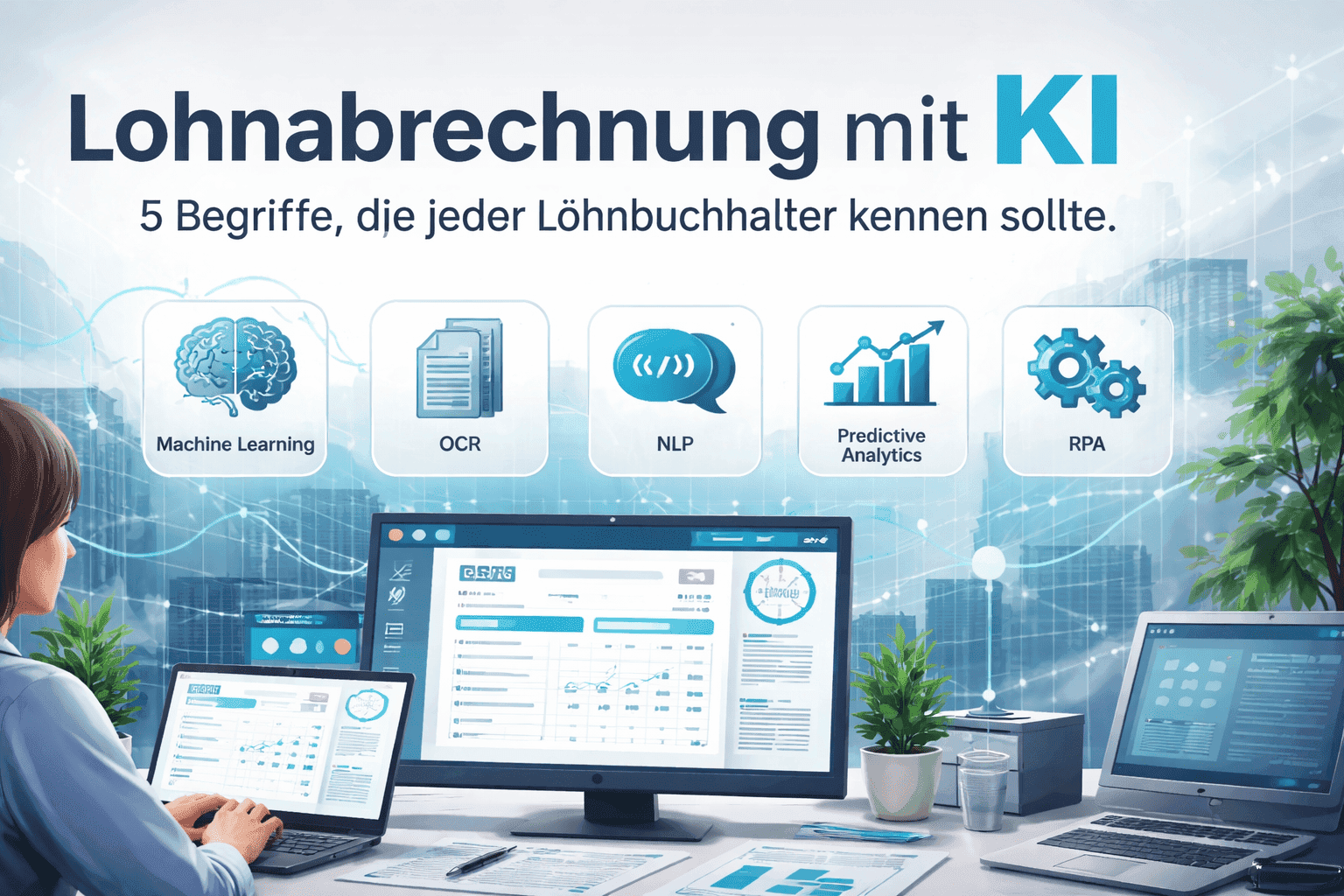
Payroll accounting with AI: 5 terms that every payroll clerk should know
Payroll processing explained clearly with AI: These 5 key AI terms payroll accountants should know to automate processes, reduce errors, and work more efficiently.

Dec 10, 2025
·
AI
How companies automate payroll accounting with Rita
Learn how Rita from project b. has automated the preliminary payroll accounting. From data collection to DATEV integration: This is how payroll agencies and tax consultants save up to 70% time.
Dec 8, 2025
·
AI
AI Software for Payroll Accounting: The Ultimate Selection Guide
Discover the ultimate selection guide for AI software in payroll. Compare AI tools and find the best payroll software for your business.
Dec 5, 2025
·
AI
10 processes in payroll that AI is already handling today
Discover 10 payroll processes that AI has already automated: from master data validation to compliance monitoring. Save up to 94% time on digital payroll.

Dec 4, 2025
·
Payment
The story of DATEV and how it became an unshakable power in German accounting.
DATEV is more than software – it is the infrastructural foundation of German accounting. The text shows how a cooperative of tax advisors became the central backbone of accounting and payroll through regulatory entanglement, standardization, and decades of trust-building. At the same time, it explains why this very structure is hindering innovation today: closed data architectures, high switching costs, and a system built for stability rather than AI-based automation. A look at how the past and present shape digital progress.
Dec 3, 2025
·
Payment
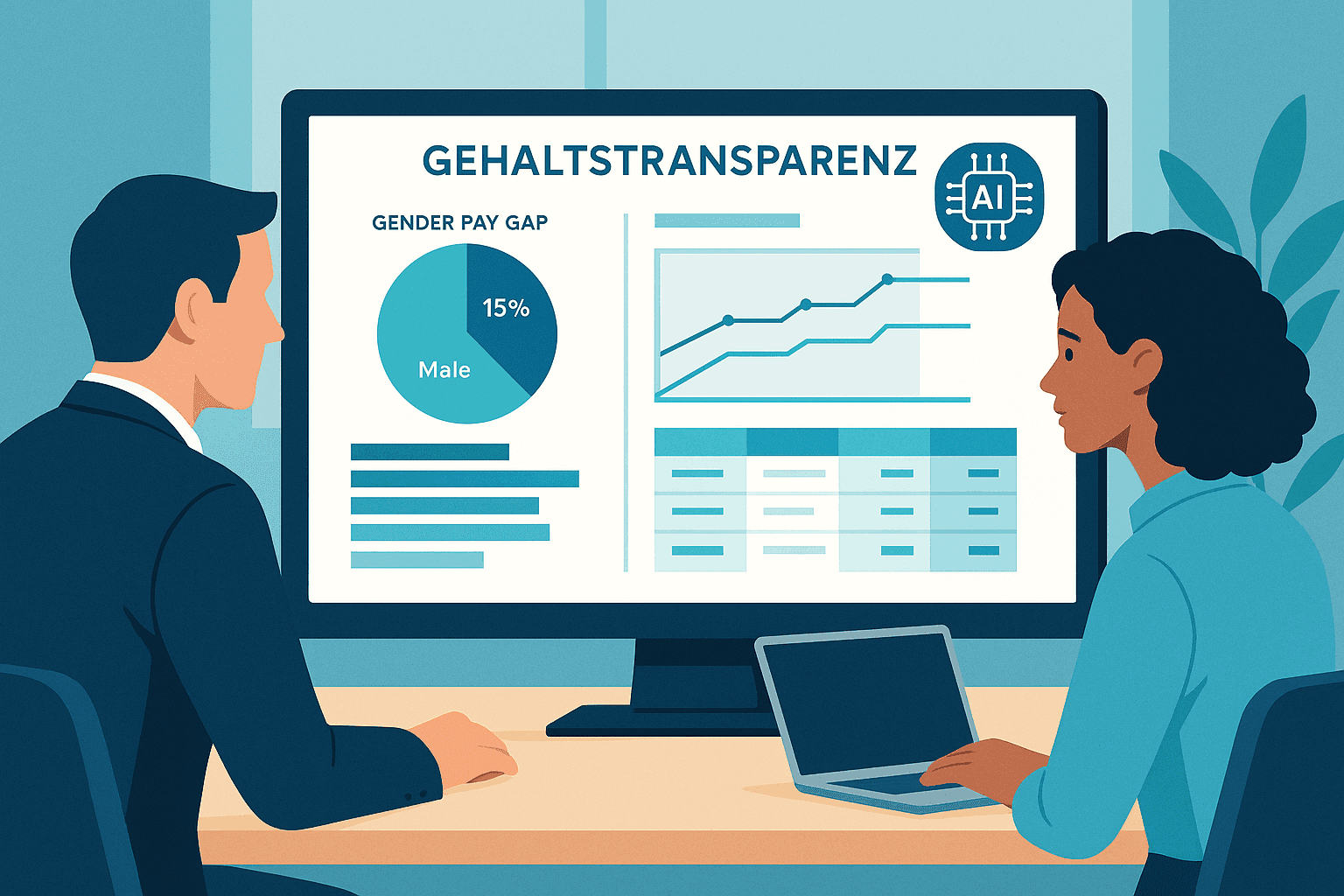
EU Salary Transparency Directive: How to Prepare Your Payroll for June 2026
Discover the best tools for implementing the EU Pay Transparency Directive – including AI solutions like project b. for fair and data-driven salary analyses.
Dec 2, 2025
·
AI
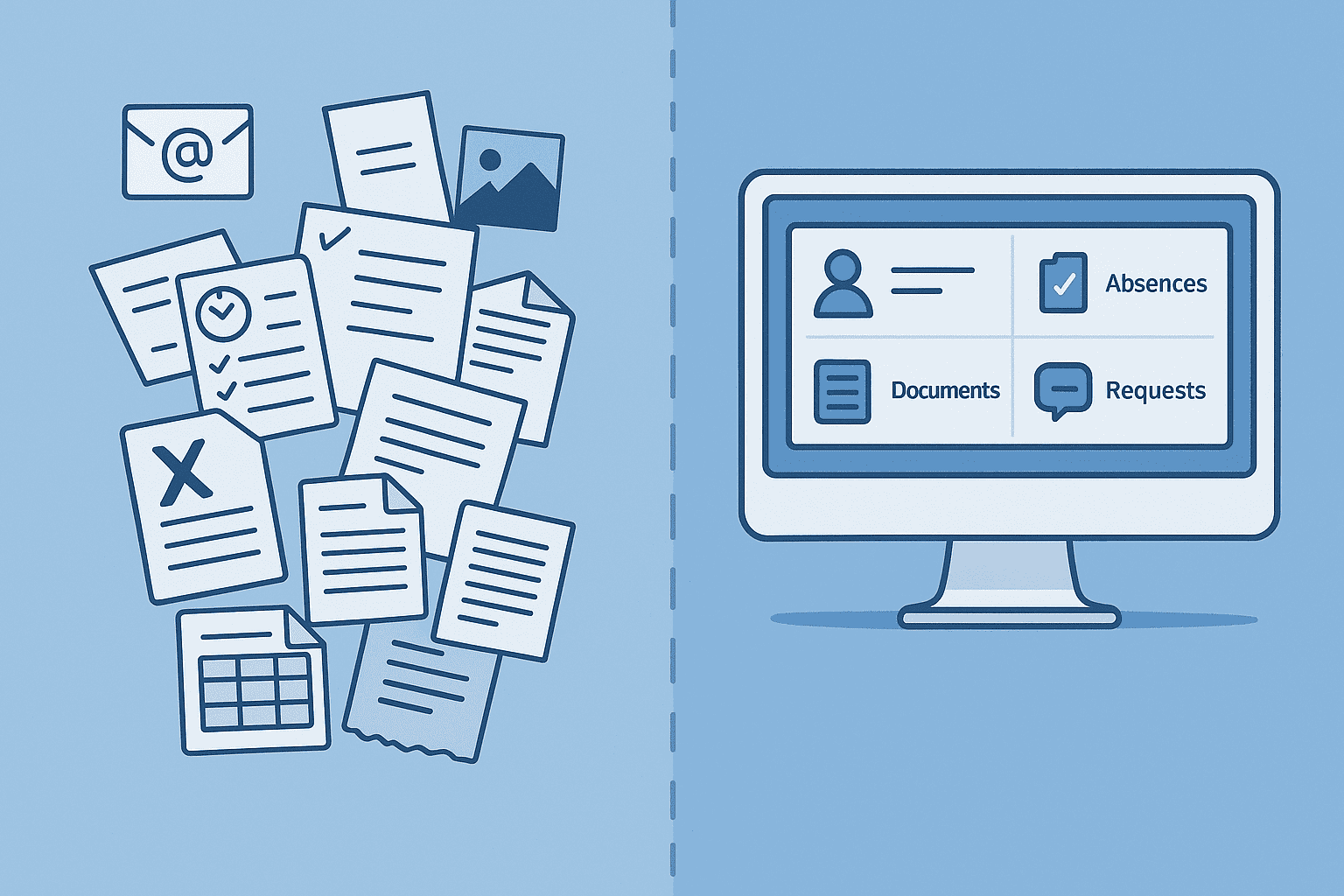
5 Reasons for Payroll Processing with project b.
Discover 5 reasons why tax consultants and payroll offices digitize their preparatory payroll accounting with project b. AI-assisted data collection, fewer queries, full DATEV integration.
Nov 27, 2025
·
AI
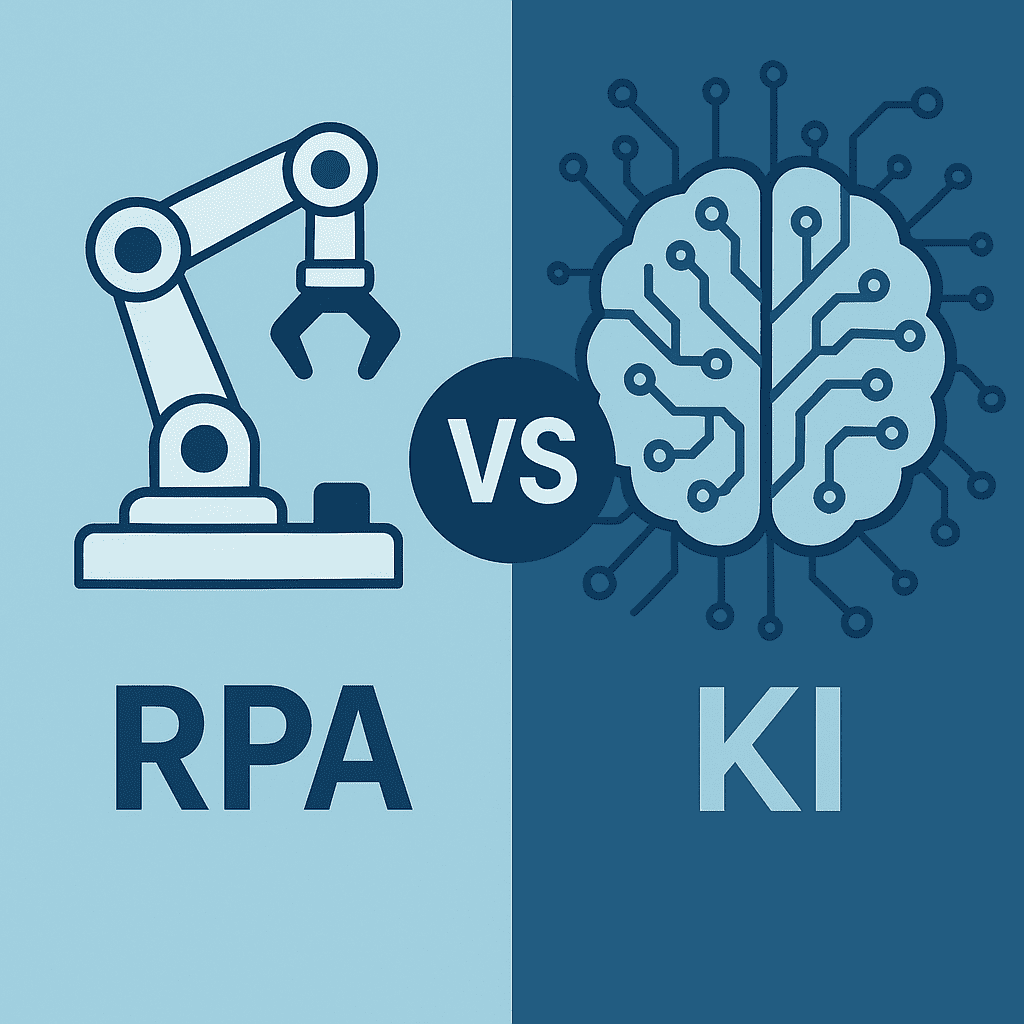
RPA vs. AI in Payroll: The Ultimate Technology Comparison 2026
RPA or AI in payroll accounting? The major comparison for 2026 shows advantages, costs, areas of application, and practical examples for the right automation strategy.
Nov 26, 2025
·
AI
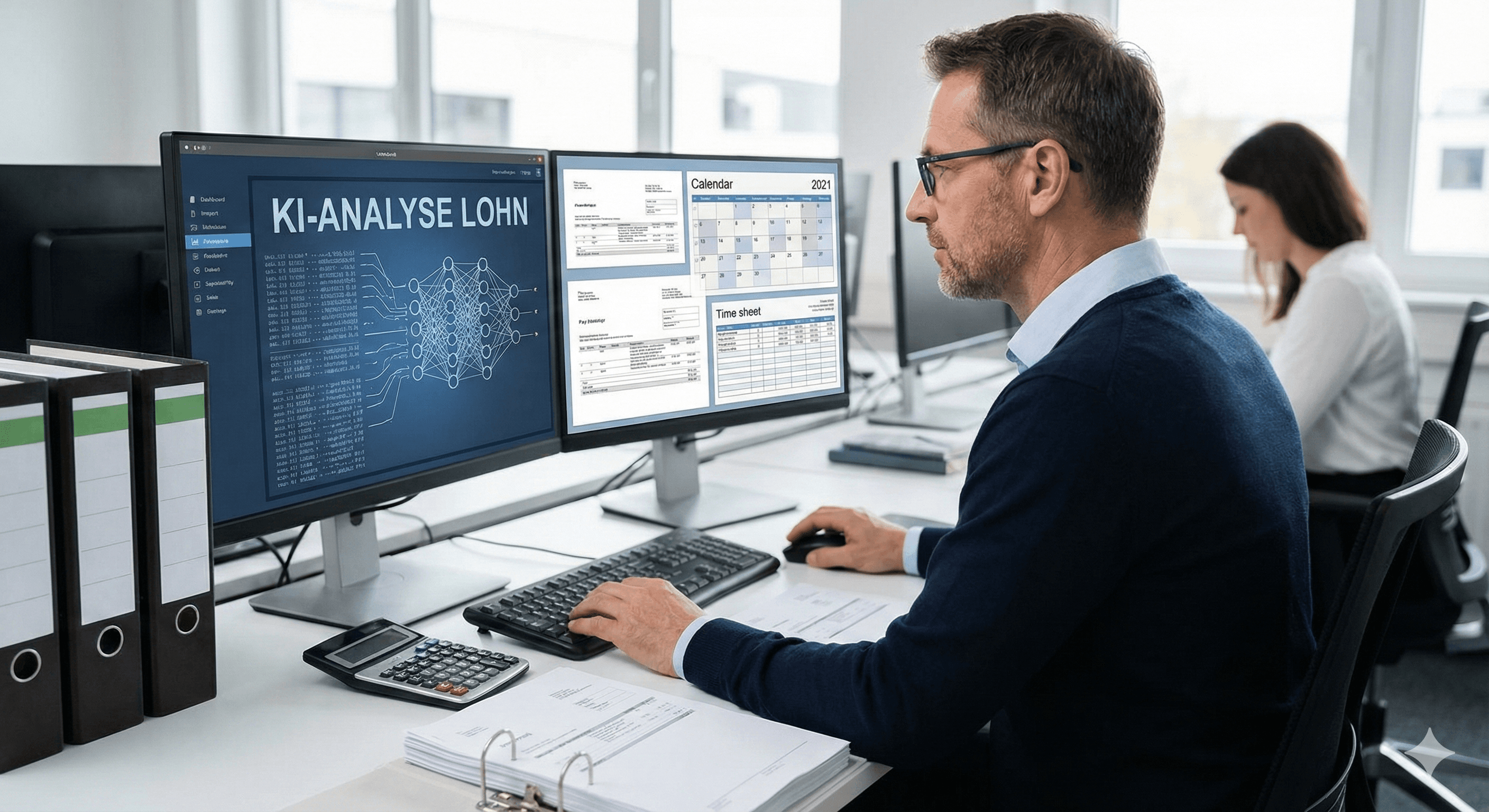
AI in payroll processing: What will be possible in 2026 and what will not?
AI in Payroll 2026: What can artificial intelligence really achieve in payroll? Reality check with maturity assessment, practical examples, and an honest analysis of the limits. For payroll offices, tax advisors, and SMEs.

Nov 25, 2025
·
AI
5 Easy Ways to Automate Payroll in 2026
5 practical ways to automate payroll: from digital time tracking to AI-driven software. With cost-saving examples for medium-sized businesses, tax consultants, and payroll offices.

Nov 24, 2025
·
Payment
Pension flat-rate reform 2026: What employers need to adjust in their payroll software now
Major income tax reform from 2026: The retirement allowance will be recalculated. Learn how this affects net wages, payroll software, and employers.
Nov 20, 2025
·
Payment
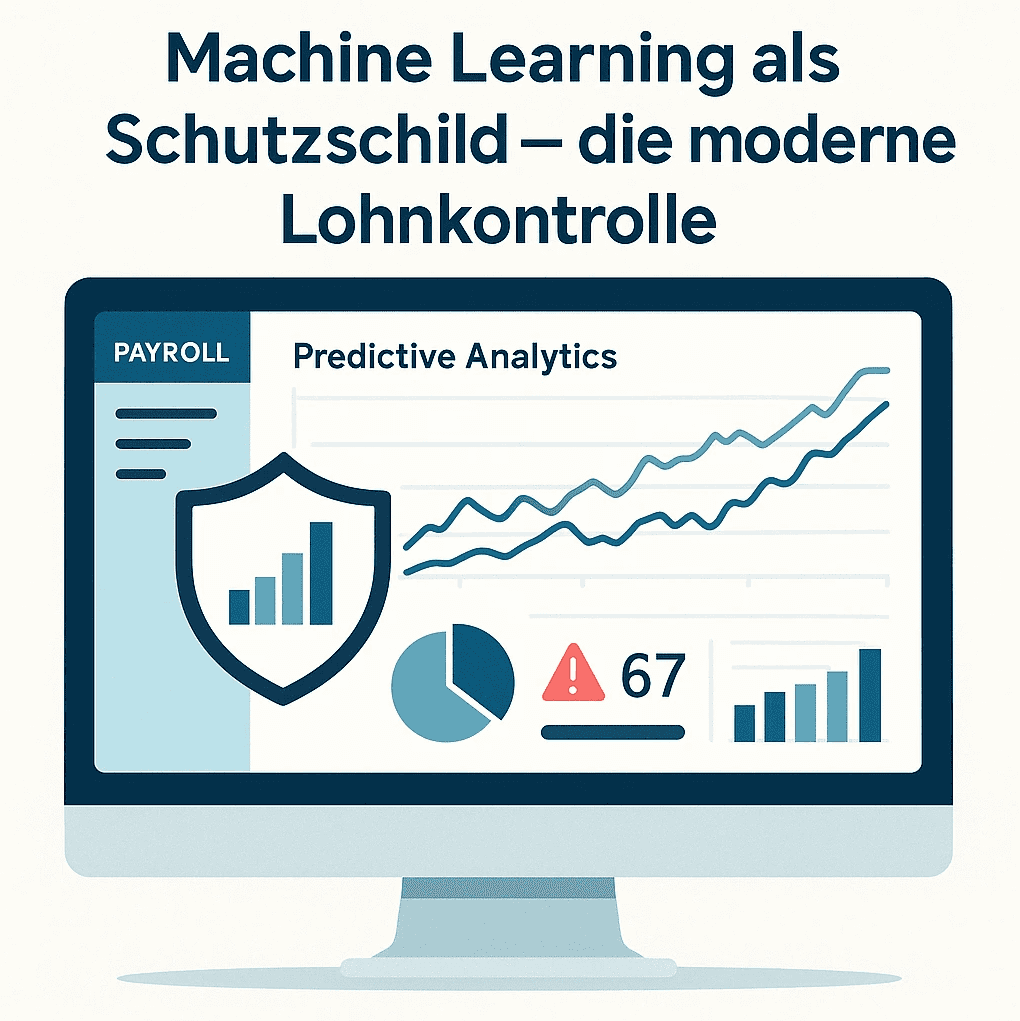
Predictive Analytics in Payroll: How Tax Advisors Avoid Costly Mistakes
Discover how predictive analytics reduces error rates in payroll, saves costs, and transforms your payroll from reactive to proactive.
Nov 13, 2025
·
Personal
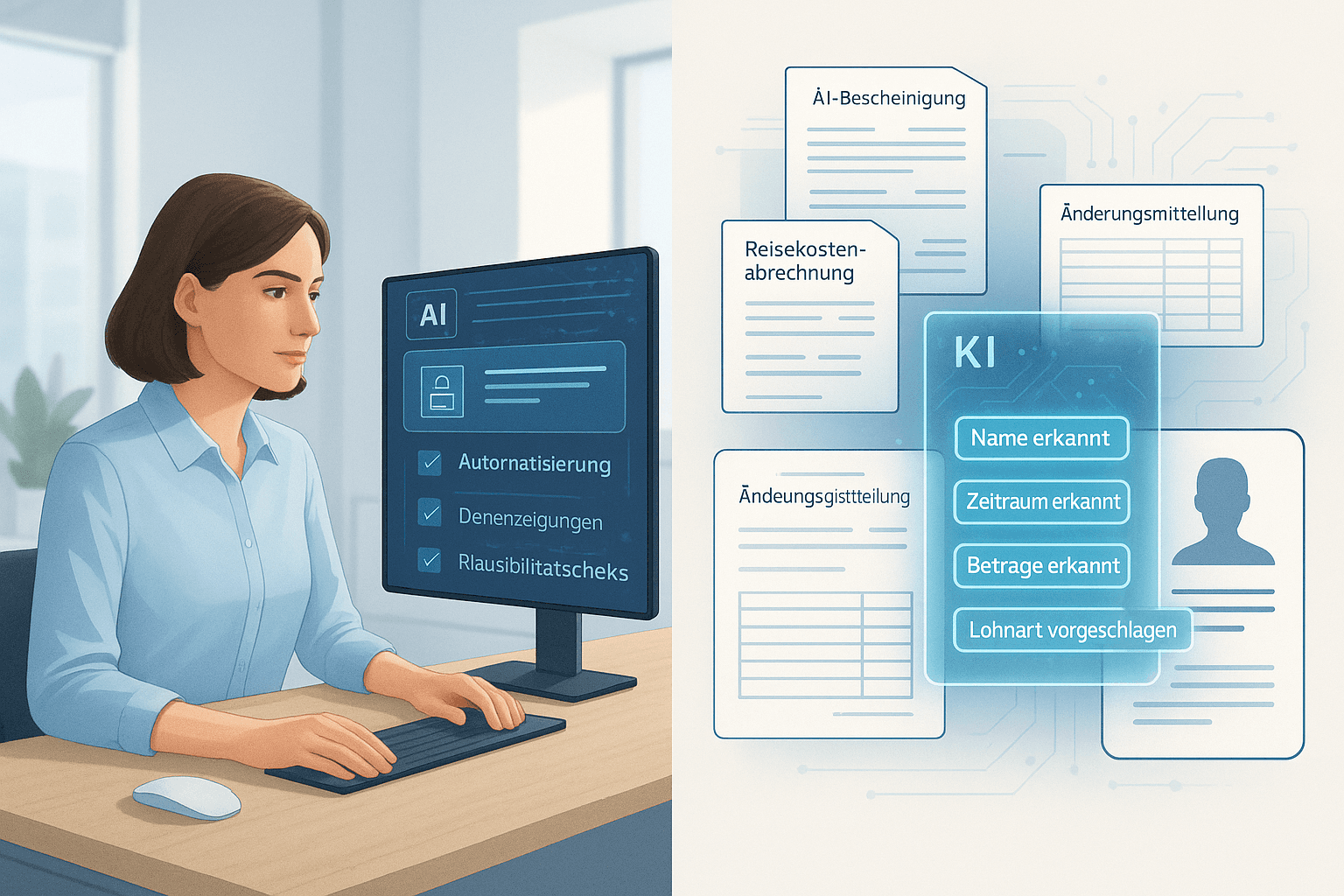
AI in Payroll Accounting: Practical Guide for Payroll Offices and Tax Advisors 2026
AI in Payroll Accounting 2026: Practical Guide for Payroll Offices with Software Comparison (project b., DATEV, Lexware), ROI Calculation and Step-by-Step Instructions.